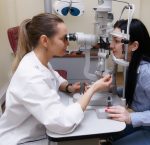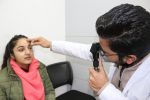
As someone interested in helping people buy the perfect pair of eyeglasses, an optician is a good entry-level position in the medical industry.
Not quite an eye doctor or surgeon, an optician provides services with frames, eyeglasses, and contact lenses.
Find out what kind of salary an optician earns, and how to become an optician with online training.
The Best Online Optician Training Programs
#1 Penn Foster Career School

About the School
Penn Foster Career School is an online education provider that offers career-focused diploma programs for students across the United States.
The Optician Career Diploma is designed for learners who want flexible, self-paced training while preparing for entry-level roles in optical retail or clinical environments.
Students can enroll at any time and complete coursework entirely online.
The program is commonly used by students preparing for American Board of Opticianry certification, although licensing requirements vary by state.
Courses Offered
The Optician Career Diploma includes approximately 7 instructional courses covering optical fundamentals, ophthalmic dispensing, lens types and materials, contact lens basics, optical measurements, and professional practice.
The curriculum includes about 305 total instruction hours and 18 graded exams.
Topics include eye anatomy, optical math, frame selection, lens fitting, and patient communication.
All coursework is delivered online with digital study materials.
Program Cost
Most students complete the program in about 11 to 12 months.
Tuition is approximately 1,499 dollars if paid in full.
Payment plans increase the total cost to about 1,779 dollars, with monthly payments starting at 59 dollars.
Digital textbooks and learning materials are included in tuition, and there are no additional lab or clinical fees.
Contact Information
- Address: 200 Hickory Street, Scranton, PA 18505
- Phone: 1-800-275-4410
- Website: Visit School Website
#2 Ashworth College

About the School
Ashworth College is an online institution offering self-paced career diplomas and degree programs.
The school focuses on affordability and flexible scheduling for adult learners.
While Ashworth offers healthcare-related career diplomas, public information on a dedicated optician diploma is limited, and program availability may vary over time.
Courses Offered
Ashworth career diploma programs generally include online coursework focused on foundational knowledge, industry terminology, applied skills, and job readiness.
Healthcare-related programs typically cover anatomy basics, professional ethics, customer interaction, and technical fundamentals.
Exact optician-specific course titles and instructional hours should be confirmed directly with the school.
Program Cost
Career diploma tuition at Ashworth College typically ranges between 549 dollars and 1,699 dollars, depending on the program and payment plan.
Monthly payment options are commonly available, often beginning with a low initial deposit.
Costs may vary based on promotions or bundled materials.
Contact Information
- Address: 5051 Peachtree Corners Circle, Suite 200, Norcross, GA 30092
- Phone: 1-800-957-5412
- Website: Visit School Website
#3 CareerStep Optical Technician and Optician Program
About the School
CareerStep is an online training provider specializing in healthcare and allied health careers.
The Optical Technician and Optician program is designed for students seeking entry-level employment in optical practices, clinics, and retail environments.
The program includes instructor support and career readiness resources.
Courses Offered
The curriculum covers ophthalmic materials, optical calculations, dispensing techniques, insurance processing, customer service, and contact lens fundamentals.
Students learn optical terminology, frame fitting, lens selection, and basic clinical workflows.
Instruction is delivered online with guided learning modules and assessments.
Program Cost
The average program length is approximately 12 months.
Tuition generally ranges from 3,500 dollars to 4,000 dollars, depending on enrollment options.
The cost typically includes course access, instructional support, and career preparation resources.
Contact Information
- Address: N/A
- Phone: 800.411.7073
- Website: Visit School Website
#4 Interstate Optical Academy

About the School
Interstate Optical Academy provides online education designed specifically for optician training and certification preparation.
The academy focuses on helping students build the knowledge required for national certification exams such as ABO and NCLE.
Programs are flexible and designed for both new learners and working opticians.
Courses Offered
Training modules include optical theory, lens materials, ophthalmic dispensing, frame fitting, contact lens fundamentals, and exam preparation strategies.
Coursework emphasizes applied knowledge and test readiness rather than degree completion.
Instruction is fully online.
Program Cost
Programs are usually completed in 6 to 12 months, depending on pace.
Tuition generally starts around 2,000 dollars and may increase based on the number of courses or exam prep packages selected.
Contact Information
- Address: 2902 Mitthoeffer Place, Indianapolis, IN 46229
- Phone: +1 317-890-0548
- Website: Visit School Website
#5 OcuPrep Optician Training

About the School
OcuPrep specializes in online optician education with a strong focus on national certification preparation.
The program is commonly used by opticians preparing for the American Board of Opticianry and National Contact Lens Examiners exams.
Coursework is structured for independent study with clear progression.
Courses Offered
Courses include ophthalmic optics, lens theory, dispensing procedures, contact lens concepts, and certification exam review.
Training emphasizes both technical knowledge and practical understanding needed in optical workplaces.
Program Cost
Most learners complete the program in 6 to 10 months.
Tuition typically ranges from 1,800 dollars to 2,500 dollars, depending on the course package selected.
Pricing may vary for bundled exam preparation options.
Contact Information
- Address: N/A
- Phone: 470-705-2020
- Website: Visit School Website
#6 OpticianWorks
About the School
OpticianWorks is an online optician education platform used by apprentices, optical staff, and independent learners.
The program focuses on real-world optical skills and certification preparation rather than academic degrees.
It is commonly used alongside apprenticeships or on-the-job training.
Courses Offered
OpticianWorks offers a core optician training curriculum, a contact lens and NCLE preparation course, and an optional structured 2-year training pathway.
Topics include optics, frame fitting, lens design, adjustments, dispensing skills, and contact lens theory.
Courses are modular and self-paced.
Program Cost
Annual access to the core curriculum costs about 159 dollars, or about 15.95 dollars per month.
Contact lens coursework costs about 199 dollars per year.
Bundled access is approximately 299 dollars per year.
The structured 2-year program typically costs between 899 dollars and 1,099 dollars as a one-time payment.
Contact Information
- Address: N/A
- Phone: N/A
- Website: Visit School Website
#7 San Diego Mesa College
About the School
San Diego Mesa College is a public community college in California offering an Associate Degree in Opticianry.
The program includes a mix of online coursework and required in-person laboratory and clinical training.
Graduates are prepared for professional optician roles and certification eligibility.
Courses Offered
The associate degree requires approximately 60 total credit hours.
Coursework includes optics, ophthalmic materials, frame selection, dispensing techniques, contact lens theory, clinical practice, and general education courses.
Lab and clinical components must be completed on-site.
Program Cost
California resident tuition averages about 46 dollars per credit hour.
For a 60-credit program, estimated tuition is around 2,760 dollars before books and fees.
Out-of-state tuition is significantly higher.
The program typically takes 2 years of full-time study to complete.
Contact Information
- Address: 7250 Mesa College Drive, San Diego, CA 92111
- Phone: +1 619-388-2682
- Website: Visit School Website
#8 Hillsborough Community College
About the School
Hillsborough Community College is a public college in Tampa, Florida, offering an Associate of Science degree in Opticianry.
The program combines online lecture courses with required in-person labs and clinical experiences.
The curriculum is designed to prepare students for employment and national certification exams.
Courses Offered
The degree requires 72 total credit hours, including ophthalmic orientation, lens design, dispensing courses with labs, contact lens theory and labs, clinical practicum, and general education courses such as mathematics.
Many lecture-based courses can be completed online, while labs and clinicals require hands-on training.
Program Cost
In-state tuition averages about 104 dollars per credit hour, resulting in an estimated tuition of approximately 7,500 dollars for the full program.
Out-of-state tuition can exceed 27,000 dollars.
Additional costs for books, lab supplies, and certification exams can total about 1,500 dollars.
The program is typically completed in 2 years.
Contact Information
- Address: 4115 North Lois Avenue, Tampa, FL 33614
- Phone: +1 813-253-7000
- Website: Visit School Website
Schools Summary Table
What Courses Are in an Online Optician Training Program?
A typical online optician training program focuses on ophthalmic (eyeglasses and frames) and contact lens dispensing.
These eye care professionals learn how to fit eyeglasses and adjust frames, and help individuals select the right frames for their lifestyle, budget, and vision correction needs.
These individuals are also trained in selling contact lenses and providing instructions for handling contact lenses.
The online optician training provides students with vital information and resources for successfully working in this field of eye health care.
Can You Earn an Optician Training Certification Completely Online?
Yes, there are several 100 percent online certification programs for optician training.
This includes Penn Foster, and Tri-County Technical College, amongst others.
Both formal and traditional colleges offer completely online training for opticians, as well as online educational platforms.
How Long Does it Take to Earn an Optician Training Certification Online?
The typical length of an online optician training certification program is seven to 12 months, depending on the school and the student.
You can opt to fast-track your training program, if needed, or go for the standard track or pace.
Some schools offer a two-year program to earn an associate’s degree in opticianry.
This is a more lengthy program that leads to a degree.
An associate’s degree can be used to apply for more advanced optometrist and ophthalmologist training to be an eye doctor.
How Much Does an Online Optician Training Certification Cost?
Pricing for online optician training certification costs is varied according to the program provider or school.
The Penn Foster 100 percent online optician training certificate is $1,449.
For comparison, the Tri-County Technical College program, which is also all online, costs $8,892.
Some programs may also be free, but while online, they may not provide you with a certificate or diploma at the end of the training.
Benefits of Online Optician Training Programs
Remote Training
When working from an online platform for optician training, you can study from any school while sitting in your home.
This eliminates the need for housing or to move in order to attend a college for optician training.
That being said, not all schools offer online training to be an optician.
Ease of Training
The training process for becoming a professional optician is easier in some respects for students.
There is no need to be in a classroom on a set schedule, which involves driving and finding parking, along with those costs.
This increases accessibility for students who are unable to come to class and makes it easier to train to be an optician.
Reduced Cost of Education
As a result of not attending a traditional classroom for optician training, students have a reduced cost of education.
There are no fees for matriculation, applications, or tuition in most cases as the online optician training has a set one-time fee that is only about $1,000 to $9,000 depending on the program.
This is far more affordable than a four-year degree in a traditional college setting which costs $20,000 to $40,000 a year.
Drawbacks of Online Optician Training Programs
Limited Hands-On Training
Typically, for someone attending a 100 percent online training program, there is a limit on the hands-on practice they receive.
This is the case with most of the optician training programs online.
However, if you are a student in a program and have access to an internship with an eyewear clinic, for example, you gain real-world experience.
The use of an internship also improves a student’s odds of landing a job as an optician after completing a program.
Therefore, the limit of hands-on training in an online program is a reason why students struggle with this type of training.
Some states, such as Washington, require students to have 6,000 hours of a certified apprenticeship in order to be licensed as dispensing opticians.
Here you would be required to do a separate apprenticeship beyond the online training program.
Therefore, the program would not be completely 100 percent online considering all you need to get a job.
Lack of Career Guidance and Mentorship
If you are a student interested in becoming an optician with online training, there is a lack of information available to guide you to the next level.
For instance, it is important to know about continuing education requirements to maintain your optician license upon graduation in your home state.
In Washington, as an example, dispensing opticians must be recertified every three years with 30 hours of CE classes.
State-specific career guidance by an academic advisor is not available with most online programs.
As a result, students are on their own in terms of figuring out if they need to pass a certification exam or to get licensed where they live in order to get hired.
Also, there may be a lack of resources to help graduates find local work with this type of training.
Unless the program includes an externship or apprenticeship and provides an actual certificate or diploma, the student graduate of opticianry may struggle to find employment.
Hands-on, real-world experience is often necessary to gain a job working as an optician.
Reduced Time Spent on Training
With an online training program, the student is only learning about ophthalmic services while staring at a computer.
This eliminates time spent in multiple classroom settings, including labs or in a college surrounded by other people.
As a result, there may be less time and energy dedicated to learning the skills necessary to be an optician.
Fewer learning methods, such as only using video and reading materials for an online program, versus hands-on applications and interactions with other students in a classroom, can also reduce the quality of training.
Benefits and Drawbacks of Online Optician Training Programs – Summary Table
| Benefits of Online Optician Training Programs | Drawbacks of Online Optician Training Programs |
|---|---|
| Remote Training | Limited Hands-On Training |
| Ease of Training | Lack of Career Guidance and Mentorship |
| Reduced Cost of Education | Reduced Time Spent on Training |
Types of Optician Training Certifications
American Board of Opticianry Advanced Certification
The American Board of Opticianry Advanced Certification (ABOC-AC) is applicable to independent opticians and ophthalmology practice professionals.
If you plan to work in an optometric office, commercial clinic, or optical product manufacturing facility, consider the ABOC-AC exam.
The fee for the ABO Advanced Exam is $175.
Ophthalmic Coding Specialist Exam and Retina Exam
The Ophthalmic Coding Specialist Exam (OCS) and Ophthalmic Coding Specialist Retina Exam (OCSR) are conducted by the American Academy of Ophthalmology (AAO).
These specialist exams are 100-question multi-choice question assessments for coding for ophthalmology.
The OCS Exam and the OCS Retina Exam each cost between $199 and $349, depending on AAOE or Academy membership.
National Contact Lens Examiners Advanced Certification
The National Contact Lens Examiners Advanced Certification (NCLE-AC) costs $175 for the examination.
Completing this training certifies an optician to provide contact lens services for customers in a professional setting.
Most students take the NCLE and the ABOC, at a minimum, in preparing for their career as an optician.
4 Self-Study Tips for Optician Training Online Students
Follow Trends for Eyeglasses and Frames
Get on board with understanding the latest trends in eyeglasses and frames.
Find out what brands are in season and with which demographic.
By having a personal feel of what is cool and hip with eyewear selection, you stand to improve your outcomes by becoming an optician.
Start while taking optician training online and increase your knowledge from the get-go.
Plus, this will make taking an online seminar more exciting and encouraging for you as a student.
Work on Communication Skills
As you take the online training to be an optician, prepare yourself for in-person sales.
This is where you need to maintain communication skills and best practices in handling the public.
Getting healthy both mentally and physically will help you boost self-confidence, and make in-person selling easier for you.
Now is the optimal time to commit to improving your whole self as you take optician training online.
Since you are not going to school in person, you have more time and energy to get in shape and practice speaking to strangers.
Pick Up Exam Study Guides and Materials
Work in plenty of time to use exam study guides and materials to help you train to be an optician.
Study guides for ABO tests are a great start.
Working with hands-on models of eyes and eyeglass frames is also a good idea at this point in your career.
Plan on Taking More Exams Than One for Opticians
The more exams you take as an optician, the better your job options will be.
There are several exams by the ABO and other associations, as well as specialized optician exams for this field.
See what all you can take in order to become certified as an optician and then prepare to take those exams.
This will take more time than just attending and passing a training program.
Also, account for the extra expenses of money for applications to take exams.
If you are studying for the optician exams as you take online optician training, you stand the best rate of success in your career.
Summary
For someone who wants to work in an optical clinic or eyeglass store, the training pathway for an optician is not too difficult.
Among the eye doctor professions, an optician is the most entry-level for this field.
From an optician, a professional can train to specialize as an eye doctor or surgeon, or simply an optometrist that performs eye exams.
There are schools and programs that provide 100 percent online training for students interested in becoming opticians.
This training varies in expense and time frame but is no more than $10,000 or two years for completion.
Frequently Asked Questions
What is the difference between an optician and an optometrist?
Opticians are eyewear technicians, as explained by the American University of the Caribbean (AUC) School of Medicine.
An optician works with fitting eyeglasses and contact lenses that patients need for vision correction.
However, an optician does not conduct eye exams, and they do not write prescriptions for lenses, frames, or contacts.
The training for an optician takes one to two years and may not require licensing.
Optometrists are not medical eye doctors, according to the ACU School of Medicine.
However, these eye care professionals have the skills necessary to examine and diagnose a patient’s eye health and vision.
An optometrist has the background needed to treat patients for vision correction, eye infection, or other medical issues of the retina, eyeball, eyelid, or other areas involving the eye.
Optometrists go to college for a bachelor’s degree in college followed by four years in optometry school to earn a doctor of optometry (OD) degree.
By the way, to be an eye doctor, such as an ophthalmologist, you spend 12 years, minimum, in college and medical school.
Do I have to be licensed or certified to be an optician?
Some states do not require opticians to be licensed or certified in order to seek employment with the public.
You are expected to receive professional training to be eligible for a job as an optician.
In fact, 21 states do require optician certification, which is different from licensing.
Certification is obtained by passing a state or national certification examination or test.
A license is received after applying for and paying any applicable fees for the license to work as an optician in a certain city or state.
That means 28 states do not require you to have a license or certificate.
The National Opticianry Competency Examination (NOCE) and the Contact Lens Registry Examination (CLRE) are two of the most common basic certification exams for an optician in any state in the US.
Is being an optician hard or difficult?
In many ways, opticians have a very difficult path of training ahead.
This field requires specialized education in eyeglasses and contacts, as well as eye and optical healthcare services.
Opticians spend one to two years training in a formal education program to become eligible for licensing and certification exams.
What is the basic education level for someone starting school for optician training?
Individuals pursuing a certificate, diploma, or degree as an optician will need to have at least a high school diploma or a GED.