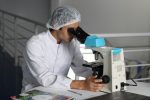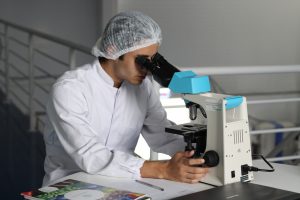
Medical technologists, or MTs, work in hands-on laboratories.
Here is where these scientists operate, so to speak, on the workforce front.
To become a medical technologist, you must complete professional training.
This training focuses on biology and chemistry, as well as other sciences related to the medical industry.
The Best Online Medical Technologist Training Programs
#1 University of Cincinnati

About the School
The University of Cincinnati is a large public research university with a strong reputation in health sciences and clinical education.
Its online medical laboratory science pathway is built for certified medical laboratory technicians who already hold an associate degree and want to advance to a medical technologist or medical laboratory scientist role.
The program is structured for working professionals and allows students to complete clinical requirements locally.
Courses Offered
Students complete upper-division coursework in clinical chemistry, hematology, immunology, microbiology, molecular diagnostics, laboratory operations, research methods, and professional practice.
The program typically requires about 60 upper-level credit hours after transfer.
Courses are offered in 7-week or 14-week formats.
A supervised clinical practicum is required and arranged near the student’s location.
Program Cost
Tuition averages between 550 and 600 dollars per credit hour, depending on residency.
For students completing approximately 60 credits, total tuition generally falls between 33,000 and 36,000 dollars.
Most students complete the program in 24 to 30 months.
Additional costs may include textbooks, background checks, and certification exam fees.
Contact Information
- Address: 2600 Clifton Ave, Cincinnati, OH 45221, United States
- Phone: +1 513-556-6000
- Website: Visit School Website
#2 Bowling Green State University

About the School
Bowling Green State University is a public institution known for accessible online degree completion programs.
The medical laboratory science program is designed for certified medical laboratory technicians seeking career advancement while continuing to work full-time.
The school emphasizes flexibility, academic support, and preparation for national certification.
Courses Offered
The online curriculum includes about 36 major credit hours in advanced laboratory science topics such as molecular diagnostics, clinical immunology, hematology, clinical chemistry, virology, laboratory management, and professional issues in healthcare.
General education credits are typically transferred in before admission.
Courses are delivered fully online with no required on-campus attendance.
Program Cost
Tuition is charged per credit hour and varies by residency, with average online undergraduate rates ranging from 400 to 450 per credit.
Total program tuition for the major coursework generally ranges from 14,000 to 17,000 dollars.
Students often complete the program in 18 to 24 months, depending on course load.
Contact Information
- Address: 1001 E Wooster St, Bowling Green, OH 43403
- Phone: (419) 372-2478
- Website: Visit School Website
#3 Old Dominion University
About the School
Old Dominion University is a public university with extensive experience serving adult and military-affiliated learners.
Its medical laboratory science degree completion program is intended for certified medical laboratory technicians who already have significant laboratory experience and college credit.
Courses Offered
Students complete advanced coursework focused on expanding laboratory science knowledge beyond the technician level.
Topics include advanced diagnostics, laboratory science integration, quality assurance, and professional practice.
A minimum of 30 credit hours must be completed through the university, though 120 total credits are required for graduation.
Program Cost
Tuition is assessed per credit hour, with in-state and out-of-state rates differing.
Online undergraduate tuition typically ranges from 400 to 500 per credit.
Completing the required 30 to 40 credits through the university generally costs between 12,000 and 20,000 dollars.
Program length is commonly 12 to 24 months.
Contact Information
- Address: 5115 Hampton Boulevard, Norfolk, VA 23529
- Phone: (757) 683-5650
- Website: Visit School Website
#4 Auburn University at Montgomery

About the School
Auburn University at Montgomery is a regional public university offering career-focused online health science programs.
The medical laboratory science program is designed for students with prior laboratory training who want a flexible path to a bachelor’s degree.
Courses Offered
The program includes coursework in clinical chemistry, hematology, immunology, immunohematology, microbiology, molecular diagnostics, and laboratory management.
Students can choose a standard two-year track or a slower-paced three-year track.
Courses are delivered fully online with clinical requirements completed locally.
Program Cost
Tuition averages around 400 dollars per credit hour.
Students completing approximately 60 credits can expect total tuition costs of about 22,000 to 24,000 dollars, depending on pacing.
The two-year track can be completed in about 24 months, while the three-year track extends closer to 36 months.
Contact Information
- Address: 7400 East Dr, Montgomery, AL 36117
- Phone: (334) 244-3758
- Website: Visit School Website
#5 Illinois State University

About the School
Illinois State University offers an accelerated online pathway for certified medical laboratory technicians seeking bachelor-level credentials.
The program is structured to recognize prior education and professional experience, allowing students to progress quickly.
Courses Offered
All major medical laboratory science courses are delivered online and focus on advanced laboratory theory and practice.
Coursework aligns with national certification requirements and includes advanced topics in diagnostics, laboratory science, and professional standards.
General education credits are typically completed before entry.
Program Cost
Tuition varies by residency and academic year, with online undergraduate rates commonly ranging from $380 to $450 per credit hour.
Because the program can be completed in as little as two to three semesters, many students complete their degree within 9 to 12 months after entering the major coursework.
Total tuition depends on remaining credits
Contact Information
- Address: 100 North University Street, Normal, IL 61761
- Phone: (309) 438-2181
- Website: Visit School Website
#6 University of West Florida

About the School
The University of West Florida offers specialized online undergraduate certificates in medical laboratory sciences for students seeking focused training rather than a full degree.
These certificates are often used for professional advancement or exam eligibility in specific laboratory categories.
Courses Offered
Certificates are available in areas such as clinical chemistry, hematology, and microbiology.
Programs range from 14 to 25 credit hours, depending on specialization.
Coursework includes advanced laboratory theory, quality assurance, and analytical techniques.
Courses are delivered in 7 to 16-week terms.
Program Cost
Tuition is charged per credit hour and typically ranges from $200 to $350 per credit depending on residency.
Total certificate costs usually fall between 3,000 and 8,000 dollars.
Most certificates can be completed in 9 to 18 months.
Contact Information
- Address: 11000 University Parkway, Pensacola, FL 3251
- Phone: (850) 474-2000
- Website: Visit School Website
#7 Alison

About the School
Alison is an online learning platform that offers free educational courses across many industries.
Its medical laboratory technician training is intended as an introductory learning option rather than a professional certification pathway.
Courses Offered
The course covers basic laboratory concepts such as safety procedures, specimen handling, infection control, and introductory clinical testing methods.
The content is self-paced and designed for beginners exploring laboratory careers.
Program Cost
The course itself is free to access.
Optional certificates are available for a small fee, usually under 50 dollars.
Completion time varies widely, ranging from 10 to 20 hours depending on pace.
Contact Information
- Address: Mount Carmel, Loughrea, Co. Galway, H62 AV62, Ireland
- Phone: N/A
- Website: Visit School Website
#8 Elevify

About the School
Elevify provides online career training courses focused on healthcare and laboratory sciences.
Programs are designed for flexible, self-paced learning and skill enhancement rather than formal licensure.
Courses Offered
Course material includes blood cell analysis, laboratory workflow, analytical techniques, result interpretation, and laboratory reporting.
Content is delivered through video lessons and digital modules.
Program Cost
Course access may begin at no cost, with premium certificate options available for a fee.
Total learning time can range from 20 hours to over 300 hours, depending on depth and optional modules selected.
Contact Information
- Address: Rua Cardeal Arcoverde, 2365, Cj 33. São Paulo - SP. Brazil
- Phone: N/A
- Website: Visit School Website
#9 Penn Foster

About the School
Penn Foster is a long-established distance education provider offering career diploma programs designed for entry-level employment.
The medical laboratory assistant program focuses on hands-on support roles in laboratory settings.
Courses Offered
Students study anatomy and physiology basics, medical terminology, phlebotomy principles, specimen processing, laboratory safety, and infection control.
The program includes an externship component to gain real-world experience.
Program Cost
The program is designed to be completed in about 12 months.
Tuition varies by payment plan but typically ranges from 1,500 to 2,000 dollars total.
The program awards approximately 117 continuing education units.
Contact Information
- Address: Learner Success Center, 200 Hickory Street, Scranton, PA 18505 USA
- Phone: 1-888-427-6200
- Website: Visit School Website
#10 MedCerts

About the School
MedCerts specializes in online allied health training programs that prepare students for entry-level certifications and healthcare support roles.
Programs are designed for flexible completion with support services included.
Courses Offered
Training includes laboratory safety, specimen handling, equipment use, clinical procedures, and exam preparation for medical laboratory assistant credentials.
Clinical hours are required and completed in person at approved sites.
Program Cost
Program tuition varies but commonly ranges from 3,000 to 5,000 dollars.
Program length typically falls between 12 and 24 weeks, depending on pacing.
Additional costs may include exam fees and clinical placement requirements.
Contact Information
- Address: 14143 Farmington Road, Livonia, MI 48154
- Phone: (800) 734-1175
- Website: Visit School Website
Schools Summary Table
| Rank | School | |
|---|---|---|
| | #1 | University of Cincinnati |
| | #2 | Bowling Green State University |
| | #3 | Old Dominion University |
| | #4 | Auburn University at Montgomery |
| | #5 | Illinois State University |
| | #6 | University of West Florida |
| | #7 | Alison |
| | #8 | Elevify |
| | #9 | Penn Foster |
| | #10 | MedCerts |
What Courses Are in an Online Medical Technologist Training Program?
There are several courses for online medical technologist training that should be included in any training program.
To fully understand the job tasks as a medical technologist, look for a program offering:
- AIDS education
- Biostatistics
- Biotechnology
- Clinical chemistry
- Communication skills for the healthcare industry
- Genetics
- Hematology
- Immunology
- Medical ethics
- Medical lab procedures
- Medical terminology
- Microbiology
- Mycology, aka the study of fungi
- Phlebotomy theory
- Phlebotomy lab
- Practicum seminar
The goal of a medical technologist is to draw fluid and tissue samples, such as premarital blood tests or AIDS tests, in a laboratory setting.
A medical technologist studies how to properly conduct these tests and must have hands-on clinical experience for certification.
Can You Earn a Medical Technologist Training Degree Completely Online?
Online training and coursework can include all of the classes and lessons needed to certify as an MT.
However, to complete a degree in medical technologist training, students must have some in-person clinical training.
So, while you can earn a medical technologist training certificate completely online, you will have to complete some training in person to be certified.
A paper certificate is one step; getting certification by passing a board exam is another area that must be completed.
In order to apply for certification examinations by a board, students of medical technologist training must have some in-person experience.
How Long Does it Take to Earn a Medical Technologist Degree Online?
It typically takes four years to become a medical technologist, and this includes the coursework needed to earn a bachelor’s degree.
Therefore, most likely the program will take four years in most cases.
Additional training for specialized certification exams is also needed.
This type of training will take anywhere from a few months to two years for most training opportunities available for MT students online.
How Much Does Online Medical Technologist Training Cost?
A bachelor’s degree is a formal four-year program at any college, and the price will vary.
You can anticipate the cost of tuition being more affordable if you stay within your home state.
If you go to an online medical technologist training program, you can cut some costs associated with attending the program.
Online training through colleges is encouraging more students to complete certificates that can be a lot more affordable.
However, to get a four-year degree as a medical technologist, you will have to pay tuition and associated fees for attending any particular school.
Even online training has costs if you expect to earn a degree.
Benefits of Online Medical Technologist Training Programs
Pay is Good for Medical Jobs
The salary for a medical technologist is about $61,890 a year, according to the US Bureau of Labor Statistics.
This ranges at about $29.75 an hour for the median pay, as of 2024. For most entry-level medical care technician jobs, this is a good starting salary. Additionally, thanks to specializations, you have plenty of areas to earn more money based on your expertise. Since you are not paying as much for in-person traditional schooling for the majority of your training, you save money upfront on training costs.
Potential for Advancement in Specialization
This points out the next benefit of online medical technologist training. You can advance and become specialized in a wide range of areas. For those individuals who are concerned about being pigeon-holed into a career pathway, this takes away that pinch. Finding a new area to train and learn about as a medical technologist allows for ample opportunities throughout one’s career.
Working With Latest Medical Issues
If you are someone who likes to know about what’s going on in the healthcare and medical industry, consider a career as a medical technologist. Technology is the latest advancement in all industries–especially in medical care–and this job puts you on the front lines of that progress. Find out what is happening behind the scenes with treatments and illnesses, and understand these from a professional perspective.
Drawbacks of Online Medical Technologist Training Programs
Risk of Personal Injury in Externships
When you are in an online program for medical technologist training, there will be an in-person component to the training program. This is called an externship, and it is required that you have a minimum number of contact hours as part of your training. Therefore, you will have to get your hands dirty, quite literally, and you might be injured in the process. Not something you want to hear, but it is important that you are aware of the job risks associated with being a health care professional and a medical technologist–even if you attend training online.
Inaccurate Information for Modern Medical Technologists
As the field of modern medical technology advances quite rapidly, there is the risk that the program you attend for online training is not up to par. You may be behind on some areas of information and need additional training to get where you want to be professionally.
Benefits and Drawbacks of Online Medical Technologist Training Programs – Summary Table
| Benefits of Online Medical Technologist Training Programs | Drawbacks of Online Medical Technologist Training Programs |
|---|---|
| Pay is Good for Medical Jobs | Risk of Personal Injury in Externships |
| Potential for Advancement in Specialization | Inaccurate Information for Modern Medical Technologists |
| Working With Latest Medical Issues |
Types of Medical Technologist Training Specializations
To get hired as a medical technologist, consider getting trained and certified in a certain specialization. The most common medical technologist specializations you can train and work in include:
- Anesthesia technician and the ASATT certification
- Audiologist
- Cardiovascular technologist
- Cytotechnologist
- Dental assistant
- Dental lab technician
- Diagnostic medical sonographer
- Dialysis technician and CHT, CHBT, and CCHT programs for certification
- Emergency medical technician (EMT)
- Histotechnologist
- Kinesiologist
- Medical assistant
- Medical lab assistant
- Medical lab technician and American Medical Technologists (AMT) certification
- Neurodiagnostic technologist
- Ophthalmic technician
- Paramedic
- Pharmacy technician and CPhT programs for certification
- Phlebotomist
- Physical therapist (PT) aide
- Physical therapist assistant (PTA)
- Radiation therapist
- Radiologic technologist
- Respiratory therapist
- A speech-language pathologist (SLP) and CCC-SLP certification
- Surgical technologist
Each of these positions is a medical care worker who specializes in the use of tools and technology to diagnose and monitor patient health.
Types of Medical Technologist Training Certifications
Choose one of these specializations and earn a certificate in the associated field, such as radiologic technology or kinesiology. If you are interested in earning a certificate as a radiologist, start with the certification exam by the American Registry of Radiologic Technologists (ARRT). Start with the US association associated with the specialization track you are headed down in your career. This will lead you in the right direction by pursuing the right certification as a medical technologist.
American Medical Technologists (AMT) Certifications
American Medical Technologists (AMT) is a leading resource for medical technologist certifications. Along with medical technologist (MT) certification, the AMT also offers certification in specialized areas, including:
- Allied health instructor (AHI)
- Certified laboratory consultant (CLC)
- Dental assistant (RDA)
- Medical administrative specialist (CMAS)
- Medical assistant (RMA)
- Medical laboratory assistant (CMLA)
- Medical laboratory technician (MLT)
- Molecular diagnostics technologist (MDT)
- Patient care technician (PCT)
- Phlebotomy technician (RPT)
As you get certified by the AMT for MT, include another training and specialty in your sights. You can easily advance your career in the healthcare industry in this manner.
Medical Laboratory Scientist Certification
Medical laboratory scientist certifications, aka MLS (ASCP) certification, are also beneficial to individuals interested in becoming medical technologists. These are nationally recognized certifications that focus on the laboratory workplace. If you have the MLS (ASCP) certification, you do not have to be specialized in one of the previously listed technologist and technician tracks. With the MLS (ASCP) certification, you can start with entry-level work in the medical technologist industry. From here, you will gain the insight and information you need to pursue advanced degrees and programs to become specialized in a certain type of medical technologist.
Other National Accreditation Agencies for MT Certification
Two more agencies to check with for MT certification in the US are nationally recognized. These include the Commission on Accreditation of Allied Health Education Programs (CAAHEP) and the National Accrediting Agency for Clinical Laboratory Sciences (NAACLS).
4 Self-Study Tips for Medical Technologist Training Online Students
Maintain Healthy Reading Habits
The biggest portion of study time for medical technologist training students is spent reading. To be able to maximize your reading time, schedule big chunks of reading throughout the month. Decide ahead of time how much you will read every day and weekly, and budget according to the rest of your study schedule. For example, on days when you have other activities to work on and cannot read as much, be kind to yourself and stay light on those days. This way, you will not be overwhelmed with reading the same amount every day, no matter what. And you can still cover all the material you need in the allotted amount of time.
Gather Transcripts and Externship Letters for Certification
To apply for the MLT (ASCP) exam, students must have college transcripts or certifications from a training program. This is required to verify education. To verify experience, MLTs must present documentation supporting clinical laboratory experience. Examples include letters from professors or externship reports approved by a lab. Students will need these upon graduating from an MLT program. Therefore, it is timely to start collecting documents needed for applying to the ASCP BOC certification exam as soon as these are received. This will ease the time spent trying to apply to the exam.
Wear Blue Light-Blocking Glasses
Since you are attending online classes most of the time as a medical technologist, prepare for blue light blocking with computer classes. Made with a yellow-tinted frame, these blue light glasses will protect your vision while working on the computer for training.
Make In-Person Study Plans With Others
Find others in your city or community who are studying medical technologists or similar areas of training. If you are all online studying, chances are you will find other students in online forums or on social media where you can connect. Then make plans to host informal cafe meetups with other MT students. This will help you establish networks, increase productivity, and learn more about the local job market.
Summary
Now that you are ready to begin your career as a medical technologist, you have all of the information at your fingertips for success. Start with online training and save time and money with certification practice. Once you have completed an online training program and have a certificate, choose a degree program for MT students. You will soon be in an externship and gaining valuable clinical hours as a new medical technologist.
Frequently Asked Questions
What is medical laboratory technology MLT (ASCP) certification?
The most well-known exam that medical laboratory technologists (MLT) can take and pass for certification is the MLT (ASCP) exam.
This is available from the American Society of Clinical Pathologists (ASCP) and the ASCP Board of Certification (BOC).
The exam costs $215 to apply for the examination and is non-refundable.
What tasks are typical for medical technologists in a laboratory setting?
In a medical laboratory, the medical technologist is responsible for collecting blood, urine, and other biological specimens.
The role of a medical technologist is to use this information for the diagnosis and treatment of illness or disease.
There are specific types of technologists in the field that you can specialize in, including nuclear medicine technologists, MRI technologists, EKG technicians, and dental hygienists.
In each of these jobs, there is a specific application of medical technology.
For example, an MRI technologist works with MRI scanning equipment and reads patient scans in hospitals.
How do I become a medical technologist in Canada?
In Canada, to work as a medical technologist, you need to get certified.
This special certification is provided by the Canadian Society for Medical Laboratory Science (CSMLS).
Medical laboratory technologists must also be trained or have educational achievements in this field.
Technologists have to pass the CSMLS Certification Exam to be certified and eligible for employment in Canada.
Which medical technology programs are the best for jobs?
Getting a bachelor’s degree in a field of medical technology is considered the best path to a career in this field.
This positions a student to pursue additional programs to further their education and career opportunities.
The four-year bachelor’s degree as a medical technologist also shows a strong commitment to the field of expertise for job applications.
You are also more likely to receive an externship that meets the certification requirements for hands-on training when you attend a four-year program to be a medical technologist.