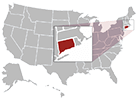
Mental Health Technicians, often called MHTs, play a hands-on role in supporting individuals experiencing mental health challenges.
In Connecticut, this role is becoming increasingly important as hospitals, residential treatment centers, and community programs expand mental health services across the state.
With a growing focus on behavioral health, substance use treatment, and crisis care, Connecticut continues to see steady demand for trained Mental Health Technicians.
This career is especially well-suited for compassionate, observant people who want to make a real impact in healthcare while gaining valuable clinical experience close to home.
Go to Section:
- What Does a Mental Health Technician Do?
- Education Requirements in Connecticut
- Top Schools Offering Mental Health Technician Programs in Connecticut
- #1 Middlesex Community College
- #2 Housatonic Community College
- #3 Gateway Community College
- #4 Naugatuck Valley Community College
- #5 Norwalk Community College
- #6 Northwestern Connecticut Community College
- #7 Asnuntuck Community College
- Certification Options in Connecticut
- Popular Mental Health Technician Certifications
- Step-by-Step: How to Become a Mental Health Technician in Connecticut
- How Long Does It Take to Become a Mental Health Technician in Connecticut?
- Cost to Become a Mental Health Technician in Connecticut
- Job Outlook for Mental Health Technicians in Connecticut
- Salary for Mental Health Technicians in Connecticut
- Frequently Asked Questions
What Does a Mental Health Technician Do?
Mental Health Technicians support patients under the supervision of nurses, psychiatrists, and other licensed professionals.
Their work focuses on daily care, safety, and emotional support.
Daily responsibilities often include assisting patients with basic needs, observing behavior and mood changes, documenting interactions, supporting therapeutic activities, and helping maintain a safe and structured environment.
MHTs may also assist during crises and follow care plans developed by the clinical team.
In Connecticut, Mental Health Technicians commonly work in psychiatric hospitals, inpatient behavioral health units, residential treatment facilities, substance use recovery centers, and community mental health programs.
While job titles can overlap, there are subtle differences.
Mental Health Technicians typically focus on psychiatric and emotional care.
Behavioral Health Technicians often work with both mental health and substance use populations.
Psychiatric Technicians may have additional medical responsibilities and sometimes require more formal training depending on the employer.
Education Requirements in Connecticut
The minimum requirement to become a Mental Health Technician in Connecticut is a high school diploma or GED.
Many entry-level positions provide on-the-job training, especially in residential and community-based settings.
Some employers prefer candidates who have completed a certificate or associate degree program in behavioral health, psychology, human services, or a related field.
These programs can improve job prospects and prepare candidates for certification.
Relevant coursework often includes introductory psychology, abnormal psychology, anatomy and physiology, patient care fundamentals, crisis intervention, and communication skills.
Top Schools Offering Mental Health Technician Programs in Connecticut
#1 Middlesex Community College

About the School
Middlesex Community College in Middletown is a public community college focused on career readiness and affordable education.
The school is well known in Connecticut for its strong health and human services offerings and serves students looking to enter the workforce quickly or continue toward a four-year degree.
Programs are designed with flexibility in mind, making them accessible for working adults.
Courses Offered
Middlesex offers a non-credit Mental Health Technician workforce training course that runs for approximately 40 sessions.
The program covers patient care basics, observation and reporting, documentation, ethics, safety procedures, and therapeutic support techniques.
The training is designed to prepare students for entry-level Mental Health Technician roles and national certification exams.
Credit-based human services courses are also available for students pursuing certificates or associate degrees.
Program Cost
The non-credit Mental Health Technician course costs approximately 1,500 dollars, including tuition and general fees.
Associate degree programs typically cost around 4,000 dollars per year for in-state students, depending on credit load, not including books and supplies.
Contact Information
- Address: 33 Kearney Square, Lowell, MA 01852, United States
- Phone: 800-818-3434
- Website: Visit School Website
#2 Housatonic Community College

About the School
Housatonic Community College in Bridgeport is a public two-year college that serves a diverse student population.
The school emphasizes workforce development and community-based education, making it a strong choice for students interested in behavioral health and human services careers.
Courses Offered
Housatonic offers associate degree and certificate programs in human services with coursework focused on mental health and behavioral support.
Classes include human behavior, case management, community resources, ethics, and child and family mental health.
These programs are structured to prepare students for entry-level mental health support roles.
Program Cost
Tuition is based on the number of credits taken.
A typical 12-credit semester for an in-state student costs approximately 1,500 dollars in tuition, with additional mandatory fees.
Total program costs vary depending on enrollment status and program length.
Contact Information
- Address: 900 Lafayette Blvd., Bridgeport, CT 06604-4704
- Phone: (203) 332-5000
- Website: Visit School Website
#3 Gateway Community College

About the School
Gateway Community College in New Haven is one of the largest community colleges in Connecticut.
It serves students pursuing career-focused education as well as those planning to transfer to four-year institutions.
The school offers strong academic support and career services.
Courses Offered
Gateway offers an associate degree in human services with coursework applicable to Mental Health Technician roles.
Courses include psychology fundamentals, communication skills, ethics, sociology, and supervised practicum experiences that provide real-world exposure to behavioral health settings.
Program Cost
Full-time in-state students can expect to pay several thousand dollars per year in tuition, depending on credit load.
Gateway remains a cost-effective option compared to private or four-year colleges.
Contact Information
- Address: 108 N 40th St, Phoenix, AZ 85034, United States
- Phone: +1 602-286-8000
- Website: Visit School Website
#4 Naugatuck Valley Community College
About the School
Naugatuck Valley Community College in Waterbury is a public community college known for small class sizes and hands-on instruction.
The school supports students pursuing careers in healthcare and social services through personalized academic guidance.
Courses Offered
The college offers human services programs that cover topics such as client advocacy, family services, behavioral health principles, documentation practices, and social systems.
These courses help prepare students for work in residential facilities, hospitals, and community mental health organizations.
Program Cost
Annual program costs vary by enrollment status and financial aid eligibility.
Many students pay several thousand dollars per year for tuition and fees, with lower costs available for part-time enrollment and certificate options.
Contact Information
- Address: Student center, 750 Chase Pkwy room 300, Waterbury, CT 06708, United States
- Phone: +1 203-575-8000
- Website: Visit School Website
#5 Norwalk Community College
About the School
Norwalk Community College provides associate degree and certificate programs focused on community support and human services careers.
The school emphasizes practical skills and career preparation for students entering the healthcare and social services fields.
Courses Offered
Norwalk offers human services programs and mental health assistant-focused coursework that includes behavioral support strategies, crisis response basics, interview techniques, and community resource coordination.
Programs are designed for direct entry into the workforce.
Program Cost
Tuition and fees are charged per credit hour.
A full-time semester typically costs several thousand dollars before financial aid.
Certificate programs require fewer credits and have a lower overall cost.
Contact Information
- Address: 188 Richards Ave, Norwalk, CT 06854, United States
- Phone: +1 203-857-7000
- Website: Visit School Website
#6 Northwestern Connecticut Community College
About the School
Northwestern Connecticut Community College in Winsted is a smaller public institution known for individualized attention and flexible scheduling.
It is a good fit for students who prefer a close-knit academic environment.
Courses Offered
The college offers human services programs with coursework in interpersonal communication, sociology, ethics, psychology, and supervised fieldwork.
These courses align well with Mental Health Technician job responsibilities in community and residential settings.
Program Cost
Program costs depend on credit hours and residency status.
Tuition rates are comparable to those of other Connecticut community colleges, and most programs can be completed within two years or less.
Contact Information
- Address: Pk Pl E, Winsted, CT 06098, United States
- Phone: +1 860-738-6300
- Website: Visit School Website
#7 Asnuntuck Community College

About the School
Asnuntuck Community College in Enfield is a public community college offering career-focused education in human services and allied health fields.
The campus provides a supportive learning environment for students entering mental health-related careers.
Courses Offered
Asnuntuck offers a human services associate degree and a mental health option certificate.
Certificate programs can often be completed in 6 to 12 months and focus on behavioral health fundamentals, psychology basics, client support techniques, and professional ethics.
Program Cost
Certificate programs generally cost less due to fewer required credits.
Tuition for in-state students typically ranges from a few hundred to several thousand dollars per year, depending on course load and program type.
Contact Information
- Address: 70 Elm St, Enfield, CT 06082, United States
- Phone: +1 860-253-3000
- Website: Visit School Website
Schools Summary Table
Certification Options in Connecticut
Connecticut does not require a state-issued Mental Health Technician license for most roles.
However, many employers prefer or encourage national certification, especially in hospital or inpatient settings.
Popular certifications demonstrate competency, improve credibility, and may support career advancement.
Certification exams typically assess knowledge of patient care, ethics, safety, and behavioral health fundamentals.
Most certifications require renewal every two years, often with continuing education.
Popular Mental Health Technician Certifications
| Certification | Provider | Exam Required | Validity |
|---|---|---|---|
| CMHT | National Association of Mental Health Technicians | Yes | 2 years |
| Behavioral Health Technician (BHT) | NHA | Yes | 2 years |
| State MHT License | Connecticut Department of Public Health | Varies | Varies |
Step-by-Step: How to Become a Mental Health Technician in Connecticut
The path to becoming a Mental Health Technician in Connecticut is straightforward and flexible.
First, meet basic eligibility requirements, which usually include being at least eighteen years old and passing a background check.
Next, complete the required education or training, whether through a certificate program, an associate degree, or employer-based training.
Gaining supervised clinical or hands-on experience is an important part of learning the role.
If pursuing certification, you will need to pass the required exam.
Some employers may require additional registration or internal credentialing.
Finally, apply for Mental Health Technician positions throughout Connecticut in hospitals, treatment centers, and community programs.
How Long Does It Take to Become a Mental Health Technician in Connecticut?
For those choosing a fast-track route, certificate programs combined with clinical experience can take around six months.
A more typical path, involving an associate degree or formal certificate plus experience, usually takes one to two years.
On-the-job training routes may allow candidates to start working within a few months, depending on the employer.
Cost to Become a Mental Health Technician in Connecticut
Costs vary based on the educational path you choose.
Certificate programs at community colleges or training centers often range from a few thousand dollars, depending on program length and included clinical hours.
Associate degree programs generally cost more and may total several thousand dollars per year in tuition, not including books and fees.
Certification exams usually involve an additional exam fee and renewal costs every two years.
Financial aid, grants, and employer-sponsored training may help offset expenses.
Job Outlook for Mental Health Technicians in Connecticut
Mental Health Technicians in Connecticut are seeing steady demand across hospitals, residential treatment facilities, and community mental health organizations.
Urban areas and regions with large healthcare systems often offer more opportunities, while smaller communities continue to expand outpatient and residential services.
As mental health awareness and access continue to grow, long-term career stability in this field remains strong.
Salary for Mental Health Technicians in Connecticut
Pay for Mental Health Technicians in Connecticut varies between entry-level and experienced roles.
Factors that influence earnings include geographic location within the state, the type of facility, shift schedules, and whether the technician holds national certification.
Specialized settings and additional credentials can also impact overall compensation.
Average Salary of Mental Health Technicians in Connecticut
Annual Salary Range:| Item | Percent |
|---|---|
$39K | |
$50K | |
$75K |
Connecticut Salary by Metro Area
| Metro Area | Employed | Avg. Annual | Avg. Hourly | Top 10% | Bottom 10% |
|---|---|---|---|---|---|
| Bridgeport-Stamford-Danbury, CT | 190 | $58,220 | $27.99 | $80,570 | $44,090 |
| Hartford-West Hartford-East Hartford, CT | 650 | $52,960 | $25.46 | $70,500 | $39,770 |
| New Haven, CT | 160 | $53,260 | $25.60 | $66,190 | $45,280 |
| Norwich-New London-Willimantic, CT | 50 | $55,380 | $26.63 | $74,370 | $44,790 |
| Waterbury-Shelton, CT | 140 | $56,660 | $27.24 | $78,470 | $44,550 |
* Employment conditions may vary by location.
Frequently Asked Questions
Do you need certification to be a Mental Health Technician in Connecticut?
Certification is not always required, but many employers prefer candidates who hold a recognized credential.
Can you become a Mental Health Technician without a college degree?
Yes, many entry-level positions accept a high school diploma plus training and supervised experience.
How long does it take to become a Mental Health Technician in Connecticut?
Certificate programs typically take about six to twelve months, associate degree paths take around two years, and on-the-job training routes may take three to six months, depending on the employer.
What makes this role so special in Connecticut?
The role emphasizes mental health care, behavioral observation, and crisis support, often in diverse community-based and hospital settings that reflect Connecticut’s integrated healthcare system.
Is this a good entry-level healthcare career?
Yes, it is an excellent entry point into mental health, nursing, social work, and related healthcare careers.