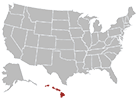
Becoming a Mental Health Technician (MHT) in Hawaii is a rewarding way to make a real difference in the lives of people facing mental health challenges.
Mental Health Technicians provide essential support to patients, helping healthcare teams monitor behaviors, implement treatment plans, and ensure safety in a variety of care settings.
Hawaii’s growing focus on mental health services has created increasing demand for qualified MHTs.
For those interested in a hands-on healthcare role that combines compassion, observation skills, and patient care, this career can be a perfect fit.
Working in Hawaii also offers the unique experience of supporting diverse communities across islands, from urban Honolulu to rural neighbor islands.
Go to Section:
- What Does a Mental Health Technician Do?
- Education Requirements in Hawaii
- Top Schools Offering Mental Health Technician Programs in Hawaii
- #1 Windward Community College
- #2 University of Hawaii Maui College
- #3 Hawaii Community College
- #4 Hawaii Behavioral Health Training Institute (HBHTI)
- Certification Options in Hawaii
- Step-by-Step: How to Become a Mental Health Technician in Hawaii
- How Long Does It Take to Become a Mental Health Technician in Hawaii?
- Cost to Become a Mental Health Technician in Hawaii
- Job Outlook for Mental Health Technicians in Hawaii
- Salary for Mental Health Technicians in Hawaii
- Frequently Asked Questions
What Does a Mental Health Technician Do?
Mental Health Technicians play a crucial role in supporting patients with mental health conditions.
Daily responsibilities typically include:
- Providing direct patient care, such as assisting with daily activities and hygiene
- Monitoring patient behavior and reporting changes to the healthcare team
- Documenting care, observations, and incidents accurately
- Supporting treatment plans under the supervision of licensed professionals
MHTs work in a range of settings in Hawaii, including hospitals, psychiatric units, residential treatment centers, community mental health clinics, and substance abuse programs.
While similar roles exist, MHTs differ slightly from Behavioral Health Technicians or Psychiatric Technicians by focusing more on behavioral observation and crisis management rather than medical procedures.
Education Requirements in Hawaii
The minimum requirement to become a Mental Health Technician in Hawaii is a high school diploma or GED.
Many employers prefer candidates who have completed a certificate or associate degree program in behavioral health.
Relevant coursework may include:
- Psychology and human behavior
- Anatomy and physiology
- Patient care techniques
- Crisis intervention and communication skills
Top Schools Offering Mental Health Technician Programs in Hawaii
#1 Windward Community College

Windward Community College is a public community college located in Kāne‘ohe on the island of O‘ahu.
It is part of the University of Hawai‘i system and serves around 2,700 students.
The school offers vocational and academic certificates that can be completed quickly to prepare for entry-level roles in healthcare and human services.
Courses Offered
The Mental Health Technician Certificate of Competence is a 9-credit program.
Required courses include Survey of Psychology and Conflict Resolution & Mediation, each worth 3 credits.
Students then choose one 3-credit elective such as Psychology of Adjustment, Abnormal Psychology, or Developmental Psychology.
The certificate can typically be completed in one semester.
There is also a 6-week intensive hands-on program to develop practical MHT skills.
Program Cost
For the 2025 academic year, Hawaii residents pay about $131 per credit, while non-residents pay about $345 per credit.
For the 9-credit certificate, tuition totals approximately $1,179 for residents and $3,105 for non-residents.
Books and supplies can cost around $1,360, making the total budget for the certificate roughly $2,500 for residents.
Contact Information
- Address: 45-720 Keaahala Rd, Kaneohe, HI 96744, United States
- Phone: +1 808-235-7400
- Website: Visit School Website
#2 University of Hawaii Maui College

University of Hawai‘i Maui College is a public institution on the island of Maui offering associate degrees and short-term certificates.
Its Human Services program prepares students for work in community health, social services, and mental health support roles.
The associate degree requires 60 to 62 credits and is typically completed in two years of full-time study.
Courses Offered
The Associate in Science degree covers human services principles, counseling skills, case management, and community health.
Specialist certificate programs are 9 to 15 credits and cover areas such as substance use disorder, youth development, and family violence.
Most programs include practicum placements to provide hands-on experience.
Program Cost
Tuition is approximately $131 per credit for Hawaii residents and $345 per credit for non-residents.
Certificates of 9–15 credits cost roughly $1,179 to $1,965 for residents or $3,105 to $5,175 for non-residents.
The full associate degree of 60–62 credits costs about $7,860 to $8,122 for residents in tuition alone.
Additional student service fees may apply.
Contact Information
- Address: 310 W Kaahumanu Ave, Kahului, HI 96732, United States
- Phone: +1 808-984-3500
- Website: Visit School Website
#3 Hawaii Community College

Hawai‘i Community College has campuses on the Big Island and offers workforce-oriented programs.
Its Human Services Certificate of Competence equips students with foundational skills for work in mental health support, residential care, and social services.
Courses Offered
The Human Services Certificate requires about 21 credits.
Courses include Introduction to Human Services, Seminar and Fieldwork I and II, and electives in psychology or sociology.
Coursework emphasizes communication, ethical client interaction, and fieldwork experience.
Students must earn a grade of C or higher in each course to complete the certificate.
Program Cost
Tuition for 21 credits is roughly $2,751 for Hawaii residents and $7,245 for non-residents.
Books, supplies, and student fees are extra, but grants and state financial assistance are sometimes available.
Contact Information
- Address: 1175 Manono St, Hilo, HI 96720, United States
- Phone: +1 808-934-2500
- Website: Visit School Website
#4 Hawaii Behavioral Health Training Institute (HBHTI)

The Hawaii Behavioral Health Training Institute is a federally funded workforce initiative that supports behavioral health training.
It partners with the University of Hawai‘i community colleges to help students complete certificates in human services, substance use disorder counseling, and related fields.
Courses Offered
HBHTI supports enrollment in partner school programs and provides professional development in cultural humility, telehealth, and team-based care.
Participants gain hands-on experience and may complete 1,600 or more hours of employment-based training.
Program Cost
HBHTI offers scholarships and stipends to eligible students.
Participants may receive up to $3,000 toward coursework and a $5,000 training stipend.
Funding depends on grant availability and eligibility, reducing or eliminating tuition costs for participating students.
Contact Information
- Address: 1330 Ala Moana Boulevard, Suite 1, Honolulu, HI 96814
- Phone: (808) 585-1424
- Website: Visit School Website
Schools Summary Table
| Rank | School | |
|---|---|---|
| | #1 | Windward Community College |
| | #2 | University of Hawaii Maui College |
| | #3 | Hawaii Community College |
| | #4 | Hawaii Behavioral Health Training Institute (HBHTI) |
Certification Options in Hawaii
While Hawaii does not require MHT certification by law, many employers prefer candidates with nationally recognized credentials.
Popular certifications include:
| Certification | Provider | Exam Required | Validity |
|---|---|---|---|
| CMHT | National Association of Mental Health Technicians | Yes | 2 years |
| Behavioral Health Technician (BHT) | National Healthcareer Association | Yes | 2 years |
| State MHT License | Hawaii Board of Nursing / Health Professions | Varies | Varies |
Certification can improve employment prospects, provide credibility, and sometimes lead to higher pay.
Renewal requirements vary by credential.
Step-by-Step: How to Become a Mental Health Technician in Hawaii
- Meet Eligibility Requirements – Most programs and employers require candidates to be at least 18 years old and pass a background check.
- Complete Required Education/Training – Choose a certificate or associate degree program in behavioral health.
- Gain Supervised Clinical Experience – Many programs include hands-on training in hospitals or mental health facilities.
- Pass Certification Exams – If pursuing national or state certification, complete the required exam.
- Apply for State Licensure/Registration – Only necessary if your chosen role or employer requires it.
- Apply for Jobs in Hawaii – Positions are available in hospitals, community clinics, residential programs, and outpatient facilities.
How Long Does It Take to Become a Mental Health Technician in Hawaii?
- Fast-track Certificate Path: About 6–12 months, including clinical hours
- Associate Degree Path: Around 1–2 years with classroom and hands-on experience
- On-the-Job Training: Entry-level positions may take 3–6 months to become fully proficient
Cost to Become a Mental Health Technician in Hawaii
Costs vary depending on the program and institution:
- Certificate programs typically range from low-cost community college options to private training institutes
- Associate degree programs may be more expensive due to additional coursework and credit hours
- Additional expenses may include textbooks, uniforms, and certification exam fees
Job Outlook for Mental Health Technicians in Hawaii
The demand for Mental Health Technicians in Hawaii is growing, particularly in urban areas like Honolulu, as well as in community mental health programs across the islands.
Hospitals, residential care facilities, and outpatient programs all need trained MHTs.
Long-term career stability is strong as mental health services continue to expand.
Salary for Mental Health Technicians in Hawaii
Pay varies based on experience, work setting, and location.
Entry-level positions offer a starting wage, while experienced MHTs with certifications can expect higher compensation.
Factors influencing salary include the employer type, geographic location, and whether you hold national or state certifications.
Average Salary of Mental Health Technicians in Hawaii
Annual Salary Range:| Item | Percent |
|---|---|
$38K | |
$52K | |
$58K |
Hawaii Salary by Metro Area
| Metro Area | Employed | Avg. Annual | Avg. Hourly | Top 10% | Bottom 10% |
|---|---|---|---|---|---|
| Kahului-Wailuku, HI | 140 | $53,900 | $25.91 | $65,190 | $38,610 |
| Urban Honolulu, HI | 1,300 | $50,750 | $24.40 | $58,400 | $38,130 |
* Employment conditions may vary by location.
Frequently Asked Questions
Do You Need Certification to Be a Mental Health Technician in Hawaii?
Depends on the employer; certification is often preferred but not always required.
Can You Become a Mental Health Technician Without a College Degree?
Yes, many entry-level positions accept a high school diploma plus on-the-job training or a certificate program.
Is This a Good Entry-Level Healthcare Career?
Yes, it’s a great pathway into mental health, nursing, and other healthcare careers.
What Is So Special About This Role in Hawaii?
MHTs in Hawaii focus on behavioral monitoring, mental health care, and crisis intervention, making a tangible impact on local communities.
How Long Does It Take to Become a Mental Health Technician in Hawaii?
Certificate path: 6–12 months; Associate degree path: ~2 years; on-the-job training: 3–6 months.