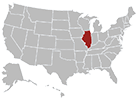
Mental Health Technicians play a critical role in supporting patients who are dealing with mental illness, emotional challenges, and behavioral disorders.
In Illinois, the demand for trained mental health support professionals continues to grow as hospitals, treatment centers, and community programs expand services.
If you are compassionate, patient, and interested in healthcare without committing to years of medical school, becoming a Mental Health Technician in Illinois can be a rewarding and stable career path with real impact on local communities.
Go to Section:
- What Is a Mental Health Technician?
- Why This Career Matters in Illinois
- What Does a Mental Health Technician Do?
- MHT vs Behavioral Health Technician vs Psychiatric Technician
- Education Requirements in Illinois
- Top Schools Offering Mental Health Technician Programs in Illinois
- #1 Kankakee Community College
- #2 Joliet Junior College
- #3 Harper College
- #4 Illinois Central College
- #5 College of DuPage
- #6 Elgin Community College
- #7 Moraine Valley Community College
- Certification Options in Illinois
- Popular Mental Health Technician Certifications
- Step by Step: How to Become a Mental Health Technician in Illinois
- How Long Does It Take to Become a Mental Health Technician in Illinois?
- Cost to Become a Mental Health Technician in Illinois
- Job Outlook for Mental Health Technicians in Illinois
- Salary for Mental Health Technicians in Illinois
- Frequently Asked Questions
What Is a Mental Health Technician?
A Mental Health Technician, often called an MHT, works under the supervision of nurses, psychologists, psychiatrists, and social workers to provide direct care to patients receiving mental health treatment.
In Illinois, Mental Health Technicians are essential across inpatient and outpatient settings, helping maintain safety, monitor patient well-being, and support treatment plans.
Why This Career Matters in Illinois
Illinois has a large and diverse population with increasing needs for mental health services, particularly in urban areas and underserved rural regions.
Mental Health Technicians help bridge the gap between patients and licensed clinicians, making care more accessible and effective.
What Does a Mental Health Technician Do?
Daily Responsibilities
Mental Health Technicians handle a wide range of duties, including:
- Observing and monitoring patient behavior and emotional state
- Assisting patients with daily activities such as hygiene and meals
- Documenting patient progress and incidents
- Helping to de-escalate behavioral crises
- Supporting therapy sessions and treatment plans
- Ensuring a safe and structured environment
Common Work Settings in Illinois
Mental Health Technicians in Illinois often work in:
- Psychiatric hospitals
- General hospitals with behavioral health units
- Residential treatment centers
- Substance abuse recovery facilities
- Community mental health clinics
- Correctional facilities
MHT vs Behavioral Health Technician vs Psychiatric Technician
While these titles are sometimes used interchangeably, there are subtle differences:
- A Mental Health Technician focuses on psychiatric and emotional care
- A Behavioral Health Technician often works with behavior modification and therapy support
- A psychiatric technician may have additional medical responsibilities and training
- Job duties often overlap, especially in Illinois healthcare facilities.
Education Requirements in Illinois
Minimum Education
To become a Mental Health Technician in Illinois, you typically need:
- A high school diploma or GED
This meets the minimum requirement for many entry-level positions.
Optional Education Paths
While not always required, many employers prefer candidates with:
- A certificate in mental or behavioral health
- An associate degree in psychology, human services, or behavioral health
Relevant Coursework
Helpful classes include:
- Psychology
- Human behavior
- Anatomy and physiology
- Patient care techniques
- Crisis intervention
- Ethics in healthcare
Top Schools Offering Mental Health Technician Programs in Illinois
#1 Kankakee Community College

Kankakee Community College is a public community college that offers a dedicated Mental Health Technician certificate designed specifically for entry-level mental health support roles.
The program is career-focused and built for students who want to work in psychiatric hospitals, residential treatment centers, and community mental health settings.
Class sizes are manageable, and the program emphasizes real-world readiness rather than theory-only learning.
Courses Offered
The Mental Health Technician certificate requires 19 total credit hours.
Core courses include Introduction to Psychology, Abnormal Psychology, Learning and Conditioning, Professional Standards in Clinical Care, and a diversity-focused course related to equity and inclusion.
Students also choose one elective, such as Introduction to Social Work or Lifespan Development.
Coursework is designed to build observation skills, communication techniques, and ethical decision-making.
Program Cost
The total estimated program cost is approximately 3,600 dollars.
This includes tuition, standard fees, books, and required supplies.
The program typically takes about 9 to 10 months to complete when taken full-time.
Financial aid and workforce grants may be available for eligible students.
Contact Information
- Address: 100 College Drive, Kankakee, IL 60901, United States
- Phone: +1 815-802-8100
- Website: Visit School Website
#2 Joliet Junior College

Joliet Junior College is one of the oldest community colleges in the country and offers workforce-focused behavioral health training through continuing education and human services pathways.
These programs are well-suited for students looking to enter mental health support roles without committing to a full degree program right away.
Courses Offered
Behavioral health-related training focuses on patient observation, therapeutic communication, crisis response, documentation, and professional boundaries.
Programs are often structured for adult learners and emphasize job-ready skills.
Course access typically spans 12 months, allowing students to progress at a steady pace.
Program Cost
Behavioral health training programs cost about 3,399 dollars for full access.
This price covers instructional materials and coursework for the full training period.
Additional costs may include background checks or certification exam fees, depending on employer requirements.
Contact Information
- Address: 1215 Houbolt Rd, Joliet, IL 60431, United States
- Phone: +1 815-729-9020
- Website: Visit School Website
#3 Harper College

Harper College is a large suburban community college with a strong health sciences division.
It offers a Psychiatric Technician certificate option alongside human services coursework.
Programs are selective and structured to meet national psychiatric technician competency standards.
Courses Offered
Students complete coursework in psychology, nursing assistant fundamentals, mental health concepts, and patient care techniques.
The program includes preparation for psychiatric technician certification exams and requires completion of clinical experience after coursework.
Total credit requirements vary but typically fall between 20 and 30 credit hours, depending on the student’s background.
Program Cost
In district tuition is approximately 141 dollars per credit hour.
A 24-credit program would cost about 3,384 dollars in tuition alone.
Books, uniforms, and testing fees can add several hundred dollars more.
Program length generally ranges from 9 months to 1 year.
Contact Information
- Address: 1200 Algonquin Rd, Palatine, IL 60067, United States
- Phone: +1 847-925-6000
- Website: Visit School Website
#4 Illinois Central College

Illinois Central College offers Human Services programs that align well with the career goals of Mental Health Technicians.
These programs prepare students to support individuals with mental illness, substance use disorders, and behavioral challenges in community and clinical settings.
Courses Offered
Human Services certificate and degree programs include coursework in Introduction to Human Services, Abnormal Psychology, Counseling Techniques, Ethics, and Case Management.
Certificate programs typically require around 30 credit hours, while associate degree programs require about 60 credit hours.
Program Cost
In district tuition averages around 150 dollars per credit hour.
A 30-credit certificate would cost approximately 4,500 dollars in tuition.
Associate degree programs usually cost about 9,000 dollars in tuition over two years, not including books and supplies.
Contact Information
- Address: 1 College Dr, East Peoria, IL 61635, United States
- Phone: +1 309-694-5422
- Website: Visit School Website
#5 College of DuPage

College of DuPage is one of the largest community colleges in Illinois and offers Human Services and Behavioral Health pathways that support careers as mental health technicians.
Programs emphasize practical skills and community-based experience.
Courses Offered
Students take courses such as Introduction to Human Services, Psychology of Adjustment, Crisis Intervention, Substance Abuse Counseling, and Group Dynamics.
Certificate programs generally require between 30 and 36 credit hours.
Associate degree programs require 60 credit hours and include general education courses.
Program Cost
In district tuition is approximately 136 dollars per credit hour.
A 32-credit certificate program costs around 4,350 dollars in tuition.
An associate degree typically totals about 8,160 dollars in tuition over two years.
Books and practicum-related expenses are additional.
Contact Information
- Address: 425 Fawell Blvd., Glen Ellyn, IL 6013
- Phone: (630) 942-2800
- Website: Visit School Website
#6 Elgin Community College
Elgin Community College offers Human Services programs designed to prepare students for direct support roles in mental health and social service agencies.
The college has strong ties to local community organizations for experiential learning.
Courses Offered
Coursework includes Human Services Foundations, Abnormal Psychology, Counseling Skills, Ethics in Human Services, and Internship or Practicum experience.
Certificate programs usually require about 33 credit hours.
Associate degree programs require approximately 60 credit hours.
Program Cost
In district tuition is about 145 dollars per credit hour.
A 33-credit certificate program costs roughly 4,785 dollars in tuition.
Associate degree programs typically total around 8,700 dollars in tuition.
Additional costs include books and background checks.
Contact Information
- Address: 1700 Spartan Dr, Elgin, IL 60123, United States
- Phone: +1 847-697-1000
- Website: Visit School Website
#7 Moraine Valley Community College

Moraine Valley Community College provides Human Services education aimed at preparing students for entry-level mental health and behavioral support roles.
Programs are structured to balance classroom learning with applied experience.
Courses Offered
Students complete coursework in Human Services Introduction, Psychology, Crisis Intervention, Case Documentation, and Field Experience.
Certificate programs generally require around 30 credit hours.
Associate degree programs require about 60 credit hours.
Program Cost
In-district tuition averages 128 dollars per credit hour.
A 30-credit certificate costs about 3,840 dollars in tuition.
Associate degree tuition typically totals around 7,680 dollars over two years.
Books and field placement costs may apply.
Contact Information
- Address: 9000 College Pkwy, Palos Hills, IL 60465, United States
- Phone: +1 708-974-4300
- Website: Visit School Website
Schools Summary Table
| Rank | School | |
|---|---|---|
| | #1 | Kankakee Community College |
| | #2 | Joliet Junior College |
| | #3 | Harper College |
| | #4 | Illinois Central College |
| | #5 | College of DuPage |
| | #6 | Elgin Community College |
| | #7 | Moraine Valley Community College |
Certification Options in Illinois
Illinois does not require a state-specific Mental Health Technician license, but certification can significantly improve job prospects.
Nationally Recognized Certifications
Popular options include:
- Certified Mental Health Technician (CMHT)
- Behavioral Health Technician (BHT)
State Requirements
Illinois does not mandate certification for MHT roles, but employers may require or prefer it.
Some facilities provide on-the-job training instead.
Exams and Renewal
Certifications typically involve:
- Passing a standardized exam
- Renewing every two years
- Completing continuing education credits
Popular Mental Health Technician Certifications
| Certification | Provider | Exam Required | Validity |
|---|---|---|---|
| CMHT | National Association of Mental Health Technicians | Yes | 2 years |
| Behavioral Health Technician (BHT) | NHA | Yes | 2 years |
| State MHT License | Illinois does not require | Varies | Varies |
Step by Step: How to Become a Mental Health Technician in Illinois
- Meet eligibility requirements, such as minimum age and background check
- Earn a high school diploma or GED
- Complete optional education or certificate training
- Gain supervised clinical or on-the-job experience
- Pass a certification exam if required by the employer
- Apply for Mental Health Technician positions across Illinois
How Long Does It Take to Become a Mental Health Technician in Illinois?
- Fast track option: Around 6 months through certificate programs and clinical training
- Typical path: 1 to 2 years with an associate degree and hands-on experience
The timeline depends on education choices and employer requirements.
Cost to Become a Mental Health Technician in Illinois
Costs vary based on the education path you choose:
- Certificate programs usually range from $2,000 to $6,000
- Associate degree programs typically cost $6,000 to $14,000 total at community colleges
- Certification exams often cost between $100 and $300
- Background checks, uniforms, and supplies may add a few hundred dollars
Many Illinois employers offer tuition assistance or paid training.
Job Outlook for Mental Health Technicians in Illinois
Mental Health Technicians are in demand across Illinois due to:
- Expansion of mental health services
- Increased focus on substance abuse treatment
- Growing need for inpatient and residential care
Demand is strongest in larger metro areas like Chicago and in regions with limited access to licensed providers.
Long-term job stability is strong, especially for those with certifications or experience.
Salary for Mental Health Technicians in Illinois
Mental Health Technician pay in Illinois varies based on several factors:
- Entry-level roles offer lower pay than experienced positions
- Hospitals and inpatient facilities often pay more than outpatient clinics
- Certifications can increase earning potential
- Location matters, with urban areas typically offering higher wages
- Actual salary figures vary by employer and region.
Average Salary of Mental Health Technicians in Illinois
Annual Salary Range:| Item | Percent |
|---|---|
$38K | |
$48K | |
$60K |
Illinois Salary by Metro Area
| Metro Area | Employed | Avg. Annual | Avg. Hourly | Top 10% | Bottom 10% |
|---|---|---|---|---|---|
| Champaign-Urbana, IL | 90 | $40,650 | $19.54 | $46,890 | $35,210 |
| Chicago-Naperville-Elgin, IL-IN | 4,870 | $47,420 | $22.80 | $56,980 | $38,240 |
| Peoria, IL | 30 | $41,340 | $19.88 | $46,920 | $35,050 |
| Springfield, IL | 140 | $47,410 | $22.79 | $58,890 | $35,210 |
* Employment conditions may vary by location.
Frequently Asked Questions
Do I need a license to become a Mental Health Technician in Illinois?
Illinois does not require a state license for Mental Health Technicians.
Many employers focus on education, training, and background checks instead.
Can I become a Mental Health Technician with no experience?
Yes.
Many facilities in Illinois offer entry-level positions with on-the-job training, especially for candidates with a high school diploma and strong interpersonal skills.
Are Mental Health Technicians exposed to stressful situations?
The role can be emotionally demanding, but training in crisis management and teamwork helps prepare technicians to handle challenging situations safely.
Is this a good career for someone planning to become a nurse or therapist?
Absolutely.
Working as a Mental Health Technician provides hands-on experience that is valuable for future careers in nursing, psychology, counseling, or social work.
Can Mental Health Technicians advance their careers?
Yes.
Many advance into roles such as psychiatric technician, case manager, nursing, or licensed mental health professions with additional education.