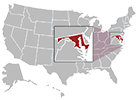
Mental Health Technicians, often called MHTs, are frontline healthcare professionals who support individuals experiencing mental illness, emotional disorders, and behavioral challenges.
They work under the supervision of nurses, psychiatrists, and licensed therapists to provide direct patient care and ensure safety in clinical settings.
In Maryland, the demand for behavioral health services continues to grow due to increased awareness of mental health needs, expanded insurance coverage, and community-based treatment initiatives.
From Baltimore’s hospital systems to rural community clinics on the Eastern Shore, mental health support roles are essential to the state’s healthcare infrastructure.
If you are compassionate, resilient, and interested in making a meaningful difference in people’s lives, becoming a Mental Health Technician in Maryland can be a rewarding and stable career path.
Go to Section:
- What Does a Mental Health Technician Do?
- MHT vs Behavioral Health Technician vs Psychiatric Technician
- Education Requirements in Maryland
- Top Schools Offering Mental Health-Related Programs in Maryland
- #1 Community College of Baltimore County
- #2 Montgomery College
- #3 Prince George's Community College
- #4 Anne Arundel Community College
- Certification Options in Maryland
- Step-by-Step: How to Become a Mental Health Technician in Maryland
- How Long Does It Take to Become a Mental Health Technician in Maryland?
- Cost to Become a Mental Health Technician in Maryland
- Job Outlook for Mental Health Technicians in Maryland
- Salary for Mental Health Technicians in Maryland
- Frequently Asked Questions
What Does a Mental Health Technician Do?
Mental Health Technicians provide hands-on care and daily support to patients in psychiatric and behavioral health settings.
Daily Responsibilities
Typical duties include:
- Monitoring patient behavior and emotional status
- Assisting with daily living activities such as hygiene and meals
- Documenting patient progress and incidents
- Supporting therapeutic activities and group sessions
- Ensuring patient safety and responding to crises
- Communicating observations to nurses and clinicians
MHTs play a crucial role in maintaining a structured, safe environment for patients.
Common Work Settings in Maryland
Mental Health Technicians work in a variety of facilities across Maryland, including:
- Psychiatric hospitals such as Sheppard Pratt
- Major hospital systems like the University of Maryland Medical Center
- State facilities such as Spring Grove Hospital Center
- Residential treatment centers
- Substance abuse recovery programs
- Community mental health clinics
Opportunities are especially strong in Baltimore, Annapolis, Columbia, and surrounding metropolitan areas.
MHT vs Behavioral Health Technician vs Psychiatric Technician
Although these titles are sometimes used interchangeably, there can be differences:
- Mental Health Technician (MHT): Focuses on patient supervision, documentation, and therapeutic support in psychiatric settings.
- Behavioral Health Technician (BHT): Often works with patients dealing with addiction or developmental disorders; may provide behavior intervention support.
- Psychiatric Technician: In some states, this role requires formal licensure and more clinical responsibilities. Maryland does not license psychiatric technicians separately, so requirements depend on the employer.
Education Requirements in Maryland
Minimum Education
Most Maryland employers require:
- A high school diploma or GED
- Basic life support or CPR certification
- Passing a background check
Optional Education Pathways
While not always mandatory, additional education can improve job prospects:
- Certificate programs in behavioral health
- Associate degree in psychology, human services, or mental health technology
- Relevant coursework may include:
- Introduction to psychology
- Human development
- Crisis intervention
- Anatomy and physiology
- Patient care techniques
#1 Community College of Baltimore County

The Community College of Baltimore County, often called CCBC, is one of the largest community colleges in Maryland.
It serves more than 50,000 students each year across multiple campuses, including Catonsville, Essex, and Dundalk.
CCBC is known for strong workforce training programs and affordable tuition for Maryland residents.
Class sizes are typically small, which gives students more direct interaction with instructors.
Many faculty members have real-world experience in healthcare and human services, which is valuable for students preparing to work in behavioral health settings.
Courses Offered
While CCBC does not offer a program titled Mental Health Technician specifically, it provides several related options that prepare students for this role.
The Human Services Associate of Applied Science degree requires approximately 60 credit hours and can be completed in about 2 years of full-time study.
Coursework includes Introduction to Human Services, Abnormal Psychology, Crisis Intervention, Group Dynamics, Ethics in Human Services, and Field Experience in Human Services.
The field experience component typically requires supervised hours in a community agency, which helps students build practical skills before graduation.
CCBC also offers certificates in areas such as Addiction Counseling and Human Services Generalist.
Certificate programs often range from 12 to 30 credit hours and can be completed in less than 1 year.
These programs focus on behavioral health fundamentals, case management skills, and communication techniques that are directly relevant to Mental Health Technician roles.
Program Cost
For in-county Maryland residents, tuition is typically a little over 120 dollars per credit hour.
In-state residents who live outside Baltimore County pay a higher per-credit rate, and out-of-state students pay significantly more.
For a 60-credit associate degree, tuition alone for in-county students may total roughly 7,000 to 8,000 dollars, not including fees, textbooks, uniforms, background checks, and health requirements.
Books and supplies can add 1,000 to 1,500 dollars over the length of the program.
Certificate programs with 12 to 30 credits may cost between 1,500 and 4,000 dollars in tuition for in-county students.
Financial aid and payment plans are available for qualifying students.
Contact Information
- Address: 800 South Rolling Road, Baltimore, MD 21228
- Phone: 443-840-2222
- Website: Visit School Website
#2 Montgomery College
Montgomery College serves more than 45,000 students annually across campuses in Rockville, Takoma Park, Silver Spring, and Germantown.
It is widely recognized for its strong health sciences and human services programs.
The college maintains partnerships with hospitals, clinics, and community organizations throughout Montgomery County, which creates valuable internship and employment pathways for students interested in mental health careers.
The college emphasizes hands-on learning and community engagement.
Many students pursuing behavioral health careers choose Montgomery College because of its transfer agreements with four-year universities and its career-focused associate degree options.
Courses Offered
Montgomery College offers an Associate of Applied Science in Human Services that requires about 60 credit hours and typically takes 2 years of full-time study to complete.
The curriculum includes courses such as Introduction to Human Services, Counseling Techniques, Human Growth and Development, Abnormal Psychology, Substance Abuse Counseling, and Crisis Intervention.
Students also complete a supervised practicum or internship, which often involves 100 to 200 hours of field experience in a community agency or behavioral health setting.
This practical training is especially helpful for students planning to work as Mental Health Technicians immediately after graduation.
The college also offers certificate programs in areas such as Addictions Counseling and Family Services.
These certificates generally require between 18 and 30 credit hours and may be completed in about 9 to 12 months, depending on course load.
Program Cost
In the county, tuition is generally about 130 to 140 dollars per credit hour.
In-state residents who live outside Montgomery County pay more per credit, and out-of-state tuition is higher still.
A 60-credit associate degree for an in-county student may total approximately 8,000 to 9,000 dollars in tuition.
Additional mandatory fees, books, and supplies can add 1,500 to 2,000 dollars over the course of the program.
A 30-credit certificate may cost between 4,000 and 5,000 dollars in tuition for in-county residents.
Students should also budget for background checks, immunizations, and CPR certification if required for clinical placements.
Contact Information
- Address: 7600 Takoma Ave #4141, Takoma Park, MD 20912, United States
- Phone: +1 240-567-5000
- Website: Visit School Website
#3 Prince George's Community College

Prince George’s Community College, often referred to as PGCC, serves more than 40,000 students each year in Largo, Maryland.
The college is known for workforce development programs that prepare students for direct entry into healthcare and community service roles.
PGCC has strong connections to local social service agencies and healthcare providers, which is beneficial for students seeking internships or employment in mental health settings.
The campus offers modern facilities, advising services, tutoring, and career counseling to support students from enrollment through job placement.
Courses Offered
PGCC offers an Associate of Applied Science in Human Services that requires around 60 credit hours.
Full-time students typically complete the program in 2 years.
Coursework includes Introduction to Human Services, Interviewing Techniques, Abnormal Psychology, Crisis Intervention, Case Management, and Ethics in Human Services.
A key feature of the program is the supervised internship component.
Students usually complete structured fieldwork hours in a human services or behavioral health setting, gaining real-world experience that is directly applicable to Mental Health Technician positions.
Certificate options are also available in specialized areas such as Addictions Counseling.
These programs generally require 18 to 30 credit hours and can often be completed within 1 year.
Program Cost
For Prince George’s County residents, tuition is typically just over 120 dollars per credit hour.
In-state residents outside the county and out-of-state students pay higher rates.
For a 60-credit associate degree, tuition for county residents may total around 7,000 to 8,000 dollars.
Fees, textbooks, and other required materials can add an additional 1,000 to 2,000 dollars.
Certificate programs ranging from 18 to 30 credits may cost approximately 2,500 to 4,000 dollars in tuition for county residents.
Contact Information
- Address: 301 Largo Rd., Largo, MD 20774
- Phone: +1 301-546-7422
- Website: Visit School Website
#4 Anne Arundel Community College
Anne Arundel Community College, often called AACC, serves more than 50,000 students annually through credit and continuing education programs.
Located in Arnold, Maryland, AACC is well-regarded for healthcare and human services training.
The college focuses on preparing students for immediate employment as well as transfer opportunities to four-year institutions.
Students benefit from academic advising, career services, tutoring centers, and access to internship placements throughout Anne Arundel County and the surrounding areas.
Courses Offered
AACC offers an Associate of Applied Science in Human Services that requires approximately 60 credit hours and generally takes 2 years of full-time study to complete.
Core courses include Introduction to Human Services, Counseling Skills, Human Development, Abnormal Psychology, Crisis Intervention, and Multicultural Counseling.
The program includes a practicum or internship component that typically requires structured field hours in a community-based agency.
This experience allows students to apply classroom knowledge in real behavioral health settings.
Certificate programs in Human Services or related behavioral health fields are also available and usually require between 15 and 30 credit hours.
Many students complete certificates in less than 1 year, depending on course load.
Program Cost
In the county, tuition at AACC is generally around 120 dollars per credit hour.
In-state residents outside Anne Arundel County and out-of-state students pay higher per-credit rates.
For a 60-credit associate degree, tuition for in-county students may total approximately 7,000 to 8,000 dollars.
Books and supplies can add 1,000 to 1,500 dollars over two years.
Certificate programs of 15 to 30 credits may cost between 1,800 and 4,000 dollars in tuition for in-county residents.
Additional expenses may include background checks, drug screening, immunizations, and CPR certification if required for field placements.
Contact Information
- Address: 101 College Pkwy, Arnold, MD 21012, United States
- Phone: +1 410-777-2222
- Website: Visit School Website
Schools Summary Table
| Rank | School | |
|---|---|---|
| | #1 | Community College of Baltimore County |
| | #2 | Montgomery College |
| | #3 | Prince George's Community College |
| | #4 | Anne Arundel Community College |
Certification Options in Maryland
Maryland does not require a state-specific Mental Health Technician license in most cases.
However, national certifications can strengthen your resume.
Nationally Recognized Certifications
| Certification | Provider | Exam Required | Validity |
|---|---|---|---|
| CMHT | National Association of Mental Health Technicians | Yes | 2 years |
| Behavioral Health Technician (BHT) | National Healthcareer Association (NHA) | Yes | 2 years |
| State MHT License | Maryland Board of Nursing or state health authority | Yes/Varies | Varies |
Some employers may require certification, while others provide on-the-job training.
Exam and Renewal Requirements
National certifications typically require:
- Passing a proctored exam
- Completing continuing education units
- Renewing every two years
Always check employer requirements, as policies vary between hospitals and treatment centers.
Step-by-Step: How to Become a Mental Health Technician in Maryland
1. Meet Eligibility Requirements
- Be at least 18 years old
- Hold a high school diploma or GED
- Pass a criminal background check
- Complete CPR certification
2. Complete Education or Training
Enroll in a certificate or associate program in behavioral health or a related field.
Some employers offer paid training programs.
3. Gain Supervised Clinical Experience
Many programs include internships or clinical rotations.
Entry-level positions may provide supervised on-the-job experience.
4. Pass Certification Exams (If Applicable)
If pursuing CMHT or BHT credentials, prepare for and pass the required exam.
5. Apply for State Licensure or Registration (If Required)
Maryland does not universally require licensure for MHTs, but verify employer-specific regulations.
6. Apply for Jobs in Maryland
Search for openings in hospitals, psychiatric facilities, residential treatment centers, and community mental health programs throughout the state.
How Long Does It Take to Become a Mental Health Technician in Maryland?
Fast-Track Option: About 6 Months
- Complete a certificate program
- Finish required clinical hours
- Apply for entry-level positions
- Typical Path: 1 to 2 Years
- Earn an associate degree
- Gain supervised experience
- Obtain optional certification
The timeline depends on whether you pursue formal education or enter through employer-based training.
Cost to Become a Mental Health Technician in Maryland
Costs vary by education path:
- Community college certificate programs: Several thousand dollars in tuition and fees
- Associate degree programs: Higher total tuition, typically spread over two years
- Certification exam fees: Several hundred dollars
- CPR and background checks: Additional smaller fees
Financial aid, grants, and workforce development programs may help reduce out-of-pocket costs.
Job Outlook for Mental Health Technicians in Maryland
Maryland continues expanding mental health services in hospitals, residential programs, and community-based care.
Growth is strongest in:
- Urban hospital systems in Baltimore
- Substance abuse treatment centers statewide
- Youth and adolescent behavioral health programs
- Crisis stabilization units
With increasing public awareness of mental health needs and continued healthcare investment, demand for trained technicians remains steady and promising.
Salary for Mental Health Technicians in Maryland
Entry-level Mental Health Technicians typically earn lower starting wages while gaining experience.
Technicians with additional certifications, specialized training, or experience in high-acuity psychiatric units tend to earn more.
Salary levels are influenced by:
- Geographic location within Maryland
- Type of employer, such as hospital versus residential care
- Level of experience
- Certification status
- Shift differentials for nights or weekends
Urban areas and hospital settings often offer higher compensation compared to smaller community facilities.
Average Salary of Mental Health Technicians in Maryland
Annual Salary Range:| Item | Percent |
|---|---|
$34K | |
$39K | |
$52K |
Maryland Salary by Metro Area
| Metro Area | Employed | Avg. Annual | Avg. Hourly | Top 10% | Bottom 10% |
|---|---|---|---|---|---|
| Baltimore-Columbia-Towson, MD | 330 | $41,860 | $20.13 | $49,630 | $34,880 |
* Employment conditions may vary by location.
Frequently Asked Questions
Do I need a college degree to become a Mental Health Technician in Maryland?
No, many positions only require a high school diploma and employer-provided training.
However, completing a certificate or associate degree can improve job prospects and advancement opportunities.
Is this a good career path before becoming a nurse or therapist?
Absolutely.
Working as a Mental Health Technician provides hands-on clinical experience that is valuable for future careers in nursing, social work, psychology, or counseling.
What personal qualities make someone successful as an MHT?
Strong communication skills, emotional resilience, patience, attention to detail, and the ability to remain calm during crises are essential traits for success in this field.
Is certification mandatory in Maryland?
Certification is not universally required by the state, but some employers prefer or require national credentials such as CMHT or BHT.
Can I work while completing my education?
Yes.
Many students work part-time in healthcare settings while earning their certificate or associate degree.