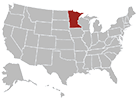
Mental Health Technicians, often called MHTs, play a vital role in supporting individuals who are living with mental health challenges.
They work directly with patients in hospitals, treatment centers, and community programs, providing hands-on care and emotional support.
In Minnesota, demand for mental health services continues to grow.
Expanded access to care, increased awareness of mental health conditions, and a strong network of healthcare systems have created consistent opportunities for trained professionals.
From major cities like Minneapolis and Saint Paul to rural communities across the state, Mental Health Technicians are essential members of care teams.
If you are compassionate, patient, and interested in working in healthcare without committing to many years of schooling, this career can offer meaningful impact and long-term stability.
Go to Section:
- What Does a Mental Health Technician Do?
- MHT vs Behavioral Health Technician vs Psychiatric Technician
- Education Requirements in Minnesota
- Top Schools Offering Mental Health Technician Programs in Minnesota
- #1 Century College
- #2 Minnesota North College
- #3 Minnesota State Community and Technical College (M State)
- #4 Rochester Community and Technical College
- #5 Anoka Technical College
- #6 Alexandria Technical and Community College
- #7 Riverland Community College
- Certification Options in Minnesota
- Popular Mental Health Technician Certifications
- Step by Step: How to Become a Mental Health Technician in Minnesota
- How Long Does It Take to Become a Mental Health Technician in Minnesota?
- Cost to Become a Mental Health Technician in Minnesota
- Job Outlook for Mental Health Technicians in Minnesota
- Salary for Mental Health Technicians in Minnesota
- Frequently Asked Questions
What Does a Mental Health Technician Do?
Daily Responsibilities
Mental Health Technicians support nurses, psychiatrists, social workers, and therapists.
Daily tasks often include:
- Monitoring patient behavior and safety
- Assisting with daily living activities such as meals and hygiene
- Leading or supporting therapeutic group activities
- Documenting patient observations and progress
- Responding to crises and helping de-escalate situations
- Transporting patients within facilities
- Accurate documentation and consistent observation are critical parts of the job, especially in hospital and residential settings.
Common Work Settings in Minnesota
MHTs in Minnesota commonly work in:
- Psychiatric hospitals
- Residential treatment centers
- Substance use treatment facilities
- Community mental health clinics
- Correctional facilities
- State-operated services programs
- Large healthcare systems such as Mayo Clinic and Allina Health employ behavioral health staff across multiple facilities.
MHT vs Behavioral Health Technician vs Psychiatric Technician
The titles can overlap, but there are differences:
- A Mental Health Technician focuses on patient monitoring and support in psychiatric settings.
- A Behavioral Health Technician may work in addiction treatment or applied behavior settings.
- A psychiatric technician is sometimes a licensed role in certain states. Minnesota does not have a separate state license specifically titled Psychiatric Technician.
Employers may use these titles interchangeably, but job duties are usually similar.
Education Requirements in Minnesota
Minimum Education
In Minnesota, the minimum requirement for many entry-level MHT positions is:
- High school diploma or GED
- Some employers prefer additional coursework or healthcare experience.
Optional Education Paths
Many candidates complete:
- A certificate in behavioral health or mental health technology
- An associate degree in human services, psychology, or behavioral science
- Associate degree programs typically require 60 to 64 credit hours and take about 2 years to complete.
Relevant Coursework
Programs often include:
- Introduction to psychology
- Abnormal psychology
- Human development
- Crisis intervention
- Anatomy and physiology
- Patient care fundamentals
- Ethics in behavioral health
- Clinical or practicum hours are often included, ranging from 100 to 300 supervised hours, depending on the program.
Top Schools Offering Mental Health Technician Programs in Minnesota
#1 Century College

Century College is a public community college serving over 11,000 students in the northeast Minneapolis‑Saint Paul area.
It offers flexible schedules with day, evening, weekend, and online classes.
Many students attend part‑time while working.
Courses Offered
The college offers a Mental and Behavioral Health Worker certificate that requires 17 credit hours and can be completed in about two semesters when taken full-time.
There is also a Mental Health Practitioner certificate requiring 30 credit hours, typically completed in four to five semesters with part‑time enrollment.
Courses include Introduction to Psychology, Crisis Intervention, Communication Skills, and supervised field experience totaling 100 to 150 practicum hours.
Program Cost
Tuition for Minnesota residents is approximately $195 per credit hour.
For a 17‑credit certificate, total tuition is about $3,315 before fees and books.
For a 30‑credit program, resident tuition is about $5,850. Books and supplies may be $800 to $1,200 per program.
Out‑of‑state tuition may be higher.
Contact Information
- Address: 3300 Century Ave N, White Bear Lake, MN 55110, United States
- Phone: +1 651-444-2000
- Website: Visit School Website
#2 Minnesota North College
Minnesota North College serves multiple campuses in northern Minnesota with more than 4,000 students.
It focuses on career preparation and supports students entering human services and mental health‑related fields.
Courses Offered
The Mental Health Practitioner certificate program requires 30 credit hours and is structured to be completed in two semesters of full‑time study.
Coursework covers Psychological Foundations, Helping Skills, and Behavioral Health Ethics and includes 120 supervised practicum hours in community settings.
Program Cost
Resident tuition is about $190 per credit hour.
For 30 credits, total tuition is $5,700, not including mandatory fees of approximately $300 to $500 per semester.
Books and materials are about $900 to $1,100.
Out‑of‑state tuition is somewhat higher.
Contact Information
- Address: 1501 US-71, International Falls, MN 56649, United States
- Phone: +1 218-293-6850
- Website: Visit School Website
#3 Minnesota State Community and Technical College (M State)

M State enrolls about 7,000 students across four campuses and offers technical certificates and associate degrees aligned with workforce needs.
The college is known for strong hands‑on programs.
Courses Offered
The Psychiatric/Mental Health Services Technician certificate program is usually 36 credit hours long and takes around one academic year to complete when attending full-time.
Courses include Behavioral Health Concepts, Patient Care Techniques, Psychiatric Observation, and Field Practicum with about 120 clinical hours.
Program Cost
Tuition for Minnesota residents is about $150 per credit hour, so total resident tuition for 36 credits is approximately $5,400.
Additional costs include books (about $900) and supplies ($200 to $400).
Out‑of‑state tuition is higher by approximately 50 to 75 dollars per credit.
Contact Information
- Address: 1900 28th Ave S, Moorhead, MN 56560, United States
- Phone: +1 877-450-3322
- Website: Visit School Website
#4 Rochester Community and Technical College
Rochester Community and Technical College has around 4,500 students and offers diplomas, certificates, and associate degrees.
The school maintains a student-to-faculty ratio of 21 to 1 for more personalized instruction.
Courses Offered
The Human Services Technician diploma is approximately 36 credit hours and includes Mental Health Support, Case Management, Counseling Skills, and Community Resource coursework.
Optional certificates in Behavioral Support require between 18 and 24 credits.
Field experience placements are typically 100 to 180 hours.
Program Cost
Resident tuition is about $190 per credit hour.
A 36‑credit diploma would cost around $6,840 before fees.
Certificate programs totaling 18 to 24 credits have resident tuition costs of $3,420 to $4,560.
Books and materials are often $800 to $1,200 per year.
Contact Information
- Address: 851 30th Ave SE, Rochester, MN 55904, United States
- Phone: +1 507-285-7557
- Website: Visit School Website
#5 Anoka Technical College

Anoka Technical College is a two‑year public technical school with a focus on career programs.
It has about 3,000 students and offers flexible scheduling with hybrid and online options.
Courses Offered
The Behavioral Health and Human Services associate degree is 60 credit hours and covers Human Development, Social Work Basics, Ethics, Case Management, and Applied Behavioral Support.
The program typically takes two academic years to complete and includes real‑world field experience of 120 to 160 hours.
Program Cost
Resident tuition is approximately $190 per credit hour.
For a 60‑credit degree, tuition totals about $11,400 before fees.
Standard fees of $300 to $600 per semester and books averaging $2,000 are additional.
Online course fees may slightly increase the total cost.
Contact Information
- Address: 1355 US-10, Anoka, MN 55303, United States
- Phone: +1 763-576-4700
- Website: Visit School Website
#6 Alexandria Technical and Community College

Alexandria Technical and Community College serves over 3,000 students with career‑focused programs.
It provides hands‑on learning, advisors to help plan coursework, and opportunities for practical clinical hours.
Courses Offered
The Behavioral Health and Human Services associate degree is about 64 credit hours.
Core coursework includes Abnormal Psychology, Counseling Techniques, Group Process, Behavioral Health Law and Ethics, and over 120 field practicum hours in local human services settings.
A shorter Human Services certificate may require 30 credits.
Program Cost
Resident tuition is around $185 per credit hour, so the 64‑credit program tuition is approximately $11,840.
Certificate programs at 30 credits cost around $5,550.
Estimated book costs are $1,800 to $2,200, and student fees run $250 to $500 per semester.
Contact Information
- Address: 1601 Jefferson St, Alexandria, MN 56308, United States
- Phone: +1 320-762-0221
- Website: Visit School Website
#7 Riverland Community College
Riverland Community College operates campuses in Albert Lea, Austin, and Owatonna and serves roughly 5,000 students.
Riverland focuses on accessible, affordable education including health sciences and human services pathways.
Courses Offered
The Health Sciences Broad Field Associate of Science is 60 to 64 credit hours and allows students to take human services or psychology electives that prepare them for mental health support work.
Coursework may include Introduction to Psychology, Interpersonal Communication, and Behavioral Health Basics, plus volunteer or internship hours of 80 to 120.
Program Cost
Resident tuition is commonly $190 per credit hour.
A full 60‑credit pathway costs about $11,400 in tuition.
Books and materials are typically $1,500 to $2,000, and mandatory campus fees average $300 per semester.
Contact Information
- Address: 1900 8th Ave NW, Austin, MN 55912, United States
- Phone: +1 507-433-0600
- Website: Visit School Website
Schools Summary Table
Certification Options in Minnesota
Minnesota does not require a specific state license for Mental Health Technicians.
However, voluntary certifications can improve job prospects.
National Certifications
- CMHT is offered by the National Association of Mental Health Technicians
- Behavioral Health Technician certification offered by the National Healthcareer Association
Certification exams typically require proof of education or experience and must be renewed every 2 years with continuing education.
Popular Mental Health Technician Certifications
| Certification | Provider | Exam Required | Validity |
|---|---|---|---|
| CMHT | National Association of Mental Health Technicians | Yes | 2 years |
| Behavioral Health Technician (BHT) | NHA | Yes | 2 years |
| State MHT License | Minnesota Department of Health | Varies | Varies |
Minnesota does not currently issue a specific MHT license, but regulations can change, so always verify with the state health department.
Step by Step: How to Become a Mental Health Technician in Minnesota
- Meet eligibility requirements
Be at least 18 years old and pass a background check. Many employers require CPR certification. - Complete the required education
Earn a high school diploma or complete a certificate or associate degree in a related field. - Gain supervised clinical experience
Complete practicum hours through your program or apply for entry-level roles that provide on-the-job training. - Pass certification exams if pursuing national credentials
Apply for and complete the CMHT or BHT exam. - Apply for state registration if required by the employer
While Minnesota does not mandate licensure for MHTs, certain facilities may have internal credentialing standards. - Apply for jobs in Minnesota
Search hospitals, treatment centers, and community mental health organizations across the state.
How Long Does It Take to Become a Mental Health Technician in Minnesota?
- Fast track path
You can complete a certificate program in about 6 months if enrolled full-time and begin working shortly after finishing the required clinical hours. - Typical path
An associate degree usually takes 1 to 2 years, depending on enrollment status and program structure.
Some employers hire high school graduates and provide several weeks of on-the-job training.
Cost to Become a Mental Health Technician in Minnesota
Costs vary based on the educational route:
- High school diploma only
Minimal direct cost if already completed. - Certificate program
Approximately 6,000 to 8,000 dollars in tuition for 30 to 36 credits at public community colleges. - Associate degree
Typically, 12,000 to 15,000 dollars in tuition for 60 credits at in-state rates. Books and fees may add 1,000 to 2,000 dollars. - Certification exams
Exam fees often range from 100 to 200 dollars, plus renewal fees every 2 years.
Financial aid, grants, and employer tuition reimbursement programs may reduce out-of-pocket expenses.
Job Outlook for Mental Health Technicians in Minnesota
Minnesota continues to invest in behavioral health infrastructure.
Hospitals, residential treatment centers, and community mental health agencies report steady hiring needs.
Urban areas such as Minneapolis and Saint Paul often show higher concentrations of openings due to larger healthcare systems.
Rural regions also experience demand, particularly where mental health providers are limited.
Long-term stability is strong because mental health services are considered essential healthcare.
As awareness and access continue to expand, trained technicians remain a critical part of the workforce.
Salary for Mental Health Technicians in Minnesota
Entry-level Mental Health Technicians typically earn less than experienced professionals who have additional certifications or several years of experience.
Pay can vary based on:
- Geographic location within Minnesota
- Type of employer, such as a hospital versus a residential facility
- Shift differentials for nights or weekends
- Level of education and certification
Technicians working in larger healthcare systems or specialized treatment facilities may earn more than those in smaller community programs.
Average Salary of Mental Health Technicians in Minnesota
Annual Salary Range:| Item | Percent |
|---|---|
$34K | |
$48K | |
$60K |
Minnesota Salary by Metro Area
| Metro Area | Employed | Avg. Annual | Avg. Hourly | Top 10% | Bottom 10% |
|---|---|---|---|---|---|
| Duluth, MN-WI | 150 | $47,400 | $22.79 | $61,540 | $35,020 |
| Minneapolis-St. Paul-Bloomington, MN-WI | 1,290 | $47,390 | $22.78 | $59,300 | $34,650 |
| St. Cloud, MN | 140 | $43,720 | $21.02 | $56,380 | $34,110 |
* Employment conditions may vary by location.
Frequently Asked Questions
Can I become a Mental Health Technician in Minnesota without a college degree?
Yes.
Many employers hire candidates with a high school diploma and provide on-the-job training.
However, completing a certificate or associate degree can make you more competitive.
Is certification required to work as an MHT in Minnesota?
No, Minnesota does not require a specific state certification for Mental Health Technicians.
Voluntary national certifications can enhance your resume.
Are there opportunities for advancement?
Yes.
Many MHTs go on to become licensed practical nurses, registered nurses, social workers, or counselors after gaining experience and additional education.
What personal qualities are important for success in this career?
Strong communication skills, emotional resilience, patience, and the ability to remain calm during crises are essential traits for effective Mental Health Technicians.
Do I need clinical experience before applying for jobs?
Not always.
Some employers offer paid training.
However, completing a program with supervised practicum hours can improve your chances of being hired.