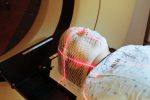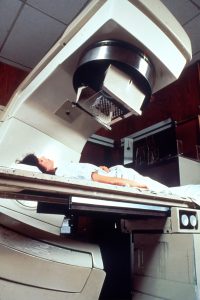
Cancer treatment programs are invaluable for helping patients overcome and defeat their cancers.
A Radiation Therapist specializes in using high-energy radiation beams to target and irradiate certain forms of cancer.
A career as a radiation therapist offers a rewarding and profitable future for many.
Is this a medical career you will be able to pursue?
Let’s see what it takes to become a radiation therapist.
The Best Online Radiation Therapist Training Programs
#1 Washburn University Radiation Therapy Program

About the School
Washburn University in Topeka, Kansas, offers a welcoming environment with a strong focus on allied health professions.
The Radiation Therapy certificate program is accredited by the Joint Review Committee on Education in Radiologic Technology, allowing students across the country to complete most coursework online while completing clinical training at a local cancer center.
The program is ideal for students who already hold a radiography credential and want to specialize in radiation therapy.
Small class sizes and attentive faculty provide personal guidance throughout the program.
Courses Offered
The certificate consists of 40 credit hours and spans about 13 months.
Online courses include Foundations of Radiation Therapy, Radiation Physics, Therapeutic Radiobiology, Imaging in Radiation Therapy, and Treatment Procedures.
Live virtual sessions are scheduled on Mondays, while clinical rotations take place Tuesday through Friday at approved local sites.
Clinical experience runs across fall, spring, and summer sessions, giving students hands-on experience while learning.
Program Cost
Tuition is charged per credit hour, totaling approximately 17,000 to 19,000 dollars for 40 credits, depending on residency.
Additional costs include books, supplies, clinical tracking system fees, immunizations, and travel to clinical sites.
Financial aid and scholarships are available to help manage expenses.
Contact Information
- Address: 1700 SW College Ave, Topeka, KS 66621
- Phone: (785) 670-1010
- Website: Visit School Website
#2 Cambridge College of Healthcare and Technology Radiation Therapy Program
About the School
Cambridge College of Healthcare and Technology is a private institution with campuses in multiple states.
The Radiation Therapy program offers a hybrid format that blends online coursework with in-person campus sessions and clinical experiences.
The program is designed for students ready to start a healthcare career while managing other life responsibilities.
Faculty bring real-world experience and support students every step of the way.
Courses Offered
Students pursue an Associate of Science degree over approximately 90 weeks.
The curriculum combines general education classes like English, speech, psychology, algebra, and anatomy and physiology with specialized radiation therapy coursework.
Core classes include Radiation Physics, Radiation Biology, Imaging Principles, Treatment Planning, Patient Care, and professional practice.
Hands-on clinical externships are integrated throughout the program.
Program Cost
Tuition and fees vary by campus, with tuition for the radiation therapy track generally totaling around 12,000 to 13,000 dollars per academic year.
Students living independently should budget for living expenses, transportation, and books, which can bring total yearly costs into the low-20,000-dollar range.
Financial aid and scholarships are available for eligible students.
Contact Information
- Address: 555 Douglas Ave #1100, Altamonte Springs, FL 32714, United States
- Phone: +1 407-265-8383
- Website: Visit School Website
#3 University of Oklahoma Health Sciences Center Bachelor of Science in Medical Imaging and Radiation Sciences

About the School
The University of Oklahoma Health Sciences Center offers a Bachelor of Science program designed for professionals already credentialed in fields like radiography, nuclear medicine, or radiation therapy.
This fully online program provides working adults the flexibility to continue their careers while advancing academically.
Courses Offered
The program is a degree completion program requiring 61 total credit hours, with up to 30 credits awarded for previous credentials and work experience.
The remaining 31 credits are completed online and cover leadership, healthcare systems, research, and advanced radiation science concepts.
The program can be completed in as little as 18 months, or students may pace themselves more slowly.
Program Cost
Tuition is charged per credit hour, with the same rate for in-state and out-of-state students.
Additional costs include textbooks, technology, and professional association fees.
Financial aid is available for those who qualify.
Contact Information
- Address: 1000 Asp Ave, Norman, OK 73019
- Phone: (405) 325-2151
- Website: Visit School Website
#4 University of Wisconsin-La Crosse Bachelor of Science in Radiation Therapy

About the School
The University of Wisconsin-La Crosse combines online academic coursework with hands-on clinical training at partner hospitals.
The program offers flexibility while ensuring students gain the real-world experience required to work as a radiation therapist.
Courses Offered
The curriculum blends foundational courses with advanced radiation therapy topics.
Students study radiation physics, oncology, treatment planning, patient care principles, and imaging.
Clinical experiences at approved sites complement online learning to build practical skills.
Program Cost
Tuition and fees vary depending on residency and credit load.
Students should also budget for travel to clinical sites, textbooks, and supplies.
Financial aid is available to help manage costs.
Contact Information
- Address: 1725 State Street, La Crosse, WI 54601
- Phone: (608) 785-8000
- Website: Visit School Website
#5 Bellevue College Radiation and Imaging Sciences Bachelor of Applied Science
About the School
Bellevue College in Washington State offers a Bachelor of Applied Science in Radiation and Imaging Sciences with tracks such as medical dosimetry and advanced radiation imaging.
The program is designed for imaging professionals seeking advanced education and leadership skills.
Coursework is offered online, with optional clinical practicum experiences.
Courses Offered
Courses include Radiation Treatment Planning, Clinical Education, Quality Assurance, Biology of Cancer, and Intercultural Health Communication.
The program emphasizes technical mastery and professional skills to prepare graduates for leadership roles.
Clinical opportunities can be arranged to complement online learning.
Program Cost
Tuition reflects standard undergraduate rates based on credits taken.
Additional costs may include practicum fees and exam preparation materials.
Financial aid is available.
Contact Information
- Address: 3000 Landerholm Cir SE, Bellevue, Washington 98007-6484
- Phone: (425) 564-1000
- Website: Visit School Website
#6 Bellevue College Radiation Therapy Program (Entry Level)
About the School
Bellevue College offers an entry-level radiation therapy program accredited by the Joint Review Committee on Education in Radiologic Technology.
The program blends online learning with hands-on clinical training, preparing students for a rewarding career in cancer care.
Courses Offered
Students study radiation treatment techniques, patient care, healthcare communication, anatomy, and radiation safety.
Clinical hours are scheduled at local imaging facilities to gain real-world experience under supervision.
Program Cost
Tuition for the program is approximately 15,310 dollars, with additional small fees for required services.
Books and supplies may be included or added depending on the term.
Contact Information
- Address: 3000 Landerholm Cir SE, Bellevue, Washington 98007-6484
- Phone: (425) 564-1000
- Website: Visit School Website
#7 Southern Illinois University Bachelor of Science in Radiologic Sciences with Radiation Therapy Emphasis

About the School
Southern Illinois University offers a Bachelor of Science in Radiologic Sciences with a concentration in radiation therapy.
The program blends academic learning with clinical training to prepare students for certification and professional practice in the field.
Courses Offered
Students complete general education, imaging science, radiation physics, treatment planning, patient care, and clinical practicums.
The program balances theoretical knowledge with hands-on experience in radiation therapy.
Program Cost
Tuition depends on in-state or out-of-state status and credit load.
Students should plan for living expenses, textbooks, supplies, and any travel for clinical assignments.
Financial aid and scholarships are available.
Contact Information
- Address: 1365 Douglas Dr., Carbondale, IL 62901.
- Phone: (618) 453-2121
- Website: Visit School Website
Schools Summary Table
What Courses Are in an Online Radiation Therapist Program?
Radiation therapy involves treating patients at various levels of cancer treatment.
Some patients will require additional therapy and may find their health compromised.
You will have to not only understand how to administer the therapies but also how to monitor and manage patients’ outcomes.
Therefore, general patient care is the foundation for a successful radiation therapist.
The major course framework will include:
- Radiation therapy equipment operations and related physics
- Measuring and recording patient vital signs
- Anatomy and physiology
- Long and short-term patient care
- Managing patient expectations
- Extensive medical terminology
- Health sciences studies
Additionally, some schools will require clinical studies or applicable machine training programs.
Students will also need to follow individual institution guidelines for receiving certification.
Can You Earn a Radiation Therapy Certification Completely Online?
In most instances, you will not be able to receive certification as a Radiation Therapist without some additional hands-on training or clinical practice.
For most radiation therapy courses, though, a majority of the academic coursework can be performed and completed online.
Completing the coursework online will ensure your final hurdles will be minimized.
How Long Does it Take to Earn a Radiation Therapy Certification Online?
Most radiation therapy certifications are structured as a two-year course, although highly motivated students may be able to complete the work in a year.
Radiation therapy requires an extensive understanding of how the machines work and the therapy’s effects on patients.
As this profession requires great attention to detail, the training needs to focus on the details, as well.
Coursework will focus heavily on the therapy practice, but will also cover broad medical knowledge.
How Much Does an Online Radiation Therapy Certification Cost?
Radiation therapy certifications require many hours of coursework to become proficient in the practice.
Depending on the school you choose, you may be looking at between 40 and 90 credit hours.
The cost per credit hour will vary, depending on the school.
Accordingly, the range of costs to complete a radiation therapist program can be anywhere from $10,000 to $45,000.
Most schools’ radiation therapy courses average around $15,000.
Additionally, most schools offer financial aid programs.
There are also grants and partial scholarships available for qualified applicants.
Search the internet for grant and scholarship information in your area.
Benefits of Online Radiation Therapy Training Programs
1. Learn While You Work
Many online students are balancing an existing work schedule with their coursework.
Completing online coursework allows for flexible scheduling for both work and school.
When considering that many online students are also parents, issues of childcare can be important factors for choosing online schooling.
Students can also attend classes from various locations.
Not being tied to a classroom location can allow more students to pursue their higher education goals.
This educational flexibility seems to be quite popular and is expected to expand over the next few decades.
2. More One-on-One Instruction
When completing coursework online, your communications will tend to be structured around online messaging and e-mail.
While on the one hand, this may seem more isolated, there is also a natural channel of communication that grows with the class.
Reaching out to an instructor online can lead to more detailed questioning.
More specific inquiry.
Compose your thoughts and create questions as you study that can later become emails and chat messages.
Your instructor will also appreciate the input, as they need to know what the class knows and is absorbing.
3. The ability to access online help
Working in an online environment offers students the tools of the internet at their disposal.
If you have questions or need further explanation, it is almost a certainty that there is a blog post or video that references your very question.
At the very least, a quick search will help you to grasp the vocabulary and themes of your current studies.
Of course, in-person classes are able to tap into the same resources.
With an online format, the instructor(s) often build the instruction around the use of online tools.
Drawbacks of Online Radiation Therapy Training Programs
1. Lack of Hands-on Instruction and Practice
When completing courses online, especially in the medical field, it is important to be able to put the learning into practice.
What is read and observed also needs to be manually performed.
The bridging of the theoretical with the actual helps to solidify knowledge.
It is also critical to see an expert perform certain procedures.
Watching someone with experience do your future job can greatly assist in clarifying some hows and wheres.
It can also help to create and craft your personal technique.
2. Fewer Peer Interactions
Sometimes, the learning is best facilitated by student comments and class discussions.
Although commenting and chat-posting can occur in real-time for an online class, it is not the same as the interaction in a live classroom.
For online students, it may be necessary to link up with other online cohorts to get a bit of interaction happening.
At the very least, the camaraderie can help drive motivation to do well and complete the course with high marks.
3. Students Need to Be Motivated and Conscientious Learners
It is easy to get distracted when you’re working or studying from home.
As a student, it can be tempting to put off your studies for another day.
After all, is the teacher even paying attention? (They are;-)
The best online students understand that you have to discipline yourself from the very beginning.
Make study schedules and stick to them.
Practice for tests often, and make sure you always read the material provided.
Benefits and Drawbacks of Online Radiation Therapy Training Programs – Summary Table
| Benefits of Online Radiation Therapy Training Programs | Drawbacks of Online Radiation Therapy Training Programs |
|---|---|
| 1. Learn while you work | 1.Lack of hands-on instruction and practice |
| 2. More one-on-one instruction | 2. Fewer peer interactions |
| 3. The ability to access online help | 3. Students need to be motivated and conscientious learners |
Types of Radiation Therapy Certifications
1. ARRT Certification
The American Registry of Radiologic Technologists, or ARRT, is one of the leading certifying organizations for radiation therapists.
The ARRT certification process ensures candidates are well-trained and prepared for their careers.
Once they receive the certification, RT technicians are able to set themselves apart from other job applicants, as well as increase their earning potential.
2. State Licensing Laws
Some states require licensing to operate any form of radiant energy technology.
Depending on the state you live in, you may have to obtain a state license before practicing radiation therapy or any other form of radiologic technology.
Over 75% of states have requirements for licensing laws, so check your state to see what you will need to do.
4 Self-Study Tips for Radiation Therapy Online Students
Working online can be equally rewarding and challenging.
Having the comfort of your own home as a classroom may sound great for some, but a huge distraction for others.
It is important to implement school goals, study schedules, and progress monitoring for yourself.
It is also important to detach from your home classroom and remember that you are not always in school.
Give yourselves rewards when you reach a milestone or ace a test.
1. Create a Positive, Non-Distracting Work Environment
Some students will swear by multitasking.
If you have headphones in, the TV playing, while chatting online during study time, you are not multitasking.
You are just dividing your brain’s time.
You are also processing and retaining less information.
Try to find or create a quiet place in which you can detach from other interests and just focus on your studies.
If you have roommates, you might have to make some concessions.
Library or coffee shop visits may be a good trade-off for finding quiet spaces.
2. Develop Study Partners or Study Groups
One of the keys to effective classrooms is student interaction.
Even if it is just in the form of class discussions, the sharing of ideas and questions helps to clarify information for so many.
With online classes, the classroom effect can be lost.
There are still discussions in the classroom chat areas, but some students will benefit more by connecting with other students in groups outside of class.
In these forums, students are more likely to open up and ask real questions.
Studying is also improved when classmates can ask each other questions and really probe what is understood before the exams take place.
Try to plan with your classmates to hold study chat groups before big tests or exams.
3. Take Lots of Notes
Get in the habit of writing down as much information as you can while class is taking place.
Include your questions and even the good questions of others.
Drawing sketches can even be appropriate when examining medical equipment or vital organs.
Then, when you have time soon after class, rewrite and clarify all of the notes you took.
Make sure you understand what you wrote and why it was important.
Write down the explanations, too.
As you go through your coursework, you will start to organize your notes better during classes.
Then, at the end of the course, you’ll have a study guide for the exam.
4. Become a Learner
Study the field you’re about to enter.
Find out about new technology and procedures.
Really dig into being a student of radiation therapy.
As you learn more, you will find that the learning is less about finishing school and more about your personal and professional growth.
These habits will impact your personal life, too.
Once you become a learner, you will find that it extends to all parts of your life.
Besides, there is too much information out there to remain stagnant.
Next steps
Becoming a radiation therapist offers competitive pay, rewarding career options, and the possibility of employment in all 50 states.
Programs offering online education have greatly expanded the field and the level of competence among radiology professionals.
If you are a successful independent learner and a disciplined student, an online radiation therapy school may be the right choice for you.
Frequently Asked Questions
Is radiation therapy dangerous to administer, as a therapist?
Although there are many safety procedures put in place for both therapist and patient, there is a chance of radiation exposure.
Fortunately, the technology and procedures continue to advance and become more specific and effective.
It is worth noting that the risk of developing tumors from administering radiation therapy is considered very low.
What is the earning potential for a licensed and certified radiation therapist?
Radiation therapists average around $70,000 throughout the US.
The low range for salary is around $45,000, and the top end is beyond $200,000.
Most salary fluctuations are affected by the location in the US in which the therapist works.
Is radiation therapy a good career move?
There is a projected 14% job growth in this industry over the next 10 years.
Those are positive numbers for individuals looking to enter the profession.
There is also a continuing demand for cancer treatment therapies, as most cancers have not been successfully cured or eradicated.
What other jobs are related to radiation therapy?
Some other medical radiant energy jobs are radiation oncologists, radiologic technologists, radiation physicists, or nuclear medicine technologists.
All of these careers focus on the use of radiant energy for the treatment of cancers and their effects on the human body.