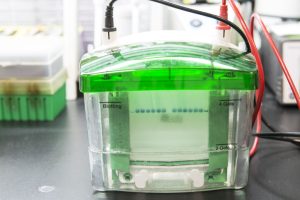
Western blotting remains a cornerstone technique for detecting proteins, verifying expression levels, and validating antibody specificity.
Traditionally, detection involves exposing membranes to film or imaging with CCD-based systems.
While effective, these methods can be time-intensive, require significant manual handling, and are less suited to high-throughput workflows.
The introduction of microplate-based luminometry offers researchers a faster, scalable, and more quantitative alternative.
From Film to Plates: Evolving Western Blot Detection
Film-based chemiluminescence has long been the gold standard, but it carries notable drawbacks: limited dynamic range, reliance on darkroom facilities, and challenges in quantifying signal intensity.
By contrast, transferring blot eluates or chemiluminescent substrates into a plate format makes it possible to measure signals directly using a microplate luminometer.
This approach eliminates darkroom dependence and transforms blot analysis into a streamlined, digital workflow.
Advantages of Plate Reader–Based Detection
- Quantitative Precision – Luminometers provide a broad dynamic range, enabling accurate quantification of protein expression that film cannot match.
- High Throughput- Multiple samples can be processed simultaneously in 96-well or 384-well plates, increasing efficiency for large experiments.
- Reproducibility – Automated plate reading reduces the variability that can result from manual exposure or film development.
- Data Integration – Results are captured digitally, making it easier to analyze, share, and archive data within broader research pipelines.
Practical Considerations
- Sample Preparation: Ensure equal protein loading and consistent transfer efficiency to maintain accuracy.
- Plate Selection: White opaque plates enhance signal reflection and reduce background, improving sensitivity for chemiluminescent assays.
- Software Analysis: Luminometer software provides real-time quantification, normalization tools, and customizable reporting features.
Broader Impact in Research
Western blotting is often used in tandem with ELISA, qPCR, or cell-based assays.
By adopting luminometer-based detection, researchers can integrate protein analysis into automated pipelines, allowing for direct comparison with other assay data.
This accelerates decision-making in both academic and drug development contexts.
Conclusion
Western blot detection is evolving beyond film.
With the adoption of plate-based workflows, a microplate luminometer offers researchers a faster, more reproducible, and scalable solution for protein analysis.
By improving quantification, reducing variability, and enabling automation, this technology enhances one of the most widely used techniques in molecular biology.
Frequently Asked Questions
How does a microplate luminometer improve Western blot detection?
It enables the direct measurement of chemiluminescent signals in plate format, thereby increasing throughput and enhancing quantification.
Is plate-based western blot detection as sensitive as film?
Yes.
Luminometers often provide greater sensitivity and a broader dynamic range than film, while avoiding issues like overexposure.
Can this method fully replace film-based detection?
For most applications, yes.
Plate-based workflows provide quantitative, digital data that can be directly integrated into broader analysis pipelines.
What type of plates should be used for luminometer detection?
White opaque plates are recommended, as they reflect signals and minimize background interference.
Does switching to plate-based detection save time?
Absolutely.
By eliminating film processing and supporting multi-well formats, luminometer-based workflows reduce handling time and boost efficiency.