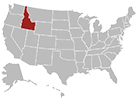
Mental Health Technicians play a critical role in Idaho’s behavioral healthcare system.
As demand for mental health services continues to grow across the state, Mental Health Technicians are increasingly relied upon to support patients, clinicians, and treatment teams in hospitals, residential facilities, and community programs.
This career is well-suited for people who are compassionate, observant, and interested in mental health but who may not want to pursue a long or expensive degree path.
Mental Health Technicians in Idaho make a direct impact on patient safety, recovery, and daily quality of life.
Go to Section:
- What Does a Mental Health Technician Do?
- Difference Between MHT, Behavioral Health Technician, and Psychiatric Technician
- Education Requirements in Idaho
- Top Schools Offering Mental Health Technician Programs in Idaho
- #1 College of Western Idaho
- #2 College of Southern Idaho
- #3 North Idaho College
- Certification Options in Idaho
- Popular Mental Health Technician Certifications
- Step by Step: How to Become a Mental Health Technician in Idaho
- How Long Does It Take to Become a Mental Health Technician in Idaho?
- Cost to Become a Mental Health Technician in Idaho
- Job Outlook for Mental Health Technicians in Idaho
- Salary for Mental Health Technicians in Idaho
- Frequently Asked Questions
What Does a Mental Health Technician Do?
Daily Responsibilities
Mental Health Technicians assist licensed mental health professionals by providing direct patient care and support.
Common responsibilities include:
- Monitoring patient behavior and emotional well-being
- Assisting with daily activities such as hygiene, meals, and movement
- Observing and documenting changes in mood, behavior, or symptoms
- Helping maintain a safe and structured environment
- Supporting group activities and therapeutic routines
- Communicating patient needs to nurses and clinicians
Common Work Settings in Idaho
Mental Health Technicians in Idaho commonly work in:
- Psychiatric hospitals and inpatient mental health units
- Residential treatment centers
- Substance abuse and recovery facilities
- Community mental health clinics
- Youth and adolescent treatment programs
- Correctional and forensic mental health facilities
Difference Between MHT, Behavioral Health Technician, and Psychiatric Technician
These titles often overlap, but there are differences:
- A Mental Health Technician focuses primarily on psychiatric and emotional care
- A Behavioral Health Technician often includes substance use and behavior-focused treatment
- A psychiatric technician may require additional clinical training, which is more common in hospital settings
- Job duties are similar, and employers in Idaho may use these titles interchangeably.
Education Requirements in Idaho
Minimum Education
The minimum requirement to become a Mental Health Technician in Idaho is:
- High school diploma or GED
Optional Education Paths
While not always required, many employers prefer candidates with:
- Certificate programs in mental health or behavioral health
- Associate degrees in psychology, human services, or behavioral science
Relevant Coursework
Helpful coursework includes:
- Introduction to psychology
- Human behavior
- Crisis intervention
- Anatomy and physiology
- Patient care and ethics
- Substance abuse fundamentals
Top Schools Offering Mental Health Technician Programs in Idaho
#1 College of Western Idaho
College of Western Idaho, often called CWI, is a large community college based in Nampa that serves students across the Treasure Valley.
It is known for affordable tuition, flexible scheduling, and strong workforce-focused healthcare programs.
Many students choose CWI because it allows them to start a healthcare career quickly while still offering pathways to higher degrees later.
Courses Offered
CWI does not offer a program labeled specifically as Mental Health Technician, but students commonly prepare for this role through the Health Science and Behavioral Health-related coursework.
Relevant courses include introductory psychology, human relations, medical terminology, patient care fundamentals, and ethics in healthcare.
These courses are often part of certificates or associate degrees, such as Health Science or Social and Behavioral Sciences.
Most associate degree pathways require around 60 credit hours and can be completed in about 2 years with full-time enrollment.
Many classes are available in hybrid or online formats, which helps working students balance school and life.
Program Cost
For in-district Idaho residents, tuition at CWI is typically around $150 per credit hour.
A 60-credit associate degree would cost approximately $9,000 in tuition.
Additional costs may include books and supplies, which often range from $800 to $1,200 total, plus small fees for labs or online courses.
Certificate options with 30 to 40 credit hours may cost closer to $4,500 to $6,000 in tuition, making this a budget-friendly option for future Mental Health Technicians.
Contact Information
- Address: 5500 E Opportunity Dr, Nampa, ID 83687, United States
- Phone: +1 208-562-3000
- Website: Visit School Website
#2 College of Southern Idaho

College of Southern Idaho, located in Twin Falls, serves a wide rural region and is well respected for its healthcare and human services programs.
CSI has strong ties to local hospitals, treatment centers, and community mental health providers, which can be helpful for students seeking hands-on experience and local employment after graduation.
Courses Offered
CSI offers associate degrees and certificates in areas like Human Services, Psychology, and Health Sciences that align well with Mental Health Technician roles.
Coursework often includes abnormal psychology, counseling basics, crisis intervention, addiction studies, patient observation, and professional communication.
Associate degree programs generally require about 60 credit hours and take roughly 2 years to complete.
Some certificate programs range from 32 to 45 credit hours and can be completed in as little as 9 to 12 months.
Clinical or practicum-style experiences may be included, giving students real-world exposure to behavioral health settings.
Program Cost
CSI tuition for Idaho residents is commonly around $160 per credit hour.
A full 60-credit associate degree would cost about $9,600 in tuition.
Certificate programs typically range from $5,000 to $7,200, depending on credit load.
Students should also budget for books, which often total $700 to $1,000, along with program fees related to background checks, CPR training, or practicum placement.
Contact Information
- Address: 315 Falls Ave, Twin Falls, ID 83301, United States
- Phone: +1 208-733-9554
- Website: Visit School Website
#3 North Idaho College
North Idaho College, based in Coeur d’Alene, is a smaller community college with a strong focus on healthcare and technical education.
Its size allows for smaller class settings, which many students appreciate when studying sensitive subjects like mental and behavioral health.
NIC is a popular choice for students in northern Idaho who want local, affordable training.
Courses Offered
NIC offers programs in Human Services and Health Sciences that can prepare students for Mental Health Technician positions.
Common courses include introduction to mental health services, psychology, substance use disorders, patient support techniques, and ethics in human services.
Associate degree programs usually require 60 credit hours and take about 2 years to finish.
Certificate options are often shorter, ranging from 30 to 36 credit hours, and may be completed in under 1 year, depending on course load and availability.
Program Cost
Tuition at North Idaho College for Idaho residents is typically around $155 per credit hour.
A 60-credit associate degree would cost approximately $9,300 in tuition.
Certificate programs may cost between $4,600 and $5,600.
Books and materials generally add another $800 to $1,100.
Some courses may also include modest lab or program fees.
Contact Information
- Address: 1000 W Garden Ave, Coeur d'Alene, ID 83814, United States
- Phone: +1 208-769-3300
- Website: Visit School Website
Schools Summary Table
| Rank | School | |
|---|---|---|
| | #1 | College of Western Idaho |
| | #2 | College of Southern Idaho |
| | #3 | North Idaho College |
Certification Options in Idaho
National Certifications
Idaho does not require state-specific licensure for Mental Health Technicians in most settings.
However, national certifications can improve employability and pay potential.
Common certifications include:
- Certified Mental Health Technician (CMHT)
- Behavioral Health Technician (BHT)
State Requirements
Idaho does not currently mandate Mental Health Technician certification statewide.
Employers may require:
- Background checks
- CPR certification
- On-the-job training or supervised experience
Exams and Renewal
Certification exams typically include multiple-choice tests covering patient care, ethics, and safety.
Renewal usually requires continuing education every two years.
Popular Mental Health Technician Certifications
| Certification | Provider | Exam Required | Validity |
|---|---|---|---|
| CMHT | National Association of Mental Health Technicians | Yes | 2 years |
| Behavioral Health Technician (BHT) | National Healthcareer Association | Yes | 2 years |
| State MHT License | Idaho does not require statewide licensure | Varies | Varies |
Step by Step: How to Become a Mental Health Technician in Idaho
- Meet eligibility requirements such as being at least 18 years old and passing a background check
- Complete a high school diploma or GED
- Enroll in a certificate or associate degree program if desired
- Complete any required clinical or supervised training hours
- Earn national certification if required by the employer
- Apply for Mental Health Technician positions across Idaho healthcare facilities
How Long Does It Take to Become a Mental Health Technician in Idaho?
- Fast track option: Around 6 months through certificate programs with clinical training
- Typical path: 1 to 2 years through an associate degree or an extended certificate program
The timeline depends on education level and employer requirements.
Cost to Become a Mental Health Technician in Idaho
Costs vary based on the education path chosen:
- Certificate programs typically range from $1,500 to $4,000
- Associate degree programs at community colleges generally cost $6,000 to $12,000 total
- Certification exams usually cost between $100 and $250
- Background checks, CPR training, and materials may add $100 to $300
Choosing a certificate program is often the most affordable and fastest option.
Job Outlook for Mental Health Technicians in Idaho
Mental Health Technicians are in steady demand across Idaho due to:
- Increased awareness of mental health conditions
- Expansion of behavioral health services
- Workforce shortages in rural areas
Hospitals, residential care facilities, and community mental health providers continue to hire Mental Health Technicians statewide, offering strong long-term career stability.
Salary for Mental Health Technicians in Idaho
Mental Health Technician pay varies by experience and setting.
Entry-level roles typically offer lower pay, while experienced technicians with certifications earn more.
Factors that influence salary include:
- Location within Idaho
- Type of facility
- Shift schedules, such as nights or weekends
- Certifications and prior healthcare experience
Average Salary of Mental Health Technicians in Idaho
Annual Salary Range:| Item | Percent |
|---|---|
$32K | |
$39K | |
$50K |
Idaho Salary by Metro Area
| Metro Area | Employed | Avg. Annual | Avg. Hourly | Top 10% | Bottom 10% |
|---|---|---|---|---|---|
| Boise City, ID | 400 | $42,020 | $20.20 | $46,990 | $39,040 |
| Idaho Falls, ID | 30 | $39,050 | $18.78 | $44,720 | $30,770 |
* Employment conditions may vary by location.
Frequently Asked Questions
Do I need a license to work as a Mental Health Technician in Idaho?
Idaho does not require a statewide license for Mental Health Technicians, but employers may require training, background checks, or certification.
Can I become a Mental Health Technician without college?
Yes.
Many entry-level roles only require a high school diploma or GED and on-the-job training.
Are Mental Health Technicians exposed to stressful situations?
The job can be emotionally demanding, especially in crisis settings, but it is also rewarding and provides strong hands on experience in mental healthcare.
Can I work part time as a Mental Health Technician in Idaho?
Yes.
Many facilities offer part time, full time, and flexible shift options depending on staffing needs.
Is this a good career path for future nurses or counselors?
Yes.
Many Mental Health Technicians use this role as a stepping stone toward nursing, psychology, social work, or counseling careers.