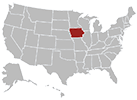
The role of a Mental Health Technician (MHT) is critical within Iowa’s behavioral health system.
These professionals provide hands‑on support to individuals experiencing mental health challenges, working closely with licensed clinicians and care teams.
As awareness and demand for quality mental health services grow across the state, opportunities for trained mental health technicians continue to expand.
Becoming an MHT in Iowa can be a rewarding career path for individuals passionate about helping others, particularly those seeking meaningful work in behavioral health, community care, hospitals, and residential treatment settings.
This article outlines the responsibilities, education, training, certifications, and steps needed to build a career as a mental health technician in Iowa.
Go to Section:
- What Does a Mental Health Technician Do?
- Common Work Settings in Iowa
- MHT vs Behavioral Health Technician vs Psychiatric Technician
- Education Requirements in Iowa
- Top Schools Offering Mental Health Technician Programs in Iowa
- #1 Iowa Western Community College
- #2 Des Moines Area Community College (DMACC)
- #3 Iowa Central Community College
- #4 Northwest Iowa Community College
- #5 Western Iowa Tech Community College
- #6 University of Iowa
- Certification Options in Iowa
- Step-by-Step: How to Become a Mental Health Technician in Iowa
- How Long Does It Take to Become a Mental Health Technician in Iowa?
- Cost to Become a Mental Health Technician in Iowa
- Job Outlook for Mental Health Technicians in Iowa
- Salary for Mental Health Technicians in Iowa
- Frequently Asked Questions
What Does a Mental Health Technician Do?
Mental health technicians play a support role in caring for individuals with mental health needs, behavioral challenges, or psychiatric disorders.
Their daily duties typically include:
- Patient care: Assisting clients with daily living activities, comfort, and basic needs.
- Monitoring: Observing behavior, emotional status, and physical condition of clients and reporting changes to licensed staff.
- Documentation: Recording observations, therapeutic interactions, and care activities in patient charts.
- Support activities: Facilitating therapeutic group activities, providing crisis intervention under supervision, and assisting with treatment plans as delegated by clinicians.
Common Work Settings in Iowa
Mental health technicians may work in a variety of environments, including:
- Community mental health centers
- Hospitals and psychiatric units
- Residential treatment facilities
- Substance abuse recovery programs
- Group homes and supportive living settings
MHT vs Behavioral Health Technician vs Psychiatric Technician
Though these titles are sometimes used interchangeably, there are subtle differences:
- Mental Health Technician: Emphasizes support for behavioral and mental health needs broadly, often in community or residential settings.
- Behavioral Health Technician: Often used in substance use and behavioral intervention environments.
- Psychiatric Technician: Typically found in hospital or clinical settings focused on psychiatric care.
Education Requirements in Iowa
Minimum Education
To begin a career as a mental health technician in Iowa, the minimum requirement is usually a high school diploma or GED.
However, additional training or post‑secondary education can improve job prospects and preparedness.
Optional Certificate or Associate Degree Programs
Iowa offers programs at community colleges and vocational schools that focus on behavioral health, human services, and mental health technician training.
These programs may result in a:
- Certificate in mental health or behavioral health support
- Associate’s degree in human services or behavioral science
Relevant coursework often includes:
- Introduction to psychology
- Human behavior
- Anatomy and physiology
- Patient care and communication skills
- Crisis intervention
Training programs often include supervised clinical experience, which builds confidence and skills for real‑world settings.
Top Schools Offering Mental Health Technician Programs in Iowa
#1 Iowa Western Community College

Iowa Western Community College is a well‑established public community college located in Council Bluffs with a long history of serving students from southwest Iowa.
It is accredited by the Higher Learning Commission and offers a wide range of academic and career training programs for students seeking certificates, degrees, and continuing education.
Its continuing education department provides workforce‑focused training, including mental health technician preparation.
Courses Offered
The Mental Health Technician I certificate program includes classroom, lab, and clinical training totaling approximately 171 hours.
Students begin with direct patient care skills like assisting with daily living tasks and vital signs, then move into modules covering professional standards, psychiatric disorders, treatment planning, and safety.
A six‑hour shadow experience is part of the curriculum, and clinical placements occur at behavioral health facilities.
After completing the course and at least one to six months of work experience, students are prepared to sit for the Mental Health Technician certification exam.
Program Cost
The Mental Health Technician I certificate costs about $1,629.
Before starting, students must complete vaccinations and immunizations and may need a criminal background check.
Some Iowa residents may qualify for tuition assistance programs that reduce or cover costs.
Contact Information
- Address: 2700 College Rd, Council Bluffs, IA 51503, United States
- Phone: +1 712-325-3200
- Website: Visit School Website
#2 Des Moines Area Community College (DMACC)
Des Moines Area Community College is one of the largest community colleges in Iowa, with multiple campuses throughout central Iowa.
DMACC offers a mix of academic degrees and short‑term workforce training certificates designed to help students enter fields such as healthcare, human services, and behavioral health.
Courses Offered
DMACC’s short‑term training includes the Direct Support Professional Behavioral and Mental Health certificate.
This blended course consists of about 54 total hours of study using online work combined with four in‑person sessions at the campus.
Students also complete a community learning experience in a behavioral health setting.
Topics include mental health recovery and wellness, foundational concepts of mental health services, and skills needed for supportive roles in behavioral health.
Program Cost
The listed cost for the DMACC Direct Support Professional Behavioral and Mental Health certificate is around $950, though qualified applicants may access free training options as part of community partnerships.
Contact Information
- Address: 1144 7th St, Des Moines, IA 50314, United States
- Phone: +1 800-362-2127
- Website: Visit School Website
#3 Iowa Central Community College
Iowa Central Community College is a public community college based in Fort Dodge and known for its career‑focused training and continuing education offerings.
The college partners with workforce programs to support students preparing for entry‑level healthcare and human services careers.
Courses Offered
The Mental Health Technician (Voucher Included) course prepares learners for work as mental health technicians and includes study of medical terminology and essential technician knowledge.
The course is structured to help prepare students for the Mental Health Technician Certification exam and includes feedback, real‑world assignments, and support for practical skills like communication and patient interaction.
Enrollment typically includes voucher access to the MHTC exam and options to earn CPR/BLS certification.
Total course hours are generally around 185, though exact scheduling or clinical components may vary.
Program Cost
The tuition for this program is listed at about $3,295, which covers instruction and an exam voucher.
Payment plans and workforce funding options may be available for eligible students.
Contact Information
- Address: One Triton Cir, Fort Dodge, IA 50501, United States
- Phone: +1 800-362-2793
- Website: Visit School Website
#4 Northwest Iowa Community College

Northwest Iowa Community College, with its main campus in Sheldon, offers continuing education and workforce training along with academic programs.
The college supports students with career‑ready courses that help build foundational skills for healthcare and supportive care settings.
Courses Offered
Northwest Iowa Community College offers the Mental Health Technician (Voucher Included) course through its continuing education division.
The training focuses on the fundamentals of mental health support work, preparing learners to take the mental health technician certification exam.
The curriculum includes modules on identifying and addressing psychosocial needs, understanding technician roles, and developing communication and care skills.
Program Cost
The cost for this online mental health technician training program is approximately $3,295, including the exam voucher, with financing options and access to workforce funding depending on eligibility.
Contact Information
- Address: 603 W Park St, Sheldon, IA 51201, United States
- Phone: +1 712-324-5061
- Website: Visit School Website
#5 Western Iowa Tech Community College
Western Iowa Tech Community College is a public community college serving northwest Iowa with campuses in Sioux City, Le Mars, Denison, Mapleton, and Cherokee.
While most of its mental health support pathways are through broader behavioral and human services coursework, the college supports career routes in health and human services.
Courses Offered
WITCC provides behavioral health and related training options that support mental health technician career pathways, such as its integrative behavioral health certificate through continuing education.
Students can explore topics like holistic approaches to mental health, including psychological and social factors, through about 24 contact hours of study.
Program Cost
The integrative behavioral health certificate offered through Western Iowa Tech costs about $178 for online access with no prerequisites.
This shorter certificate is more foundational and may be useful alongside other training or degree work.
Contact Information
- Address: 4647 Stone Ave, Sioux City, IA 51106, United States
- Phone: +1 712-274-6400
- Website: Visit School Website
#6 University of Iowa

The University of Iowa is a major public research university in Iowa City.
Through its College of Education, the university offers undergraduate and graduate programs in counseling and behavioral health services intended for students seeking broader preparation in helping professions, human behavior, and counseling skill building.
Courses Offered
The Bachelor of Arts in Counseling and Behavioral Health Services provides a strong academic foundation for students interested in mental health careers.
Coursework includes applied psychology, ethics, counseling skills, human services foundations, and electives that deepen understanding of human behavior.
The curriculum totals around 39 semester hours in the major, paired with general education requirements.
Program Cost
Tuition and costs depend on residency and credit load, but university tuition is typically charged per credit hour.
Because program costs vary widely by number of credits and housing choices, students should contact the university for current per‑credit tuition and fees for undergraduate programs.
Contact Information
- Address: Iowa City, IA 52242, United States
- Phone: +1 319-335-3500
- Website: Visit School Website
Schools Summary Table
Certification Options in Iowa
While Iowa may not mandate state licensing specifically for mental health technicians, certifications can enhance credibility and employability.
Many employers prefer or require recognized credentials.
Nationally Recognized Certifications
| Certification | Provider | Exam Required | Validity |
|---|---|---|---|
| CMHT | National Association of Mental Health Technicians | Yes | 2 years |
| Behavioral Health Technician (BHT) | National Healthcareer Association | Yes | 2 years |
| State MHT Credential | Iowa regulatory board or workforce agency | Varies | Varies |
Certification Details
- CMHT (Certified Mental Health Technician): A credential demonstrating competence in core mental health support skills.
- BHT (Behavioral Health Technician): Often emphasizes skills related to behavioral interventions and support.
- State Credential (if available): Requirements and availability vary; contact Iowa workforce development or relevant boards.
Certifications typically require passing an exam and may have ongoing renewal requirements, such as continuing education.
Step-by-Step: How to Become a Mental Health Technician in Iowa
- Meet eligibility requirements
- Be at least the minimum age required by employers.
- Pass background checks as required in healthcare settings.
- Complete the required education or training
- Graduate from high school or earn a GED.
- Consider certificate or associate degree programs for a competitive advantage.
- Gain supervised clinical experience
- Participate in clinical placements or internships during training.
- Seek volunteer or entry‑level work in mental health settings to build practical experience.
- Pass certification exams (if applicable)
- Prepare for and pass exams like the CMHT or BHT to earn credentials.
- Apply for state licensure or registration
- Iowa does not require a universal MHT license, but check for any employer‑specific requirements.
- Apply for jobs in Iowa
- Use job boards, healthcare employers, and community mental health agencies to find openings.
How Long Does It Take to Become a Mental Health Technician in Iowa?
- Fast‑track path: Certificate programs combined with required clinical hours can take as little as six months.
- Typical path: Completing an associate degree or extended certificate with supplementary experience often takes one to two years.
Timeframes vary based on individual education choices, clinical requirements, and certification preparation.
Cost to Become a Mental Health Technician in Iowa
Costs depend on the type of program chosen:
- Certificate programs: Generally less expensive than degree programs, but vary by institution.
- Associate degree programs: Typically include tuition for two years of coursework.
- Additional fees: Books, supplies, certification exam fees, and clinical training costs may apply.
Prospective students should contact schools for up‑to‑date cost information and explore financial aid options.
Job Outlook for Mental Health Technicians in Iowa
Demand for mental health support personnel is increasing as communities prioritize behavioral health services.
Growth is expected in:
- Hospitals and psychiatric units
- Residential care settings
- Community mental health agencies
- Substance abuse treatment programs
Technicians with certification and hands‑on experience tend to have stronger employment prospects.
Long‑term career stability is supported by broadening healthcare services and expanded public awareness of mental health needs.
Salary for Mental Health Technicians in Iowa
Pay for mental health technicians may vary based on:
- Years of experience
- Work setting (hospital, community center, residential facility)
- Geographic location within Iowa
- Certifications held
While entry‑level positions may start lower, experienced technicians with credentials and specialized skills can command higher compensation.
Average Salary of Mental Health Technicians in Iowa
Annual Salary Range:| Item | Percent |
|---|---|
$32K | |
$39K | |
$47K |
Iowa Salary by Metro Area
| Metro Area | Employed | Avg. Annual | Avg. Hourly | Top 10% | Bottom 10% |
|---|---|---|---|---|---|
| Cedar Rapids, IA | 30 | $38,430 | $18.48 | $40,850 | $31,520 |
| Des Moines-West Des Moines, IA | 180 | $39,850 | $19.16 | $46,710 | $30,330 |
| Iowa City, IA | 60 | $43,770 | $21.04 | $47,650 | $34,910 |
| Sioux City, IA-NE-SD | 40 | $37,840 | $18.19 | $47,280 | $31,340 |
* Employment conditions may vary by location.
Frequently Asked Questions
Do I need a college degree to become a mental health technician in Iowa?
A college degree is not always required, though many employers prefer candidates with certificates or associate degrees in related fields.
Does Iowa require a license to work as an MHT?
Iowa does not currently mandate a specific state license for mental health technicians, but employers may have credentialing preferences.
Can I work in hospitals as an MHT in Iowa?
Yes, mental health technicians are employed in a variety of settings, including hospitals, psychiatric units, and community mental health centers.
Will certification help me get hired?
Having a nationally recognized certification can make a candidate more competitive and may lead to better opportunities.
Is clinical experience necessary before becoming an MHT?
Yes, supervised clinical experience is valuable and often required by training programs and employers to ensure readiness for patient care.