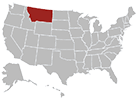
Mental Health Technicians, often called MHTs, play a vital role in supporting individuals who are experiencing mental health challenges.
They work directly with patients, helping them feel safe, supported, and understood while assisting licensed professionals with treatment plans.
In Montana, the demand for mental health services continues to grow.
Communities across the state, from larger cities like Billings and Missoula to rural areas and tribal communities, are expanding access to behavioral health care.
With increasing awareness of mental wellness and substance use treatment needs, trained support professionals are more important than ever.
If you are compassionate, patient, and interested in working directly with people in need, becoming a Mental Health Technician in Montana can be both a meaningful and stable career choice.
Go to Section:
- What Does a Mental Health Technician Do?
- MHT vs Behavioral Health Technician vs Psychiatric Technician
- Education Requirements in Montana
- Top Schools Offering Mental Health Technician Programs in Montana
- #1 Montana State University Billings
- #2 Flathead Valley Community College
- #3 Helena College University of Montana
- #4 Missoula College University of Montana
- Certification Options in Montana
- Step by Step: How to Become a Mental Health Technician in Montana
- How Long Does It Take to Become a Mental Health Technician in Montana?
- Cost to Become a Mental Health Technician in Montana
- Job Outlook for Mental Health Technicians in Montana
- Salary for Mental Health Technicians in Montana
- Frequently Asked Questions
What Does a Mental Health Technician Do?
Mental Health Technicians provide hands-on support to patients in mental health and behavioral health settings.
Daily Responsibilities
Common duties include:
- Monitoring patient behavior and emotional state
- Assisting with daily living activities such as hygiene and meals
- Leading or supporting group activities
- Observing and documenting patient progress
- Helping maintain a safe and structured environment
- Communicating updates to nurses, therapists, and psychiatrists
- Accurate documentation is essential. MHTs often record changes in mood, medication side effects, and responses to therapy.
Common Work Settings in Montana
In Montana, Mental Health Technicians commonly work in:
- Psychiatric units in hospitals
- Residential treatment centers
- Substance use recovery facilities
- Community mental health clinics
- State-operated facilities
- Correctional or youth detention centers
Larger healthcare systems in cities like Great Falls and Bozeman offer structured behavioral health departments, while rural communities may provide broader, community-based roles.
MHT vs Behavioral Health Technician vs Psychiatric Technician
While the titles are sometimes used interchangeably, there are differences:
- A Mental Health Technician focuses on direct patient care and support.
- A Behavioral Health Technician may work more closely with behavior modification plans and applied behavior analysis programs.
- A psychiatric technician may require additional formal training or licensure in some states and often works closely with nursing staff in clinical settings.
In Montana, job titles vary by employer, and certification requirements depend on the facility rather than a strict statewide license for MHTs.
Education Requirements in Montana
Minimum Education
At a minimum, you must have:
- A high school diploma or GED
Most employers also require:
- CPR certification
- First aid certification
- Background check clearance
Optional Education Pathways
While not always required, many employers prefer candidates who complete:
- A certificate in behavioral health
- An associate degree in psychology or human services
Typical programs range from 30 to 60 credit hours and include supervised clinical experience.
Relevant Coursework
Helpful courses include:
- Introduction to psychology
- Abnormal psychology
- Human growth and development
- Anatomy and physiology
- Patient care techniques
- Crisis intervention
Completing formal training can significantly improve job prospects in competitive markets.
Top Schools Offering Mental Health Technician Programs in Montana
#1 Montana State University Billings

Montana State University Billings is a public university located in the heart of Billings, Montana.
It serves a diverse student population and focuses on practical, career-oriented programs.
The university emphasizes small class sizes and personalized attention, which is especially helpful for students entering healthcare and behavioral health fields.
The campus has modern labs, clinical simulation centers, and strong connections to local hospitals and mental health facilities for hands-on training.
Courses Offered
Students in behavioral health or human services programs at MSU Billings can expect courses such as Introduction to Psychology, Abnormal Psychology, Human Growth and Development, Anatomy and Physiology, Patient Care Techniques, and Crisis Intervention.
Clinical practicum hours are integrated into the program to provide direct experience in hospitals, residential care, or community mental health clinics.
Students may complete between 30 and 60 credit hours, depending on whether they pursue a certificate or an associate degree.
Program Cost
Tuition for Montana residents ranges roughly from 350 dollars to 400 dollars per credit hour.
A certificate program totaling 30 credits could cost approximately 10,500 to 12,000 dollars.
An associate degree totaling 60 credits may cost around 21,000 to 24,000 dollars.
Additional fees for lab supplies, books, and clinical uniforms may add another 1,000 dollars to 1,500 dollars to the total program cost.
Contact Information
- Address: 1500 University Dr, Billings, MT 59101, United States
- Phone: +1 406-657-2011
- Website: Visit School Website
#2 Flathead Valley Community College

Flathead Valley Community College, located in Kalispell, Montana, is known for its practical programs and strong community ties.
The school offers a supportive environment with instructors who are often industry professionals. FVCC emphasizes experiential learning and prepares students for immediate entry into the workforce, making it an ideal option for those pursuing mental health technician roles.
Courses Offered
The Human Services program at FVCC includes courses in Introduction to Psychology, Human Services Foundations, Counseling Techniques, Crisis Management, Ethics in Behavioral Health, and Applied Behavioral Analysis.
Clinical experience is a core component, typically requiring 120 to 150 hours in partner facilities such as community mental health centers or residential care units.
Certificate and associate degree programs range from 30 to 60 credit hours.
Program Cost
For residents, tuition is about 125 dollars per credit hour.
A 30-credit certificate program would cost around 3,750 dollars, while a 60-credit associate degree program may cost approximately 7,500 dollars.
Students should also budget 800 to 1,200 dollars for books, supplies, and background check fees.
Contact Information
- Address: 777 Grandview Dr, Kalispell, MT 59901, United States
- Phone: +1 406-756-3822
- Website: Visit School Website
#3 Helena College University of Montana

Helena College, part of the University of Montana system, offers a variety of healthcare and human services programs.
Located in the state capital, the college benefits from proximity to government agencies, hospitals, and community organizations.
Students have access to updated labs, simulation spaces, and faculty with practical experience in mental health and social services.
Courses Offered
Programs focus on psychology, human development, patient care, and behavioral health. Key courses include General Psychology, Developmental Psychology, Anatomy and Physiology, Patient Care Skills, and Crisis Intervention.
Students participate in 100 to 200 hours of supervised clinical experience in local hospitals, residential treatment centers, and community mental health clinics.
Program Cost
Resident tuition is about 140 dollars per credit hour.
A certificate program of 30 credits would cost approximately 4,200 dollars, while a full associate degree of 60 credits would cost around 8,400 dollars.
Additional costs for books, uniforms, and certification exam fees may range between 1,000 and 1,500 dollars.
Contact Information
- Address: 1115 N Roberts St #117, Helena, MT 59601, United States
- Phone: +1 406-447-6900
- Website: Visit School Website
#4 Missoula College University of Montana

Missoula College, affiliated with the University of Montana, is located in Missoula and focuses on career-ready programs in healthcare, technology, and human services.
The college offers small class sizes, personalized advising, and strong relationships with local healthcare providers, giving students hands-on experience throughout their programs.
Courses Offered
Students pursuing mental health or human services training will encounter courses in Introduction to Psychology, Abnormal Psychology, Human Growth and Development, Counseling Fundamentals, Patient Care, and Ethics in Behavioral Health.
Clinical practicum experiences typically include 120 hours of supervised work in hospitals, community clinics, or residential care settings.
Programs range from 30 to 60 credit hours.
Program Cost
Tuition for Montana residents is roughly 140 dollars per credit hour.
A 30-credit certificate program costs approximately 4,200 dollars, and a 60-credit associate degree costs about 8,400 dollars.
Students should also plan for books, lab fees, uniforms, and certification exam costs totaling roughly 1,000 to 1,500 dollars.
Contact Information
- Address: 1205 E Broadway St, Missoula, MT 59802, United States
- Phone: +1 406-243-7811
- Website: Visit School Website
Schools Summary Table
| Rank | School | |
|---|---|---|
| | #1 | Montana State University Billings |
| | #2 | Flathead Valley Community College |
| | #3 | Helena College University of Montana |
| | #4 | Missoula College University of Montana |
Certification Options in Montana
Montana does not currently require a specific state license for Mental Health Technicians.
However, national certifications can increase credibility and employment opportunities.
Nationally Recognized Certifications
- CMHT through the National Association of Mental Health Technicians
- Behavioral Health Technician certification through the National Healthcareer Association
Exam and Renewal Requirements
Most certifications require:
- Completion of approved training
- Passing a certification exam
- Renewal every 2 years
- Continuing education credits
Certification Comparison Table
| Certification | Provider | Exam Required | Validity |
|---|---|---|---|
| CMHT | National Association of Mental Health Technicians | Yes | 2 years |
| Behavioral Health Technician (BHT) | National Healthcareer Association | Yes | 2 years |
| State MHT License | Montana Department of Labor and Industry | Varies | Varies |
Since Montana does not mandate a state MHT license, the third option typically does not apply unless working in a specialized facility.
Step by Step: How to Become a Mental Health Technician in Montana
1. Meet Eligibility Requirements
You must be at least 18 years old, have a high school diploma or GED, and pass a criminal background check.
2. Complete Required Education or Training
Enroll in a certificate or associate degree program in behavioral health, psychology, or human services.
3. Gain Supervised Clinical Experience
Many programs include 100 to 300 hours of supervised clinical practice in hospitals or treatment centers.
4. Pass Certification Exams if Applicable
If pursuing CMHT or BHT certification, register for and pass the required exam.
5. Apply for State Requirements
Most Montana employers require background screening and CPR certification, but not a formal state MHT license.
6. Apply for Jobs in Montana
Search for openings in hospitals, residential centers, and community mental health clinics across Montana.
How Long Does It Take to Become a Mental Health Technician in Montana?
- Fast track option: You can complete a certificate program in about 6 months, especially if it includes accelerated coursework and clinical hours.
- Typical path: An associate degree usually takes 1 to 2 years to complete, depending on whether you attend full-time or part-time.
Cost to Become a Mental Health Technician in Montana
Costs vary depending on the school and program type.
Certificate programs at community colleges may range from 3000 to 8000 dollars total for tuition and fees.
This usually includes 30 to 40 credit hours.
Associate degree programs may cost between 7000 and 15000 dollars total for in-state students, covering approximately 60 credit hours over two years.
Additional costs may include:
- Books and supplies: 800 to 1500 dollars
- CPR and first aid certification: 50 to 150 dollars
- Certification exam fees: 150 to 250 dollars
- Background checks: 30 to 75 dollars
Financial aid and grants may reduce out-of-pocket expenses for qualifying students.
Job Outlook for Mental Health Technicians in Montana
Montana continues expanding behavioral health services in hospitals, residential treatment facilities, and community clinics.
Urban areas such as Billings and Missoula show steady hiring demand, while rural regions also seek trained professionals due to limited healthcare access.
Growth is supported by:
- Increased awareness of mental health needs
- Expansion of telehealth services
- State initiatives supporting substance use recovery
Long-term career stability is strong for individuals willing to work flexible schedules and in high-demand settings.
Salary for Mental Health Technicians in Montana
Entry-level technicians typically earn less than those with several years of experience or advanced certifications.
Pay can vary based on:
- Geographic location within Montana
- Type of facility
- Level of education
- National certifications
- Shift differentials for nights or weekends
Hospital-based roles may offer higher compensation compared to smaller residential facilities.
Experienced technicians with specialized skills often earn more.
Average Salary of Mental Health Technicians in Montana
Annual Salary Range:| Item | Percent |
|---|---|
$33K | |
$37K | |
$49K |
Montana Salary by Metro Area
| Metro Area | Employed | Avg. Annual | Avg. Hourly | Top 10% | Bottom 10% |
|---|---|---|---|---|---|
| Billings, MT | 50 | $38,860 | $18.68 | $48,780 | $33,170 |
* Employment conditions may vary by location.
Frequently Asked Questions
Can I become a Mental Health Technician in Montana without a college degree?
Yes.
A high school diploma or GED is the minimum requirement for many entry-level roles.
However, completing a certificate or associate degree can improve job prospects and advancement opportunities.
Is certification required to work as an MHT in Montana?
Montana does not require a specific state MHT license.
Some employers may prefer or require national certification depending on the setting.
Can this role lead to other careers in mental health?
Absolutely.
Many MHTs continue their education to become licensed counselors, social workers, nurses, or psychologists.
Is working as a Mental Health Technician emotionally challenging?
The role can be demanding, as you work with individuals facing serious mental health conditions.
However, it is also deeply rewarding for those who value helping others and making a meaningful impact.
Do Mental Health Technicians work night shifts?
Yes.
Many hospitals and residential facilities operate 24 hours a day, so evening, overnight, and weekend shifts are common.