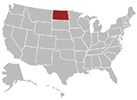
Mental Health Technicians, often called MHTs, are frontline professionals who support individuals experiencing mental health challenges, behavioral disorders, and substance use issues.
In a largely rural state like North Dakota, access to behavioral healthcare can be limited in some regions, which makes trained support staff especially valuable.
As communities across the state continue expanding mental health services in hospitals, residential treatment centers, and community clinics, the demand for qualified Mental Health Technicians continues to grow.
If you are compassionate, patient, and interested in hands-on healthcare work without spending many years in school, this career can offer meaningful impact and strong long-term stability within North Dakota’s healthcare system.
Go to Section:
- What Does a Mental Health Technician Do?
- MHT vs Behavioral Health Technician vs Psychiatric Technician
- Education Requirements in North Dakota
- Top Schools Offering Mental Health Technician Programs in North Dakota
- #1 North Dakota State College of Science
- #2 Bismarck State College
- #3 Minot State University
- #4 University of North Dakota
- #5 Williston State College
- Popular Mental Health Technician Certifications in North Dakota
- Step by Step: How to Become a Mental Health Technician in North Dakota
- How Long Does It Take to Become a Mental Health Technician in North Dakota?
- Cost to Become a Mental Health Technician in North Dakota
- Job Outlook for Mental Health Technicians in North Dakota
- Salary for Mental Health Technicians in North Dakota
- Frequently Asked Questions
What Does a Mental Health Technician Do?
Mental Health Technicians work directly with patients under the supervision of nurses, psychologists, psychiatrists, or licensed counselors.
Daily Responsibilities
Typical duties include:
- Monitoring patients’ behavior and emotional state
- Assisting with daily living activities such as meals and hygiene
- Supporting therapeutic activities and group sessions
- Documenting patient progress and incidents
- Ensuring a safe and structured environment
- Responding to behavioral crises when necessary
MHTs often serve as the primary day-to-day support for patients in structured treatment settings.
Common Work Settings in North Dakota
Mental Health Technicians commonly work in:
- Psychiatric units within hospitals, such as those in Fargo and Bismarck
- State-operated facilities like the North Dakota State Hospital
- Residential treatment centers
- Substance abuse recovery facilities
- Community mental health clinics
Rural regions may also rely heavily on MHTs in regional care facilities where staff wear multiple hats.
MHT vs Behavioral Health Technician vs Psychiatric Technician
While titles are sometimes used interchangeably, there are subtle differences:
- Mental Health Technician (MHT): General support role focused on patient monitoring and daily care.
- Behavioral Health Technician (BHT): Often emphasizes behavioral therapy support and applied behavior analysis.
- Psychiatric Technician: In some states, this is a licensed role with additional clinical training. North Dakota does not require a separate psychiatric technician license, but responsibilities may overlap.
Education Requirements in North Dakota
Minimum Education
The minimum requirement is typically:
- High school diploma or GED
- On-the-job training provided by the employer
Many entry-level roles in North Dakota accept applicants with only a high school diploma, especially in rural areas.
Optional Education Paths
While not always required, additional education increases job competitiveness and advancement potential:
- Certificate programs in behavioral health
- Associate degree in human services, psychology, or mental health technology
- Relevant coursework includes:
- Introductory psychology
- Abnormal psychology
- Anatomy and physiology
- Crisis intervention
- Patient care fundamentals
Top Schools Offering Mental Health Technician Programs in North Dakota
#1 North Dakota State College of Science
North Dakota State College of Science, located in Wahpeton, is a public two-year college with a strong focus on career-ready programs.
The college serves more than 2,500 students and offers hands-on training designed to prepare graduates for direct entry into the workforce.
Class sizes are typically small, which allows for personalized instruction and closer interaction with faculty.
The campus environment is practical and career-focused, making it a good fit for students who want to move quickly into healthcare roles.
Courses Offered
Students interested in mental health work often enroll in the Human Services Technician Associate in Applied Science program.
This degree typically requires about 60 to 65 credit hours and can be completed in 4 semesters, or approximately 2 years.
Coursework includes Introduction to Psychology, Human Growth and Development, Abnormal Psychology, Case Management, Crisis Intervention, Interviewing Techniques, and Group Dynamics.
Many students complete a supervised practicum that ranges from 120 to 180 clinical hours in community agencies or healthcare facilities.
The program is designed to build practical skills in communication, documentation, and client support.
Program Cost
In-state tuition is approximately 180 to 200 dollars per credit hour.
For a 60-credit program, total tuition can range from 10,800 to 12,000 dollars.
Out-of-state tuition is higher and may range from 250 to 300 dollars per credit hour.
Books and supplies typically cost 1,000 to 1,500 dollars over the course of the program.
Additional expenses may include background checks, immunizations, and practicum-related costs.
Contact Information
- Address: 800 6th St N, Wahpeton, ND 58076, United States
- Phone: +1 800-342-4325
- Website: Visit School Website
#2 Bismarck State College
Bismarck State College is a public community college located in North Dakota’s capital city.
It enrolls more than 3,500 students and offers a wide range of technical and transfer programs.
The college has strong partnerships with local healthcare providers, which benefits students seeking internships and job placement opportunities.
Its location in Bismarck gives students access to hospitals, behavioral health centers, and state facilities.
Courses Offered
Students can pursue an Associate in Applied Science in Human Services, which generally requires about 62 credit hours and takes 2 years to complete.
Courses often include General Psychology, Abnormal Psychology, Counseling Techniques, Ethics in Human Services, Multicultural Issues, and Substance Abuse Counseling.
A supervised field experience is typically required and may involve 150 to 200 hours in a clinical or community setting.
The program emphasizes practical skills in patient observation, documentation, and supportive counseling techniques that are directly applicable to Mental Health Technician roles.
Program Cost
In-state tuition averages about 190 dollars per credit hour.
For 62 credits, tuition costs are roughly 11,780 dollars.
Out-of-state tuition can range from 280 to 320 dollars per credit hour.
Students should budget an additional 1,200 to 1,800 dollars for textbooks and program materials.
Some students may also need to pay fees for liability insurance and clinical placement processing.
Contact Information
- Address: 1500 Edwards Ave, Bismarck, ND 58506, United States
- Phone: +1 701-224-5400
- Website: Visit School Website
#3 Minot State University
Minot State University is a public four-year university serving approximately 3,000 students.
It offers both associate and bachelor’s level programs in behavioral sciences.
The university environment is slightly larger than community colleges, but still provides relatively small class sizes compared to major state universities.
Students benefit from access to campus counseling labs and research opportunities.
Courses Offered
Students pursuing mental health support careers often choose the Associate of Science in Human Services or the Bachelor of Science in Social Work.
The associate pathway typically requires about 60 credit hours over 2 years.
Courses include Introduction to Sociology, General Psychology, Human Behavior, Social Welfare Policy, and Case Management.
Students usually complete a practicum of at least 120 hours.
The bachelor’s program requires about 120 credit hours over 4 years and includes more advanced coursework and extended field placements that can exceed 400 supervised hours.
Program Cost
Undergraduate tuition for North Dakota residents is approximately 230 to 250 dollars per credit hour.
For a 60-credit associate path, tuition totals about 13,800 to 15,000 dollars.
For a full 120-credit bachelor’s degree, tuition may range from 27,600 to 30,000 dollars.
Books and additional fees can add 1,500 to 2,500 dollars per year, depending on course load.
Contact Information
- Address: 500 University Ave W, Minot, ND 58707, United States
- Phone: +1 800-777-0750
- Website: Visit School Website
#4 University of North Dakota
The University of North Dakota, located in Grand Forks, is the state’s flagship public university with enrollment of more than 13,000 students.
It offers comprehensive programs in psychology, social work, and behavioral sciences.
The university has extensive healthcare partnerships and access to major hospital systems, making it an attractive choice for students seeking broader career advancement opportunities.
Courses Offered
Students often pursue a Bachelor of Arts or Bachelor of Science in Psychology or Social Work.
These programs typically require 120 to 125 credit hours and take about 4 years to complete.
Core courses include Developmental Psychology, Abnormal Psychology, Research Methods, Behavioral Statistics, and Clinical Social Work Practice.
Field education components may require 400 to 500 supervised hours in healthcare or community agencies.
While this path exceeds minimum MHT requirements, it opens doors to supervisory and graduate-level opportunities.
Program Cost
In-state tuition averages about 280 to 300 dollars per credit hour.
For 120 credits, tuition can range from 33,600 to 36,000 dollars.
Out-of-state tuition may exceed 400 dollars per credit hour.
Students should also consider housing, meal plans, and textbook expenses, which may total 10,000 to 15,000 dollars per academic year, depending on living arrangements.
Contact Information
- Address: Grand Forks, ND 58202, United States
- Phone: +1 701-777-3000
- Website: Visit School Website
#5 Williston State College

Williston State College is a smaller public two-year college located in western North Dakota.
It serves roughly 1,000 students and offers a supportive environment with small class sizes.
The college is well-suited for students who prefer a close-knit academic setting and want affordable tuition.
Courses Offered
Students interested in mental health support careers may pursue an Associate in Arts or Associate in Science with coursework in psychology and human services.
These programs typically require 60 to 64 credit hours over 2 years.
Courses include Introduction to Psychology, Human Development, Sociology, Ethics, and Interpersonal Communication.
Some students complete internships in local community agencies, which may involve 100 to 150 supervised hours.
Program Cost
In-state tuition is approximately 180 to 200 dollars per credit hour.
For a 60-credit program, tuition totals around 10,800 to 12,000 dollars.
Books and academic fees may add another 1,000 to 1,500 dollars over two years.
The overall cost remains among the most affordable options in the state, making it attractive for students seeking entry into the workforce without significant debt.
Contact Information
- Address: 1410 University Ave, Williston, ND 58801, United States
- Phone: +1 701-774-4200
- Website: Visit School Website
Schools Summary Table
| Rank | School | |
|---|---|---|
| | #1 | North Dakota State College of Science |
| | #2 | Bismarck State College |
| | #3 | Minot State University |
| | #4 | University of North Dakota |
| | #5 | Williston State College |
Certification Options in North Dakota
North Dakota does not mandate state licensure specifically for Mental Health Technicians.
However, voluntary certifications can improve employment prospects.
National Certifications
Common certifications include:
- Certified Mental Health Technician (CMHT)
- Behavioral Health Technician (BHT)
These certifications typically require:
- Proof of education or work experience
- Passing a competency exam
- Periodic renewal through continuing education
Popular Mental Health Technician Certifications in North Dakota
| Certification | Issuing Organization | Requirements | Renewal |
|---|---|---|---|
| Certified Mental Health Technician (CMHT) | American Medical Certification Association | High school diploma + exam | Annual renewal with CE credits |
| Behavioral Health Technician (BHT) | National Career Certification Board | Training + exam | Recertification every 2 years |
| Certified Psychiatric Technician Assistant (CPTA) | National Healthcareer Association | Training + exam | Renewal with CE credits |
Step by Step: How to Become a Mental Health Technician in North Dakota
1. Meet Eligibility Requirements
- Be at least 18 years old
- Hold a high school diploma or GED
- Pass a background check
- Meet employer-specific health requirements
2. Complete Required Education or Training
- Enroll in a certificate or associate program, or
- Apply for entry-level roles that offer on-the-job training
3. Gain Supervised Clinical Experience
Many programs include practicum hours in hospitals or residential facilities.
4. Pass Certification Exams (If Applicable)
If pursuing voluntary certification, complete the exam and application process.
5. Apply for State Registration (If Required by Employer)
While North Dakota does not license MHTs separately, some employers require internal credentialing.
6. Apply for Jobs in North Dakota
Focus on hospitals, residential facilities, and community health centers, particularly in larger cities like Fargo, Bismarck, Grand Forks, and Minot.
How Long Does It Take to Become a Mental Health Technician in North Dakota?
Fast Track Option: About 6 Months
- Complete a short certificate program
- Finish required clinical hours
Typical Path: 1 to 2 Years
- Earn an associate degree
- Gain supervised experience
- Pursue optional certification
The timeline depends on whether you enter directly into employment or choose a formal academic route.
Cost to Become a Mental Health Technician in North Dakota
Costs vary by education pathway:
Certificate Programs
- Tuition ranges from approximately 3,000 to 8,000 dollars
- Books and materials may cost 500 to 1,000 dollars
- Certification exam fees typically range from 150 to 300 dollars
Associate Degree Programs
- Community college tuition may range from 8,000 to 15,000 dollars total
- University-based associate pathways can range from 15,000 to 25,000 dollars, depending on residency status
- Additional costs include textbooks, fees, and background checks
Financial aid, workforce grants, and employer tuition reimbursement may significantly reduce out-of-pocket costs.
Job Outlook for Mental Health Technicians in North Dakota
North Dakota continues expanding behavioral healthcare services due to:
- Increased awareness of mental health needs
- Substance use recovery initiatives
- Growing rural healthcare outreach
Demand is strongest in:
- Fargo
- Bismarck
- Grand Forks
- Minot
Hospitals, residential treatment centers, and community mental health programs are actively recruiting support staff.
Long-term stability is strong, especially for those who pursue certification or advanced education.
Salary for Mental Health Technicians in North Dakota
Entry-level technicians typically earn less than experienced professionals, especially those with certifications or additional education.
Factors influencing pay include:
- Geographic location within North Dakota
- Type of facility (hospital vs residential center)
- Level of education
- Years of experience
- Specialized certifications
Working in larger metropolitan areas or state-operated facilities may offer stronger compensation and advancement opportunities.
Frequently Asked Questions
Do I need a college degree to become a Mental Health Technician in North Dakota?
No.
Many employers accept a high school diploma with on-the-job training, though formal education improves job prospects.
Are there advancement opportunities in this field?
Yes.
Many MHTs go on to become licensed practical nurses, registered nurses, counselors, or social workers after gaining experience.
Is this a good career choice in rural North Dakota?
Absolutely.
Rural communities often rely heavily on mental health support staff, making this role especially valuable and in demand.
Is certification required in North Dakota?
Certification is not required by the state, but voluntary credentials can strengthen your resume.
Can I work in substance abuse treatment as an MHT?
Yes.
Many facilities hire Mental Health Technicians to support individuals in addiction recovery programs.