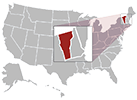
Mental Health Technicians, often called MHTs, play an essential role in supporting individuals who are experiencing mental health challenges.
In Vermont, these professionals work closely with nurses, therapists, and psychiatrists to provide hands-on care in hospitals, residential programs, and community mental health centers.
Across Vermont, the demand for mental health services continues to grow.
Rural communities in particular rely heavily on behavioral health support staff to meet patient needs.
As awareness of mental health issues increases and access to care expands, trained technicians are becoming more valuable throughout the state.
This career is ideal for compassionate, patient individuals who want to work directly with people in need.
It is also a strong entry point into long-term careers in nursing, social work, counseling, or psychology.
Mental Health Technicians have a direct impact on patient safety, treatment progress, and overall quality of care.
What Does a Mental Health Technician Do in Vermont?
Mental Health Technicians in Vermont provide daily support to individuals receiving behavioral health services.
Their responsibilities often include:
- Assisting patients with daily living activities such as meals, hygiene, and mobility
- Monitoring patient behavior and emotional well-being
- Documenting observations and reporting changes to licensed professionals
- Supporting group therapy sessions and recreational activities
- Helping maintain a safe and structured treatment environment
MHTs may work in psychiatric units, crisis stabilization centers, residential treatment programs, or community-based facilities.
While the job title may vary, some employers use terms like Behavioral Health Technician or Psychiatric Technician.
In Vermont, these roles are similar, though Psychiatric Technicians may sometimes have more specialized clinical training depending on the employer.
Education and Training Requirements in Vermont
The minimum educational requirement to become a Mental Health Technician in Vermont is typically a high school diploma or GED.
However, many employers prefer candidates who have completed postsecondary training in behavioral health or a related field.
Common education pathways include:
- Certificate programs in Behavioral Health or Human Services
- Associate degrees in Mental Health Technology, Human Services, or Psychology
Certificate programs generally take 6 to 12 months to complete and may require 18 to 30 credit hours.
Associate degree programs typically require about 60 credit hours and take approximately 2 years of full-time study.
Estimated tuition costs in Vermont community colleges range from approximately $260 to $300 per credit hour for in-state students.
A 60-credit associate degree program may total between $15,000 and $18,000 in tuition, not including fees and textbooks.
Certificate programs can cost between $5,000 and $9,000, depending on credit load and institution.
Coursework often includes:
- Introduction to Psychology
- Abnormal Psychology
- Crisis Intervention
- Human Growth and Development
- Ethics in Human Services
- Patient Care and Documentation
Some programs also include supervised practicum or internship experiences in local healthcare settings.
Top Schools Offering Mental Health Technician Programs in Vermont
#1 Community College of Vermont

The Community College of Vermont, part of the Vermont State Colleges system, serves students statewide through multiple academic centers and online programs.
It offers flexible scheduling options, making it ideal for working adults.
Courses Offered
Students can pursue an Associate of Science in Behavioral Science, which typically requires 60 credit hours.
Coursework includes Introduction to Psychology, Social Psychology, Human Services, and Mental Health and Substance Abuse.
Programs are available in hybrid and online formats.
Some courses include field-based learning components.
Program Cost
In-state tuition is approximately $290 per credit hour.
A full 60-credit associate degree may cost around $17,400 in tuition.
Additional fees and materials are not included in this estimate.
Contact Information
- Address: 1 Abenaki Way, Winooski, VT 05404, United States
- Phone: +1 802-654-0505
- Website: Visit School Website
#2 Vermont State University

Vermont State University is a public institution formed through the consolidation of several Vermont colleges.
It offers comprehensive academic programs and strong community partnerships.
Courses Offered
Students can enroll in a Bachelor of Science in Psychological Science or Human Services programs that require approximately 120 credit hours.
Relevant coursework includes Abnormal Psychology, Counseling Techniques, and Crisis Management.
Internship experiences are often required in the final year.
Program Cost
Undergraduate tuition for in-state students is approximately $12,000 to $14,000 per year.
A four-year degree may total between $48,000 and $56,000 in tuition before fees and housing.
Contact Information
- Address: 575 Stone Cutters Way, Montpelier, VT 05602, United States
- Phone: +1 802-728-1100
- Website: Visit School Website
#3 Northern Vermont University Campus Programs

Now integrated into Vermont State University, the former Northern Vermont University campuses continue to offer strong liberal arts and human services-focused programs.
Courses Offered
Programs in psychology and human services include around 60 to 120 credit hours, depending on degree level.
Coursework emphasizes mental health theory, assessment basics, and community practice.
Internships are often embedded within degree requirements.
Program Cost
Annual tuition for in-state students is approximately $13,000 to $15,000.
Total program costs depend on degree level and enrollment status.
Contact Information
- Address: 1001 College Rd. Lyndonville, VT 05851
- Phone: 800.225.1998
- Website: Visit School Website
#4 Champlain College
Champlain College is a private institution in Burlington known for career-focused education and small class sizes.
Courses Offered
Champlain offers degrees in Psychology and Human Services with 120 credit hours.
Coursework includes Clinical Psychology, Ethics in Counseling, and Applied Behavioral Analysis.
Internship opportunities are strongly encouraged.
Program Cost
Undergraduate tuition is approximately $43,000 per year.
Total tuition for a four-year program may exceed $170,000 before financial aid.
Contact Information
- Address: 163 S Willard St, Burlington, VT 05401, United States
- Phone: +1 802-860-2700
- Website: Visit School Website
#5 Vermont Technical College Legacy Programs

Previously operating independently and now part of Vermont State University, Vermont Technical College offers applied degree programs with practical training components.
Courses Offered
Associate degree options in health-related fields generally require 60 to 65 credit hours.
Programs often incorporate clinical experiences and applied coursework relevant to patient care.
Program Cost
In-state tuition averaged approximately $14,000 per year.
A two-year associate program may total about $28,000 in tuition before additional fees.
Contact Information
- Address: 124 Admin Drive, PO Box 500, Randolph Center, VT 05061.
- Phone: (802) 728-1000
- Website: Visit School Website
Schools Summary Table
| Rank | School | |
|---|---|---|
| | #1 | Community College of Vermont |
| | #2 | Vermont State University |
| | #3 | Northern Vermont University Campus Programs |
| | #4 | Champlain College |
| | #5 | Vermont Technical College Legacy Programs |
Step by Step: How to Become a Mental Health Technician in Vermont
- Step 1. Meet basic eligibility requirements such as being at least 18 years old and passing a background check.
- Step 2. Complete the required education or training program, such as a certificate or associate degree in behavioral health or a related field.
- Step 3. Gain supervised clinical experience if required by employers. Many candidates obtain this through internships or entry-level roles.
- Step 4. Obtain certification if required or preferred in Vermont. While not always mandatory, national certifications such as Certified Mental Health Technician may improve job prospects.
- Step 5. Apply for jobs in hospitals, residential treatment facilities, community mental health centers, or outpatient clinics throughout Vermont.
Job Outlook for Mental Health Technicians in Vermont
Mental Health Technicians are needed in hospitals, residential care facilities, and nonprofit community mental health agencies across Vermont.
Rural areas often experience higher demand due to workforce shortages.
As mental health awareness grows and funding for behavioral health services increases, the long-term outlook for technicians remains stable.
Many professionals use this role as a stepping stone to higher-level clinical or nursing careers.
Advancement opportunities may include supervisory roles, case management positions, or continued education in counseling or social work.
Salary for Mental Health Technicians in Vermont
Entry-level Mental Health Technicians in Vermont typically earn lower starting wages compared to those with several years of experience.
With experience, certifications, and specialized skills, earning potential increases.
Factors influencing salary include geographic location within Vermont, employer type, such as hospital versus residential facility, education level, certification status, and years of hands-on experience.
Technicians working in larger medical centers or specialized psychiatric units may earn more than those in smaller community settings.
Average Salary of Mental Health Technicians in Vermont
Annual Salary Range:| Item | Percent |
|---|---|
$40K | |
$46K | |
$50K |
Vermont Salary by Metro Area
| Metro Area | Employed | Avg. Annual | Avg. Hourly | Top 10% | Bottom 10% |
|---|---|---|---|---|---|
| Burlington-South Burlington, VT | 220 | $46,490 | $22.35 | $48,400 | $41,950 |
* Employment conditions may vary by location.
Frequently Asked Questions
Is certification required to work as a Mental Health Technician in Vermont?
Certification is not always required by the state, but some employers prefer national credentials.
Certification can improve job competitiveness and demonstrate professional commitment.
How long does it take to complete training?
Certificate programs may take 6 to 12 months.
Associate degrees generally take about 2 years of full-time study.
Can I work while completing my education?
Yes.
Many programs offer part-time, evening, or online options that allow students to work while studying.
What career advancement options are available?
Mental Health Technicians often continue their education in nursing, social work, psychology, or counseling.
Some advance into supervisory or case management roles.
Are entry level jobs available in Vermont?
Yes.
Many employers hire candidates with a high school diploma and provide on-the-job training, especially in residential and community mental health settings.