Medical careers are often referred to as recession-proof, as there seems to be an endless supply of patients.
Doctors and nurses will always find a use for their specialties.
Additionally, there is a growing demand for all the medical specialists who work alongside the doctors and nurses.
These technicians and medical machine operators are at the forefront of the new and emerging technology.
Technology has helped make diagnoses and treatments increasingly more advanced and accurate.
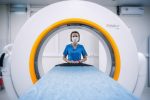
MRI Technologists, for instance, help to provide views of patients that were only available through surgery in the not-so-distant past.
Could an MRI Technologist be the right career move for you?
The Best Online MRI Technologist Training Programs
#1 Tesla MR Institute MRI Technologist Program
About the Program
Tesla MR Institute offers a pathway to become an MRI technologist in about 12 to 18 months.
The didactic portion is fully online, and students complete clinical training at a site near them.
The program includes simulated scanning hours to build skills before entering clinicals.
What’s Included
Students complete an initial online education phase, followed by an advanced phase with simulator experience, where they can log hundreds of simulated scans.
The program concludes with required clinical hours in a real MRI setting.
Estimated Cost
Tuition ranges from about 11,000 to 12,900 dollars, depending on the payment plan, with discounts available for upfront payment and options for quarterly or monthly installments.
Contact Information
- Address: 459 Broadway, New York, NY 10013
- Phone: 833-837-5267
- Website: Visit School Website
#2 Pulse Radiology Online MRI Program

About the Program
Pulse Radiology offers a structured education program for MRI technologist training.
The program lasts about 14 weeks and covers all required content areas for the MRI registry exam.
Clinical training is arranged through affiliated sites across multiple states.
What’s Included
The program includes eleven self-paced video modules, mock registry tests, over 1,000 registry-style questions, and approximately 25.5 Category A continuing education credits.
Students complete clinical training at partner locations.
Estimated Cost
Pricing varies by package and whether clinical training is included, but programs of this type generally range in the several thousand dollars.
Contact Information
- Address: 175 Hampton Point Drive, Suite 4, St Augustine, FL 32092, United States
- Phone: (646) 948-1500
- Website: Visit School Website
#3 Fort Hays State University Certificate in Magnetic Resonance Imaging

About the Program
Fort Hays State University offers a fully online certificate in MRI designed for practicing radiologic technologists.
It prepares students for advanced certification or career growth.
What’s Included
The program consists of 16 online credit hours and can be completed within two semesters while working.
It provides advanced study of MRI content for professional development.
Estimated Cost
Costs are based on standard tuition per credit hour at the university.
Specific figures vary by residency status and term.
Contact Information
- Address: 600 Park Street, Hays, KS 67601-4099
- Phone: +1 785-628-3478
- Website: Visit School Website
#4 UPMC Advanced Imaging Technologist MRI Certificate Program

About the Program
UPMC Imaging Services offers a self-study online MRI training program as part of its advanced imaging technologist certificate pathway.
It is intended for radiologic professionals seeking to advance MRI skills.
What’s Included
Students study online didactic materials covering MRI basics, physics, and clinical content.
They then complete an internship at a UPMC facility to meet clinical competency requirements.
Estimated Cost
Tuition and related fees for online courses and clinical training total around 2,600 to 3,410 dollars, depending on the course mix and delivery format.
Contact Information
- Address: 100 Fairfield Drive, Seneca, PA 16346
- Phone: 814-677-1433
- Website: Visit School Website
#5 MTMI MRI Training Course for Technologists
About the Program
MTMI provides a self-paced online MRI training course for technologists preparing for the registry exam.
It offers foundational knowledge and virtual simulation tools to support exam preparation.
What’s Included
The course includes structured MRI content, simulation software access for about three months, and the opportunity to earn 40 hours of Category A credit plus at least 16 hours of structured education required for certification progression.
Estimated Cost
Pricing varies depending on format and options chosen, and clinical training may need to be arranged independently.
Contact Information
- Address: 10361 Innovation Drive, STE 400, Wauwatosa, WI 53226
- Phone: (800) 765-6864
- Website: Visit School Website
Schools Summary Table
Comparison of the Top Online MRI Technologist Training Programs
| Program | Program Length | Online Hours | Clinical Hours | Cost |
|---|---|---|---|---|
| Tesla MR Institute MRI Technologist Program | 12-18 months | Hundreds of simulated scan hours | Required, arranged near student | $11,000-$12,900 |
| Pulse Radiology Online MRI Program | 14 weeks | Eleven video modules, over 1,000 questions, 25.5 CE credits | Completed at partner sites | Several thousand dollars (varies by package) |
| Fort Hays State University Certificate in MRI | 2 semesters | 16 credit hours | Completed locally as arranged | Tuition per credit hour (varies by residency) |
| UPMC Advanced Imaging Technologist MRI Certificate Program | Varies | Online didactic courses | Internship at UPMC facility | $2,600-$3,410 |
| MTMI MRI Training Course for Technologists | 3 months | Simulation software, 40 CE Category A hours, 16 structured education hours | Must arrange independently | Varies by course options |
Disclaimer: Information may change. Clinical hours and certification requirements vary by program. Confirm details with the school before enrolling.
What Courses Are in an Online MRI Technologist Program?
MRI, which stands for magnetic resonance imaging, is a method of scanning and developing images of a patient’s internal body structure.
MRIs use radio waves to image patients.
Along with X-rays and CAT scans, MRIs have helped medicine move beyond strictly needing surgery to diagnose patient ailments.
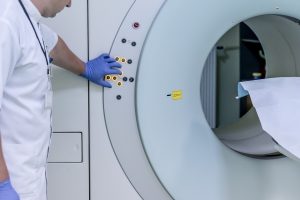
As an MRI technologist, you will need to know how to operate and service the equipment, as well as manage patients.
A calm bedside manner is necessary for many patients to relax during the MRI procedure.
It is also necessary to develop a cursory understanding of the various medical conditions that you will be scanning for.
Some of the classes and courses you will need to complete include:
- Chemistry
- Human Biology
- Anatomy
- Physiology
- Microbiology
- Managing and recording patient vital signs
- Sonographic Principles and Instrumentation
- Radiology Physics
- Customer service
- Intermediary computer literacy
- Clinical Radiology studies
- Magnetic Resonance
- Radiographic Positioning
In addition to the specific courses designed for MRI training, students will also need to have completed an Associate of Arts or Associate of Science two-year degree.
Can You Earn an Online MRI Technologist Certification Completely Online?
Yes, it is possible to complete your MRI coursework entirely online, depending on the school.
You will need an Associate’s Degree before beginning your MRI coursework.
Most Associate’s Degrees are two-year programs.
Some schools do require additional in-person clinical training.
MRI Technologists will also want to obtain certification to ensure greater job opportunities and rate of pay.
How Long Does it Take to Earn an MRI Technologist Certification Online?
MRI certification is accomplished through the American Registry of Radiologic Technologists (ARRT).
Applicants will need to complete a 1-2-year MRI training program through an accredited school before applying for certification.
You are then allowed three attempts within three years to pass the required MRI exam.
How Much Does an Online MRI Technologist Certification Cost?
Depending on the program and school/institution, the average in-state tuition cost will be $5,000.
Out-of-state tuition averages around $18,000.
Partial scholarships and grants are available for qualified applicants.
Most schools also offer tuition reimbursement programs.
Benefits of Online MRI Technologist Training Programs
1. Learn while you work
Many online students are balancing an existing work schedule with their coursework.
Completing online coursework allows for flexible scheduling for both work and school.
Students can also attend classes from various locations.
Not being tied to a classroom location can allow more students to pursue their higher education goals.
2. More one-on-one instructions
When completing coursework online, your communications will tend to be structured around online messaging and e-mail.
While on the one hand, this may seem more isolated, there is also a natural channel of communication that grows around the class.
Reaching out to an instructor can be more specific.
More detailed.
Compose your thoughts and create questions as you study that can later become emails and chat messages.
Your instructor will also appreciate the input, as they need to know what the class knows and is absorbing.
3. The ability to access online help
Working in an online environment offers students the tools of the internet.
If you have questions or need further explanation, it is almost a certainty that there is a blog post or video that references your very question.
Of course, in-person classes are able to tap into the same resources.
With an online format, the instructor(s) often build the instruction around the use of online tools.
4. Affordable and convenient
By giving students financially viable options for gaining certification, more students can become technicians without breaking the bank.
Affordable online courses also offer students convenient methods for increasing their overall educational goals.
Advanced education equals greater skills as a technician, too, which can also increase earnings.
As students become more educated, they become more valuable to their employers and their patients.
Drawbacks of Online MRI Technologist Training Programs
1. Lack of hands-on instruction and practice
When completing courses online, especially in the medical field, it is important to be able to put the learning into practice.
What is read and observed also needs to be manually done.
The bridging of the theoretical with the actual helps to solidify knowledge.
It is also critical to see an expert perform certain procedures.
Watching someone with experience do your future job can greatly assist in clarifying some hows and wheres.
It can also help create your personal MRI technique.
2. Fewer peer interactions
Sometimes, the learning is best facilitated by student comments and class discussions.
Although commenting and chat-posting can occur in real-time for an online class, it is not the same as the interaction in a live classroom.
For online students, it may be necessary to link up with other online cohorts to get a bit of interaction happening.
At the very least, camaraderie can help drive motivation to do well and complete the course.
3. Students need to be motivated and conscientious learners
It is easy to get distracted when you are working or studying from home.
As a student, it can be tempting to put off your studies for another day.
After all, is the teacher even paying attention? (They are;)
The best online students understand that you have to discipline yourself from the very beginning.
Make study schedules and stick to them.
Practice for tests often, and make sure you always read the material provided.
4. Longer hours of independent study
Since you will be completing training from home or a non-classroom location, you will find that you are responsible for more of the studying and reviewing for tests.
Traditionally, when students are left to study on their own, versus completing study exercises in a classroom setting, the latter garners the better scores.
If possible, connect with other students who are studying online.
Try to organize online study groups to help each other become more knowledgeable and prepared.
Benefits and Drawbacks of Online MRI Technologist Training Programs – Summary Table
| Benefits of Online MRI Technologist Training Programs | Drawbacks of Online MRI Technologist Training Programs |
|---|---|
| Learn while you work | Lack of hands-on instruction and practice |
| More one-on-one instructions | Fewer peer interactions |
| The ability to access online help | Students need to be motivated and conscientious learners |
| Affordable and convenient | Longer hours of independent study |
Types of MRI Technologist Certifications
Certifications for MRI Technologists are usually offered through two national organizations:
- American Registry of Radiologic Technologists (ARRT)
- American Registry of Magnetic Resonance Imaging Technologists (ARMRIT).
ARRT-
- Applicants are examined through both written and practical components to determine competency.
- Certification must be renewed annually.
- Applicants must have completed 24 hours of continuing education within two years of re-applying.
ARMRIT-
- Applicants are required to demonstrate their educational and clinical experience and expertise.
- Recertification is required every three years.
- Applicants must have completed 24 hours of continuing education in their last three years.
- There is also a $300 re-certification fee.
- Applicants must notify ARMRIT if they have been convicted of a felony.
4 Self-Study Tips for MRI Technologist Online Students
1. Study frequently and often.
You are working and studying to start a career in healthcare.
You need to not only know the information backward and forwards but also become so confident in the info and terminology that you are at ease treating patients.
By regularly studying in small bursts, you avoid burnout from overexposure or marathon study sessions.
You will also become comfortable speaking the language of an MRI technician, which will help streamline your move into a career.
2. Develop study partners or study groups
One of the keys to effective classrooms is student interaction.
Even if just in the form of class discussions, the sharing of ideas and questions helps to clarify information for so many.
With online classes, the classroom effect can be lost.
There are still discussions in the classroom chat areas, but some students will benefit more by connecting with other students in groups outside of class.
In these forums, students are more likely to open up and ask real questions.
Studying is also improved when classmates can ask each other questions and really probe what is understood before the exams take place.
3. Take lots of notes
Get in the habit of writing down as much information as you can while class is taking place.
Include your questions and even the good questions of others.
Drawing sketches can even be appropriate when examining equipment.
Then, when you have time soon after class, rewrite and clarify all of the notes you took.
Make sure you understand what you wrote and why it was important.
Write down the explanations, too.
As you go through the class, you will start to organize your notes better during class.
Then, at the end of the course, you will have a study guide for the exam.
4. Create a positive, non-distracting work environment
Some students will swear by multitasking.
If you have headphones in, the TV playing, while chatting online during study time, you’re not multitasking.
You are just dividing your brain’s time.
You are also processing and retaining less information.
Try to find or create a quiet place in which you can detach from other interests and just focus on your studies.
If you have roommates, you might have to make some concessions.
Library or coffee shop visits may be a good trade-off for finding quiet spaces.
Next Steps
Becoming an MRI technologist can offer individuals of various backgrounds the possibility to enter the medical field.
Once employed, opportunities for advancement and additional training will quickly present themselves.
Consider which work and school schedule will meet your needs the best before searching for the school you will apply to.
Make sure you will have ample time to focus on your studies.
Then, as you are working towards certification, make sure you are reaching out to potential employers to see what they’re looking for in an employee.
Frequently Asked Questions
What is the earning potential for a licensed and certified MRI Technologist?
MRI Technologists average around $75,000 throughout the US.
The low range for salary is around $62,000, and the top end is beyond $85,000.
Most salary fluctuations are affected by the location in the US in which the technologist works and the competitiveness of the industry in that area.
Is there a market for MRI Therapists in the US?
There is a projected growth of nearly 10% for the next ten years for MRI and radiology techs.
Various job markets with greater growth potential will be more favorable to employment opportunities.
MRI technologists can also find some employment opportunities within private practices and military fields, as well.
Are there risks associated with becoming a MRI Technologist?
Since MRIs require high levels of radio and magnetic waves, there is a risk of overexposure and potential health consequences.
At the same time, there are numerous safety procedures in place to help patients and technologists remain safe.
What are careers related to MRI technologists?
With a background in MRI technology, trainees can also pursue careers as Diagnostic Medical Stenographers, Radiation Therapists, or Nuclear Medicine Technologists.
Additionally, working in the medical field opens up opportunities for all kinds of different medically related occupations.
Networking and communication are key to maximizing your opportunities.