









Medical Biller and Coder Job Description
Medical billing and medical coding are two distinct occupations, even though they frequently get lumped together.
Medical coding is similar to medical billing in that it is concerned with revenue cycles and the financial health of healthcare organizations.
The job, however, requires a greater level of expertise and responsibility.
Medical billers submit claims to insurance companies, while medical coders review documentation from providers and translate it into codes for reimbursement.
Some businesses hire one individual to do both tasks; larger businesses, on the other hand, usually employ billers and coders separately.
Duties
Job Duties of Medical Coding
A medical coder’s work is critical to the success of a healthcare organization.
Given the role they play in affecting cash flow, insurance claims processors are financially reliant on their efforts to ensure reimbursements continue to flow.
Time-sensitive activities are handled by medical coders and they need to stay on top of their workload to ensure that clients are served, supplies are kept on hand, and the doors remain open.
Like sleuthing agents, they must pick out the most relevant information in the documentation and convert it into accurate codes.
It sometimes helps to think of them as detectives or translators.
Daily, a coder will undertake these activities:
- Translate doctor’s notes into diagnosis codes, treatment/service codes, and medical hardware symbols.
- Keep track of all reimbursements. Communicate with medical providers and insurance companies or other payers as necessary.
- To the greatest level of specificity, communicate with medical professionals to verify or obtain information on coding.
- Use technology, such as coding software and patient record systems.
Job Duties of Medical Billing
Billers process bills for insurance companies and other payers.
When bills are submitted in a timely and correct manner, providers and hospital systems are reimbursed.
Medical billers are in charge of submitting a claim that is complete with accurate codes supplied by the medical coder to an insurance company or other payer.
Medical billing also includes time-sensitive duties, since this phase is linked to reimbursement for medical services.
A medical biller’s job begins after the coding is completed.
Medical billers keep track of outstanding claims, prepare bills for patients, and work with them to set up payment arrangements to get a provider or facility paid the correct amount.
Medical billing professionals must have great attention to detail.
They must look for any flaws for claims to be paid on time.
That implies billers should have a basic understanding of the coding system used at their workplace.
Billers are in charge of the final steps to ensure that payers and healthcare providers receive the correct money.
They may do so on a typical day:
- Using diagnosis and treatment codes supplied by a medical coder, as well as other clinical information from your patient’s electronic health record (EHR), you may generate and submit reimbursement claims.
- Verify claim records and claims to ensure that they are correct and reflect the standard of care given.
- Ensure that all creditors, coders, and insurance companies are aware of your costs.
- Assist patients in obtaining reimbursement for additional expenditures uncovered by insurance companies or other payers.
- Make phone calls, send emails, and gather information to acquire pre-authorization for therapy or operations as soon as possible.
Is It Possible for One Person to Do Both Tasks?
In most situations, designated personnel is responsible for billing and coding.
That being said, it is conceivable for someone to perform both roles in some instances.
A solo practitioner or a modest medical practice may use a single employee to handle both medical billing and coding.
Smaller organizations, such as a single physician’s office or a small business, may do so.
Candidates who can fill both job descriptions are more likely to be hired in smaller markets with a limited pool of applicants, such as small and rural areas.
Larger businesses, such as hospitals and health systems, keep the two jobs distinct.
Because billers are frequently paid less than coders, the division of labor makes sense from a financial standpoint.
However, a background in billing isn’t necessarily required.
Coders who are also skilled in billing might find it easier to move into medical coding or another industry with similar pay.
Salary
According to the Bureau of Labor Statistics, the median annual medical billing and coding salary is $55,970, or $26.91 per hour.
However, several variables may affect your earnings.
Billers and coders in Alaska make an average of $60,600 per year, significantly more than the national average.
And certified coders, according to the AAPC, earn 39 percent more than non-certified coders.
Medical billers and coders may earn the most money in these states, according to the BLS:
- District of Columbia – $76,990 annually
- Alaska – $60,600 annually
- Washington – $68,020 annually
- Massachusetts – $60,460 annually
- Minnesota – $60,240 annually
In addition to state salaries, it’s also crucial to think about how salaries vary by city.
According to the US Bureau of Labor Statistics, the following five metropolitan areas have the highest annual mean salaries for medical coding and billing.
- Kokomo, Indiana – $71,470 annually
- Trenton, New Jersey – $70,430 annually
- Kennewick/Richland, Washington – $67,560 annually
- Vallejo-Fairfield, California – $65,080 annually
- Corvallis, Oregon – $64,770 annually
Annually National Average Salary: $55,970
Average Annual Salary by State
| State | Avg. Annual Salary |
|---|---|
| Alabama | $42,830 |
| Alaska | $60,600 |
| Arizona | $52,200 |
| Arkansas | $46,430 |
| California | $68,080 |
| Connecticut | $61,230 |
| Delaware | $51,630 |
| District of Columbia | $76,990 |
| Florida | $50,320 |
| Georgia | $53,440 |
| Hawaii | $64,690 |
| Idaho | $53,010 |
| Illinois | $53,670 |
| Indiana | $49,960 |
| Iowa | $52,640 |
| Kansas | $53,080 |
| Kentucky | $50,740 |
| Louisiana | $48,270 |
| Maine | $51,940 |
| Maryland | $64,380 |
| Massachusetts | $60,460 |
| Michigan | $51,540 |
| Minnesota | $60,240 |
| Mississippi | $43,940 |
| Missouri | $52,940 |
| Montana | $51,630 |
| Nebraska | $55,890 |
| Nevada | $63,950 |
| New Hampshire | $52,310 |
| New Jersey | $56,730 |
| New Mexico | $51,470 |
| New York | $64,550 |
| North Carolina | $53,210 |
| North Dakota | $54,800 |
| Ohio | $57,620 |
| Oklahoma | $51,120 |
| Oregon | $59,520 |
| Pennsylvania | $50,920 |
| Rhode Island | $60,830 |
| South Carolina | $55,520 |
| South Dakota | $53,240 |
| Tennessee | $57,510 |
| Texas | $51,020 |
| Utah | $53,880 |
| Vermont | $52,960 |
| Virginia | $54,460 |
| Washington | $68,020 |
| West Virginia | $46,600 |
| Wisconsin | $56,970 |
| Wyoming | $56,610 |
| Guam | $37,010 |
| Puerto Rico | $26,930 |
Annual Average Salary: Top 5 States
The top earning state in the field is District of Columbia, where the average salary is $76,990.
These are the top 5 earning states in the field:
* Employment conditions may vary by location.
How to Become a Medical Biller or Coder - Step by Step
Step 1 Getting Your Diploma
The speed at which you may earn your medical coder certificate or diploma is one of the most appealing aspects of the job.
If you pursue a job as a medical coder, you may get a certificate, diploma, or associate degree in medical billing and coding.
Following that, you’ll study more in-depth topics like the company’s primary responsibilities.
Not research papers and diplomas, but rather coding courses and certification examinations, not academic transcripts and degrees, help decide whether you’re qualified to work as an entry-level medical biller or coding expert.
Medical coding and billing certifications demand that students master the same set of federal coding regulations as those who pursue medical billing and coding degrees:
- CPT (Current Procedure Terminology – the American Medical Association)
- ICD 10-CM (Coding standards for diseases and disorders – the Centers for Medicare and Medicaid Services)
- HCPS (Coding standards for medical services and supplies – the Centers for Medicare and Medicaid Services)
Because the two jobs have many parallels, some schools offer a single curriculum that combines billing and programming to give dual certificates.
If you want to specialize in one area, there are differences between the two training paths.
Step 2 Get Certified
Getting your certification is the next step.
Recommended Programs
Education
The Course of the Healthcare Billing Program
Depending on the course, Medical Billing courses may vary; however, students can anticipate completing coursework in:
- Advancing Coding Applications
- CPT Medical Coding
- Electronic Medical Records
- Healthcare Applications
- Health Information Ethics
- Introduction to Anatomy and Physiology
- Law, Ethics, and Confidentiality in Allied Health
- Medical Billing Technology
- Medical Coding
- Medical Health Insurance
- Medical Insurance Principles
- Medical Office Procedures
- Medical Reception
- Medical Terminology
Coding for Medical Specialties Program Courses
The Medical Coding course of study is quite comparable to the Medical Billing program.
In reality, most programs will only have a few distinctions.
The following is an outline of what you can expect:
- Advancing Coding Applications
- CPT Medical Coding
- Electronic Medical Records
- Healthcare Applications
- Health Information Ethics
- Introduction to Anatomy and Physiology
- Law, Ethics, and Confidentiality in Allied Health
- Medical Coding
- Medical Health Insurance
- Medical Insurance Principles
- Medical Office Procedures
- Medical Reception
- Medical Terminology
Career Video Overview
Certification & Licensing
Certification in Medical Billing
These courses will help you prepare for tests that may be required to get the following degrees:
- Certified Professional Biller (CBP) – American Academy of Professional Coders
- Certified Medical Reimbursement Specialist (CMRS) – American Medical Billing Certification
- Certified Medical Billing Specialist (CMBS) – Medical Association of Billers
Certification in Medical Coding
To get the following credentials, you’ll need to take courses that will prepare you for tests that include:
- Certified Professional Coder (CPC) – American Academy of Professional Coders
- Certified Coding Associate (CCA) – American Health Information Management Association
- Certified Coding Specialist (CCS) – American Health Information Management Association
- Certified Coding Specialist #2 Physician-based – American Health Information Management Association
Online or in-person coding and billing certification courses are available.
There are several benefits and drawbacks to enrolling in either type of program.
In-Person Programs
Learning in a traditional classroom environment, on the other hand, offers students face time with an instructor and other pupils, as well as hands-on instruction.
It also demands that you follow the institution’s timetable.
Students who do not have a program near their home or those who are studying while also working full-time, looking after family demands, or pursuing an education might be excluded.
Online Courses
On the other hand, online medical billing and coding training programs provide scheduling flexibility, allowing you to learn whenever it is convenient for you, as long as you finish your coursework.
You can study in the comfort of your own home without having to travel anywhere.
But instead of face-to-face help from teachers and the socializing aspect of interacting with other students, you give up access to technology and an internet connection.
Typical Training Program Length: 0-6 Months
Job Outlook
One of the most essential factors to consider when looking for a new profession is whether you’ll be able to find employment where you want to live, or where you already reside.
There are currently 335,000 medical records specialists and health information technicians working in the United States, according to the BLS.
The following are the top five states, in terms of employment, for these professionals:
- California – 38,920
- Texas – 28,500
- Florida – 22,480
- Ohio – 15,000
- New York – 14,280
The following metropolitan areas have the highest proportions of professionals in these fields:
- Los Angeles-Long Beach-Anaheim, California – 13,880
- New York-Newark-Jersey City, New York-New Jersey- Pennsylvania – 13,210
- Dallas-Fort Worth-Arlington, Texas – 7,820
- Chicago-Naperville-Elgin, Illinois-Indiana-Wisconsin – 7,460
- Houston-The Woodlands-Sugarland, Texas – 7,210
10-Year Employment Growth Rate: 7%
2024
2034
That's a higher than average projected growth of 13,800.
Why Should I Become a Medical Coder or Biller?
Overall Satisfaction: High

While few job opportunities pay well and have flexible hours, the lack of barriers to entry makes it easy for anyone to start their own company.
You can see why people want to work as medical records and health information technicians when you consider the above factors.
Here are some additional advantages that we haven’t discussed yet:
- Billers and coders in healthcare are appreciated and acknowledged members of the team.
- The team’s efforts ensure earnings continue to enter the business, allowing medical staff to focus on individual attention.
- As a medical billing or coding specialist working from home, you’ll have complete control over your schedule and the flexibility to work with clients anywhere in the world.
- As the population ages, there are more and more people in need of health care, and many of those who have been working in the business are ready to retire, so there is plenty of prospects and job security.
- Healthcare businesses are accessible in every area of the country, so no matter where you want to live or operate, you’ll almost certainly discover employers who need someone with your talents.
- When you’re in the field, you’ll discover plenty of room to advance, whether by gaining experience as a manager or moving into a hands-on caring role like nursing.
- Medical coders and billers, on the other hand, do work that has the potential to make a significant difference to patient health and outcomes.
Average Salary: Medium

The average salary is about $55,970.
Getting a better salary is not out of reach for medical billers and coders; working for a big agency usually comes with benefits and above-average pay.
Job Growth Outlook: High

Job growth of 7% is projected by the BLS, which is considered high!
As healthcare is ever-growing in the U.S,. we can expect this role will become more lucrative and more in-demand in the future.
Time to Complete Training: 0-6 Months

Education can take as little as 4 months and as long as a year, it really depends on the type of program and certification you are after.
Most programs take 4-6 months.
Personal Skills Needed

It takes attention to detail, good communication skills, bookkeeping, teamwork, and basic computer skills to become a successful medical biller/coder.
If sitting in front of a computer most of your day doesn’t sound like it’s a good fit for you, you might want to consider a different career path.
Frequently Asked Questions
How long do you have to go to school to be a medical coder or biller?
Whether you want to go through a four-month in-person program or an online program, getting certified as a medical biller or coder may take anywhere from four months to fifteen months.
Several advanced certifications might need additional study, but most of the time, getting started in the field takes less than a year.
What does a medical coder accomplish throughout the day?
Billers and coders generally work in an office environment.
Before starting to process the patient charts that accumulate throughout the day as patients are seen by the clinical staff, they check their email and voicemail first thing in the morning.
Each chart is analyzed to assign correct diagnostic and treatment codes to insurance firms, Medicaid or Medicare, workers’ compensation, or other payers.
What is one of the highest-paying jobs in these professions?
As a Medical and Health Services Manager, you are estimated to have an annual salary of approximately $104,280 per year.
You will be in charge of the administrative section of a medical practice office, which includes overseeing billing and coding staff and paperwork, electronic medical records, and employee administration duties.
While working as a medical coder and biller may be an excellent start to understanding the inner workings of how a medical practice works, obtaining employment as a medical manager will require additional training and expertise.
A bachelor’s degree is generally required, as are some managerial positions.
Many managers have a Master’s in Public Health (MPH), for example.
Medical experience and administrative experience are also necessary.
 Medical Biller and Coder Info by State

- Alabama
- Alaska
- Arizona
- Arkansas
- California
- Colorado
- Connecticut
- Delaware
- Florida
- Georgia
- Hawaii
- Idaho
- Illinois
- Indiana
- Iowa
- Kansas
- Kentucky
- Louisiana
- Maine
- Maryland
- Massachusetts
- Michigan
- Minnesota
- Mississippi
- Missouri
- Montana
- Nebraska
- Nevada
- New Hampshire
- New Jersey
- New Mexico
- New York
- North Carolina
- North Dakota
- Ohio
- Oklahoma
- Oregon
- Pennsylvania
- Rhode Island
- South Carolina
- South Dakota
- Tennessee
- Texas
- Utah
- Vermont
- Virginia
- Washington
- West Virginia
- Wisconsin
- Wyoming
Medical Biller and Coder Resources
- 14 Pros and Cons of Being a Medical Biller and Coder
- How Much Does Medical Billing and Coding School Cost?
- 7 Best Online Medical Billing and Coding Training Programs
Discover Additional Medical Careers
Nursing & Patient Care
 Certified Nursing Assistant
Working as a Certified Nursing Assistant is an entry-level role that will give you hands-on experience when you are ready to take the next step in your medical career.
 Dental Hygienist
Dental hygienists take care of cleaning teeth to promote hygiene and help avoid cavities and gum problems.
 EMT
EMTTrained emergency medical technician that arrives at the scene to provide medical services such as resuscitation.
 Home Health Aide
Home health aides provide home care to individuals who require assistance in their day-to-day living.
 Licensed Practical Nurse (LPN)
Licensed Practical Nurses provide basic nursing care to patients and work with Registered Nurses and Doctors.
 Nurse Practitioner
A Nurse Practitioner can diagnose, treat, counsel, and prescribe medications to patients in hospitals or doctors’ offices.
 Patient Care Technician
Patient care techs work directly with patients helping them with daily activities and assist the medical staff by measuring and monitoring the patients' vital signs among other tasks.
 Physical Therapist Assistant
Physical therapist assistants provide physical therapy services to patients and aide to physical therapists.
 Professional Recovery Coach
A professional recovery coach is a life coach who works with someone during their addiction recovery process.
 Registered Nurse (RN)
Registered Nurses provide hands-on patient care in various settings, mainly hospitals, and clinics.
Allied Health & Clinical
 Dental Assistant
Dental assistants help dentists to provide patient care, keep records, and care for the dental equipment.
 Dialysis Technician
Dialysis technicians maintain and monitor dialysis equipment, and also act as primary caregivers for patients undergoing dialysis treatment.
 Medical Assistant
Medical assistants support the work of physicians, nurses, and other health professionals.
 Medical Technologist
Medical laboratory technologists collect bodily samples and conduct tests to analyze those samples.
 Mental Health Technician
A Mental Health Technician is a healthcare support professional who assists licensed clinicians in caring for individuals with mental, emotional, or behavioral conditions.
 Nutritionist
As a Nutritionist, you’ll be tasked with creating meal plans, counseling, and understanding dietary restrictions for all types of clients.
 Optician
Opticians are technicians and salespersons at the same time who spends most of their day talking to customers, reading prescriptions written by doctors, and dispensing glasses and lenses.
 Pharmacy Technician
Pharmacy technicians provide patients with medications through prescription or over the counter.
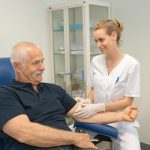 Phlebotomy Technician
As a Phlebotomist, it will be your responsibility to take blood samples from patients and send them to the lab for further testing.
 Sterile Processing Technician
A sterile processing technician is a healthcare professional who is responsible for preparing, sterilizing, maintaining, packaging, and storing medical tools and equipment used in surgical and other medical procedures.
 Surgical Technologist
Surgical technologists – also known as operating room techs – prepare operating rooms and assist doctors and nurses during surgical procedures.
Imaging & Diagnostic
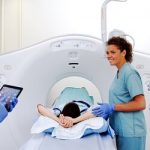 MRI Technologist
MRI Technologists use a machine to scan the body and create a detailed image of the inside for doctors to analyze.
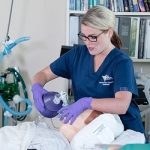 Respiratory Therapist
Respiratory therapists treat and care for patients who experience breathing difficulties.
 Ultrasound Technician
Ultrasound technicians aid physicians in monitoring and diagnosing patients through the use of ultrasonic imaging technology.
 X-Ray Technician
X-Ray Technicians are medical imaging professionals who use technology to visualize the inside of our bodies.
Healthcare Admin & IT
 Healthcare Administrator
Healthcare administrators – also known as healthcare executives or health services managers – are responsible for the planning, direction, and coordination of medical and health services.
 Medical Office Manager
Medical Office Managers are unseen masters of controlled chaos, juggling the needs of healthcare professionals while keeping the non-clinical side of the office humming.
 Medical Transcriptionist
Medical transcriptionists go over voice recordings to convert them into written texts.
 Patient Access Representative
The work involves helping people to orient themselves to the space and everything that is going on.
 Registered Health Information Technician
Registered Health Information Technician (RHIT) help store and verify accuracy of health records as well as analyze patient data.
Animal Care
 Dog Groomer
Dog groomers attend to grooming dogs, usually at dog salons or big pet-related chain stores.
 Veterinary Assistant
Veterinary Assistants work closely with Veterinarians to handle routine animal care.
 Vet Office Manager
Veterinary office managers work to make sure that the daily operations run smoothly and efficiently at veterinary hospitals or veterinary clinics.
 Veterinary Technician
Veterinary Technicians assist veterinarians as well as diagnosing and treating animals, mostly in private clinics.